Which matcha is the best is the wrong question, and it's why every list you read crowns a different tin. The right question is which matcha is best for the way you drink it, and the answer changes between a two ounce bowl of usucha, a 16 ounce iced latte, and a first cup you aren't sure you'll like.
Ceremonial and culinary aren't regulated grades. Ceremonial broadly means first-harvest, shade-grown tencha milled fine enough to whisk with water. Culinary means later-harvest leaf built for baking and blending, where milk, sugar, and fruit cover bitterness.
So this roundup matches the powder to the situation. Straight tea and umami depth, Ippodo Ummon. One tin for everything, Kettl Hakusan. First cup ever, Naoki Superior Blend. Organic on a budget, Encha. Farm-traceable, Matchaful Hikari. Cultivar-forward and latte-friendly, Rocky's Matcha. And for Miami, a mobile bar that whisks ceremonial-grade matcha to order.
Ignore the superlatives on the front of the tin. First harvest, a named region, a shading period, and vivid green powder tell you more than the word premium ever will.
## Table of Contents - 1. The Matcha Bike - What it does on campus and at events - 2. Ippodo Tea Ummon - How to actually drink it - 3. Kettl Hakusan - Why it beats a punchier label - 4. Naoki Matcha Superior Blend - What grade actually changes - 5. Encha Ceremonial Grade Matcha - 6. Matchaful Hikari Single Origin - What farm-level sourcing buys you - 7. Rocky's Matcha Ceremonial Blend - Why good blends keep selling out - 7 of the Best Matchas Compared - Your Next Sip: Pick by Purpose, Not by Price
1. The Matcha Bike
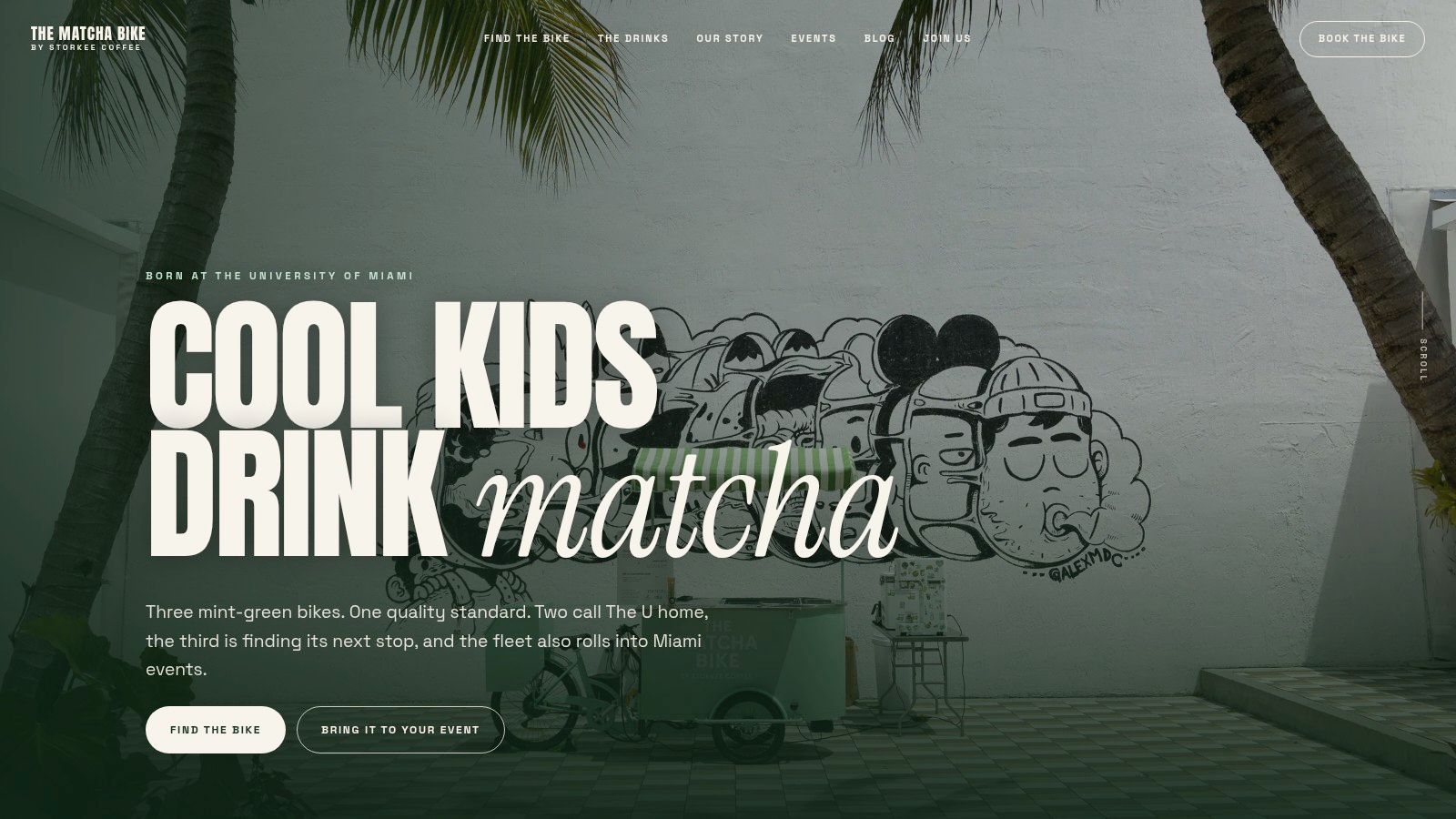
Want matcha prepared fresh at a campus stop or event? The Matcha Bike serves Miami with a fleet of three mint-green bikes: two stationed at the University of Miami and one dedicated to pop-ups around the city. Every drink uses ceremonial-grade matcha whisked to order, with a consistent preparation process across the fleet.
The concept began at the University of Miami with a focus on high-quality matcha, thoughtfully chosen ingredients, and the same care in every drink. Its menu rotates with the season, the setting, and what the team is excited to make. Strawberry Dream is a layered pour of strawberry and matcha.
What it does on campus and at events
Campus service is commonly near Merrick Fountain, with weekly location updates on Instagram. For a drink made to order, check those updates before heading over.
- Campus and community: A regular University of Miami presence offers a recurring place to find the service.
- Event service: Professional baristas manage setup and service, with custom menus and flavors shaped around the event.
- Branding: Branded cans and cups can carry the event identity into the drink experience.
- Logistics: The compact, self-contained setup suits indoor and outdoor venues. Clients tell the team where to roll in, and the team shapes the drink experience around the event.
- Track record: The Matcha Bike has done a brand activation with Alo Wellness Club in Miami.
For budgets under $500, a matcha drop-off can be coordinated for a group, with follow-up options sent after an inquiry. The event inquiry form offers four estimated budget ranges: under $500, $500 to $1,000, $1,000 to $2,500, and $2,500+.
Event pricing depends on the inquiry, so this is not the pick if you need a published rate before getting in touch. The Matcha Bike is branded as The Matcha Bike by Storkee Coffee and independently operated. Explore The Matcha Bike's Miami matcha service for campus updates and event inquiries.
2. Ippodo Tea Ummon
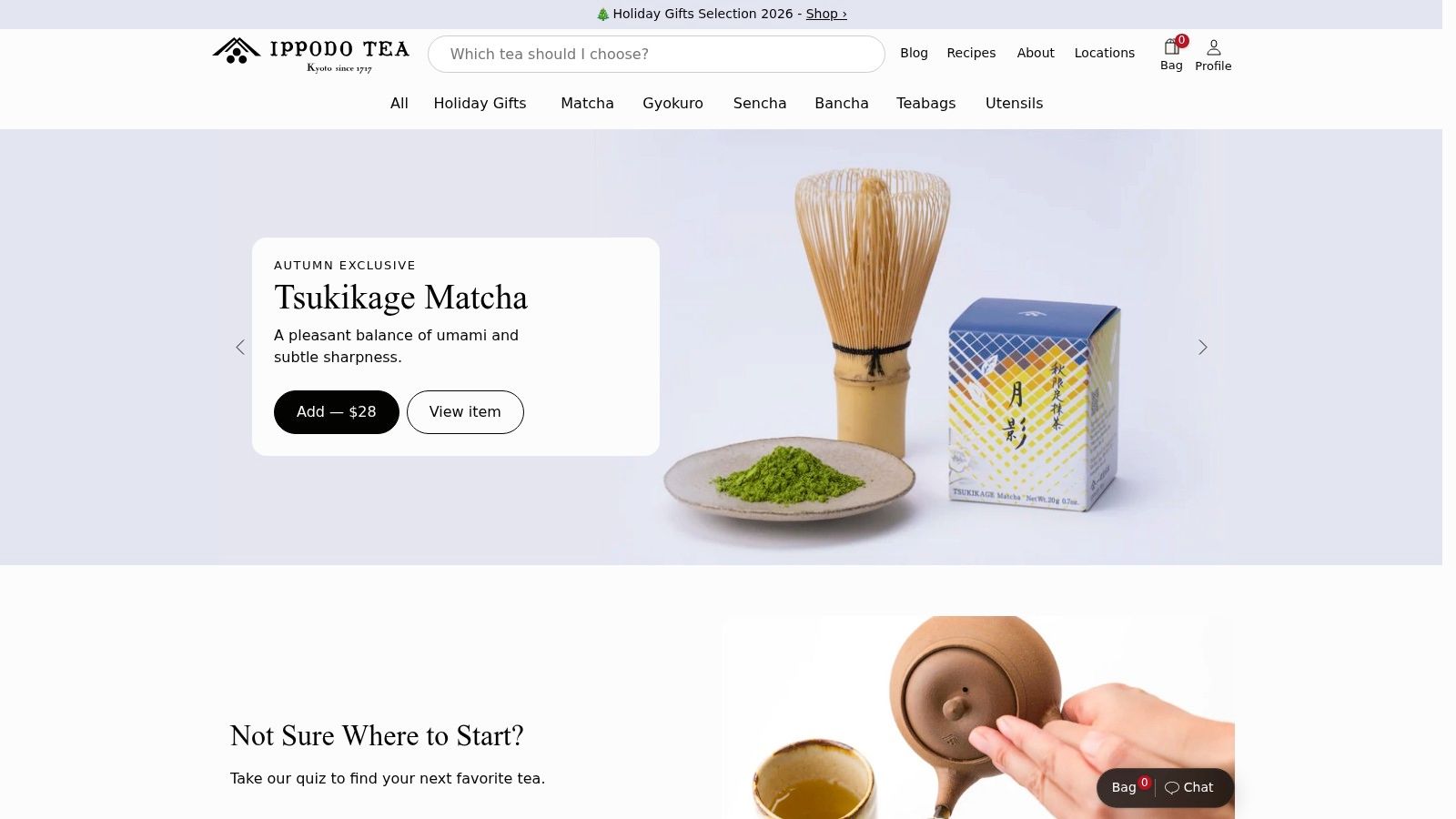
Ummon is the benchmark for straight matcha, made by a Kyoto tea company that has been at it since 1717. Ippodo describes it as dark green, aromatic, and full of umami, and it works both as thin tea and as thick koicha. At research time the 40g bag listed for $81 and the can for $82.
Why it tastes like that starts in the field. Japanese tea plants used for high-quality matcha are commonly covered for approximately 20 to 30 days before harvest, with shade cutting sunlight by about 70% to 95%, according to a scientific review of matcha cultivation and chemistry. Shading suppresses catechin formation and promotes chlorophyll, caffeine, and L-theanine, which is why the powder reads bright green and savory instead of harsh. The same review identifies first-flush leaves as richer in amino acids and caffeine than autumn-flush leaves.
How to actually drink it
Sift 1.5 to 2 grams into a warmed bowl, add about 2 ounces of water at 170 to 180°F, and whisk hard in a Z until a fine foam holds. Milk buries exactly what you paid for.
Drink this one with water, not oat milk. It's a 40 gram tin at a premium price, and the umami is the entire reason to buy it.
The objections are real. It's expensive for 40 grams, the intensity is a lot if you prefer soft and sweet, and an opened tin fades within weeks, so buy it only if you'll finish it. Ippodo's Sayaka and Ikuyo blends are the lighter, cheaper ways into the same house style.
3. Kettl Hakusan
Hakusan is a blend from Ogura, Uji, produced by Yamamasa Koyamaen and sold by Kettl, the New York tea company that buys from Japan weekly. Kettl describes it as deep green and velvety, with toasted sesame, spring herb, and nori notes. The 40g tin was listed at $45 and was sold out when I checked, and the listing named 2025 as the production year.
This is the tin for someone who wants one matcha to handle hot tea, iced matcha, and iced lattes without a second purchase. Preparation guidance on the listing covers all three, which is rarer than it should be.
Why it beats a punchier label
Ceremonial grade was the leading segment by grade in 2024, at approximately 46% of the global matcha market according to Credence Research, so the word on the front of a tin filters almost nothing. What separates Hakusan is narrower: a named producer, a named town, a dated production year, and instructions that assume you'll drink it more than one way.
- Savory, not sweet: toasted sesame and nori notes make it a distinctive drink compared with the soft, floral styles beginners gravitate to.
- Versatile: rich enough to hold up over ice, light enough to drink as usucha daily.
- Price: $45 for 40g is a premium everyday tea, well below the most expensive tins here.
- Availability: it sold out at research time, so set a restock alert rather than paying a reseller.
If your palate wants sweetness and flowers, this isn't it. If you want a tea that tastes like a Uji field and still works with milk at 3 p.m., it's the one. Miami readers who want to taste what that standard looks like in a cup can see the service standard in practice.
4. Naoki Matcha Superior Blend
Naoki's Superior Blend is the pick for a first cup and for anyone who drinks matcha mostly as a latte. It's Uji, Kyoto matcha labeled first-harvest, described by the brand as mellow and low in bitterness, and listed from $24.99 in several sizes. Naoki imports in small batches and ships from the U.S., which shortens the gap between milling and your kitchen counter.
The product page carries serving and latte instructions and a seller-hosted 4.8 out of 5 from 211 reviews. Treat that rating as marketing evidence, not testing evidence.
What grade actually changes
Grade labels do carry measurable differences. A comparative study of culinary and ceremonial matcha found ceremonial samples higher in chlorophyll and caffeine, while culinary samples showed higher total phenolics and stronger CUPRAC antioxidant readings. The ceremonial tier buys you color, caffeine, and smoothness. The culinary tier buys astringency and extraction. Neither wins in the abstract, and for a flavored drink a well-chosen culinary grade can outperform and cost less.
Where Naoki lands is a beginner-friendly ceremonial powder whose low bitterness makes a small bowl drinkable and a milk drink forgiving.
The trade-off: mellow is the whole pitch and also the limitation. If you want a sharp, grassy, umami-heavy bowl, this reads thin. Buy the smallest size, finish it within a few weeks of opening, and move up once you know which direction your palate leans.
5. Encha Ceremonial Grade Matcha
Encha sells organic Uji matcha and splits its range by use rather than by adjective: a ceremonial pouch for water, a latte blend, a barista-style powder. The company says its powder contains no additives or preservatives. The 30g ceremonial pouch was $19.99 and described as 15 servings, and it was marked sold out when I checked. The product page showed 4.9 out of 5 from more than 450 seller-hosted reviews.
Organic is the reason to pick this over cheaper ceremonial tins, and it isn't only a farming preference. A contaminant check reported by Vol.at found organic products had lower overall aluminum and lead contamination and little or no pesticide residue, while conventional products included pesticide findings, including substances not approved in the European Union. The same reporting is careful to note how thin the matcha-specific heavy-metal evidence remains, which is exactly why paperwork beats a claim on the bag.
Ask for the lot: organic certification is a screening factor, not a lab result. Request the certificate of analysis for the lot you're buying and check the milling date on the tin.
- Price: $19.99 for 30g is the cheapest route into organic ceremonial matcha in this roundup.
- Sizing: 15 servings disappear fast if you drink two a day, so buy a second pouch before you run out.
- Reviews: they're hosted by the seller, not an independent lab, so don't read them as safety data.
Book the bar and you get ceremonial-grade matcha whisked to order at your event, which is the practical version of the same standard.
6. Matchaful Hikari Single Origin
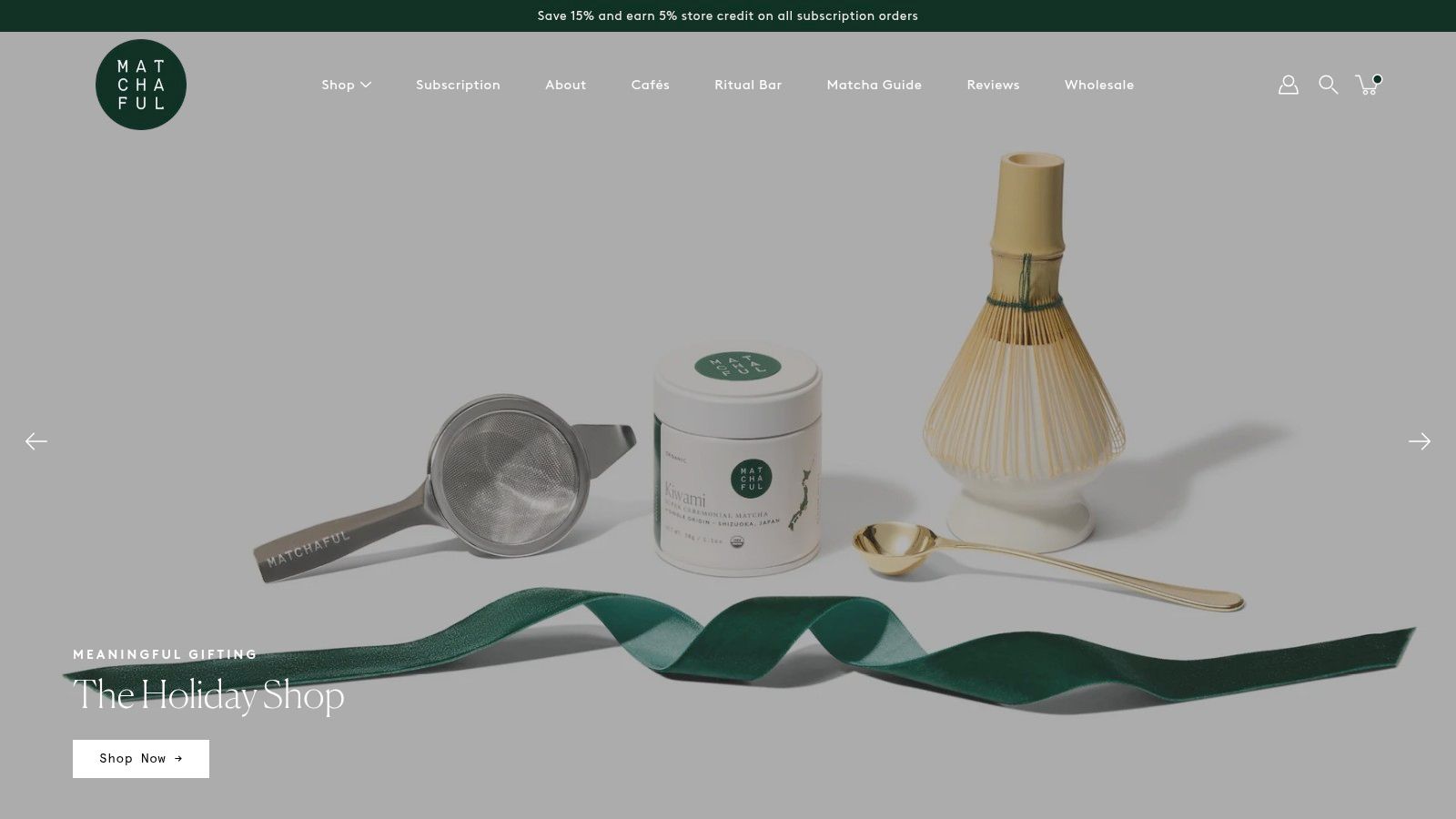
Hikari comes from one farm, Hattori Tea Farm in Shizuoka, which puts it in a different category from blends you can't trace past the word Japan. Matchaful describes it as first-harvest, smooth, and creamy, with notes of walnut, lemon, and butter. At research time 30g was $42 and 100g was $79, with lower subscription pricing shown, and the brand lists a 1kg size for high-volume users.
What farm-level sourcing buys you
A named farm and a named harvest let you compare one purchase to the next. If the first tin tastes nutty and bright, you know what to reorder, and if a later lot drifts you can name the drift instead of guessing. Blends hide all of that.
Where the marketing gets thick is health framing. A June 2024 survey of more than 1,500 adults across France, Germany, Italy, Spain, the United Kingdom, and the United States, commissioned by Prinova, found that 72% said they were more likely to buy a food or beverage product when its packaging mentioned a health benefit. Read that as a reason to skip the front of the bag and read the bottom, where the milling date sits.
Skip it if you want a heavy, savory, umami-forward bowl. Hikari leans light, floral, and a touch astringent. Skip the 1kg bag unless you're running a café, because ground matcha fades once air gets in. The 30g at $42 is a fair trial price and a poor price per gram, which is the correct way to start with any single-origin tea.
7. Rocky's Matcha Ceremonial Blend
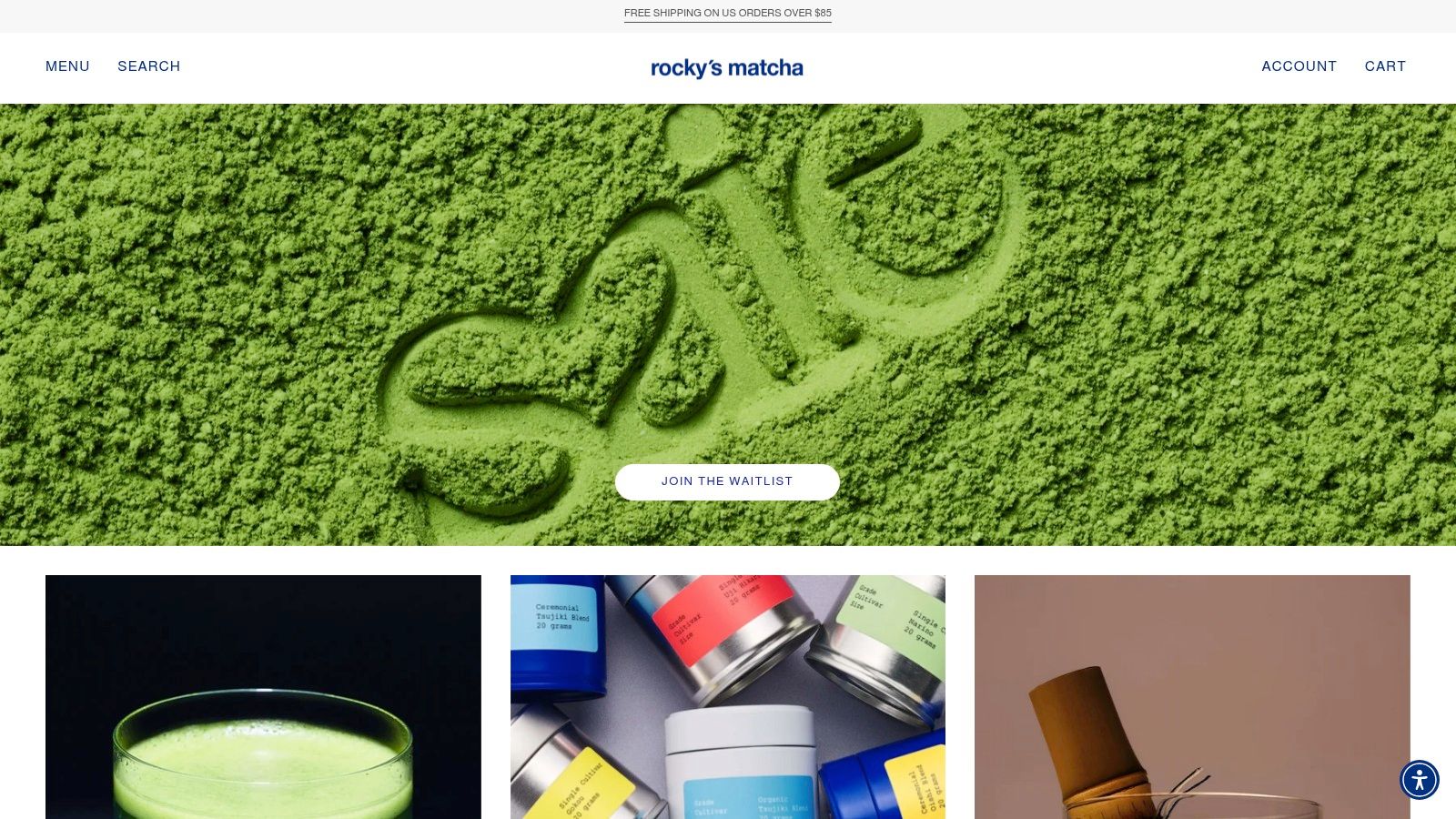
Rocky's built this blend from four named cultivars, Okumidori, Saemidori, Okuyutaka, and Tsuyuhikari, grown in Yame, Japan. The brand calls it vivid green and rich in savory flavor and recommends it for both lattes and everyday drinking. The 20g size was $36 and the 100g was $168 at research time, and the 100g page showed a seller-hosted 4.9 out of 5 from 74 reviews.
Cultivar detail is the reason to pay attention. Okumidori carries body, Saemidori leans sweet and umami, Okuyutaka brings aroma, and Tsuyuhikari rounds the edges. A four-cultivar blend is built for consistency across seasons, which is exactly what a daily latte habit needs.
Why good blends keep selling out
Demand is outrunning supply at the quality end. In 2025 matcha accounted for around 15% of Good & Proper's total revenue, and the company's matcha sales had more than doubled year over year, according to Circana-reported industry coverage. Popular blends go quiet for weeks at a time.
- Best for milk: savory and vivid enough to stay recognizable under oat milk and syrup.
- Worth the trial size: 20g at $36 covers a week of drinks before you commit to the 100g tin.
- Cost: $168 for 100g is a serious commitment, and premium positioning guarantees nothing about your palate.
- Freshness: buy the size you'll finish, not the size with the better unit price.
A $168 tin you open once a month is a worse purchase than a $36 jar you finish in three weeks.
7 of the Best Matchas Compared
No single matcha suits every cup. Use this comparison to match each pick to its strongest use, from traditional tea to event service.
| Item | Origin | Best For | Starting Price | Flavor Profile |
|---|---|---|---|---|
| The Matcha Bike | Miami, Florida; began at the University of Miami | Campus matcha and customized events | Event quotes; groups under $500 can request a matcha drop-off | Ceremonial-grade matcha with a menu that rotates by season and setting |
| Ippodo Tea, Ummon | Kyoto, Japan | Traditional preparation and experienced matcha drinkers | $81 for 40g | Deeply green, aromatic, rich umami |
| Kettl, Hakusan | Ogura, Uji, Japan | Traditional tea, iced matcha, and lattes | $45 for 40g; sold out when checked | Toasted sesame, spring herbs, and nori |
| Naoki Matcha, Superior Blend | Uji, Kyoto, Japan | Everyday tea and lattes, especially for newer drinkers | $24.99 | Mellow and low in bitterness |
| Encha, Ceremonial Grade Matcha | Uji, Japan | Matcha prepared with water | $19.99 for 30g; sold out when checked | Bright, grassy green |
| Matchaful, Hikari Single Origin | Hattori Tea Farm, Shizuoka, Japan | Smooth matcha and larger-volume buyers | $42 for 30g | Creamy, with walnut, lemon, and butter notes |
| Rocky's Matcha, Ceremonial Blend | Yame, Japan | Traditional drinking and lattes | $36 for 20g | Vivid green and savory |
For an event, The Matcha Bike offers a different kind of comparison: drinks are made with ceremonial-grade matcha and whisked to order, with a custom menu and professional baristas for full-service setups. Smaller group budgets can request a matcha drop-off.
Your Next Sip: Pick by Purpose, Not by Price
Choose matcha by how you plan to drink it. For straight tea and deep umami, pick Ippodo Ummon and whisk it with water at 170 to 180°F. Kettl Hakusan suits tea, iced matcha, and lattes; Naoki Superior Blend is an approachable first tin. Choose Encha Ceremonial for an organic option on a budget, Matchaful Hikari for single-origin matcha, and Rocky's Ceremonial Blend for a cultivar-forward latte.
Price alone won't tell you which one fits. Classic-grade matcha made up roughly 57.3% of global matcha revenue in 2025, according to Grand View Research's matcha market analysis. Zappi's analysis of matcha pricing puts the average matcha latte at $5.84 in 2024 and about $6.15 in the later period it covers. If you drink matcha often, a bag at home can cost less than repeated café orders.
Preparation changes the result. Sift the powder, use water below boiling, and whisk until the surface turns foamy. Seal the tin after each use and finish it within weeks of opening. Hot water and stale powder can make a cup taste bitter.
For a live example of quality preparation, The Matcha Bike serves ceremonial-grade matcha whisked to order at the University of Miami and at events across Miami. Its seasonal menu changes, but the quality-first standard stays the same.
Choose for your usual drink, buy the smallest size available, and prepare it carefully. A good matcha is the one that suits your cup, not the one with the highest price.
---
Ceremonial-grade matcha whisked to order is the standard The Matcha Bike brings to campus and events across Miami. Event service includes professional baristas, a self-contained bar suited to indoor or outdoor venues, and custom menus with branded cans and cups. Visit The Matcha Bike for weekly campus location updates or to inquire about event service.