
The classroom is quiet, the questions are printed, and a student is waiting beside the microphone. Somewhere overhead, an astronaut may soon answer. The audience sees a brief conversation, but the organizers have already coordinated equipment, permissions, rehearsals, and a schedule that can't slide because someone arrived late.
That's what makes special event stations useful planning examples. A temporary radio operation gives people a reason to gather at a particular time, listen closely, and participate. The attraction might be a spacecraft, a remote location, a historic building, or a familiar campus celebrating something important.
For a club, school, or community host, the practical questions are similar. Can visitors find the station? Can operators deliver the promised experience? What happens if propagation, weather, equipment, or access changes?
These examples offer seven ways to reach real audiences, not a confirmed activation calendar. Before planning around any station, verify its current operating arrangements. Some are permanent facilities with occasional special operations; others are event formats that clubs can adapt. Their strongest lessons concern scheduling, access, and making a short operating window meaningful.
## Table of Contents - 1. NA1SS (ARISS) Amateur Radio on the International Space Station - Rehearse the handoff, not just the questions - 2. KC4AAA at Amundsen-Scott South Pole Station - Make limited access manageable - 3. W1AW at ARRL Headquarters - Publish a schedule people can actually use - 4. ARRL Field Day Special Event Stations - Design separate paths for operating and visiting - 5. International Lighthouse & Lightship Weekend Special Event Stations - Fit the station to the site - 6. Themed Anniversary and Commemorative Special Event Callsigns - Design the confirmation before opening the log - 7. Campus and Community Special Event Station Activations - Measure participation without complicating it - How the seven special event stations compare on schedule, participation, and constraints - Choosing the Right Special Event Station for Your Next Activation - A practical pre-activation checklist
1. NA1SS (ARISS) Amateur Radio on the International Space Station
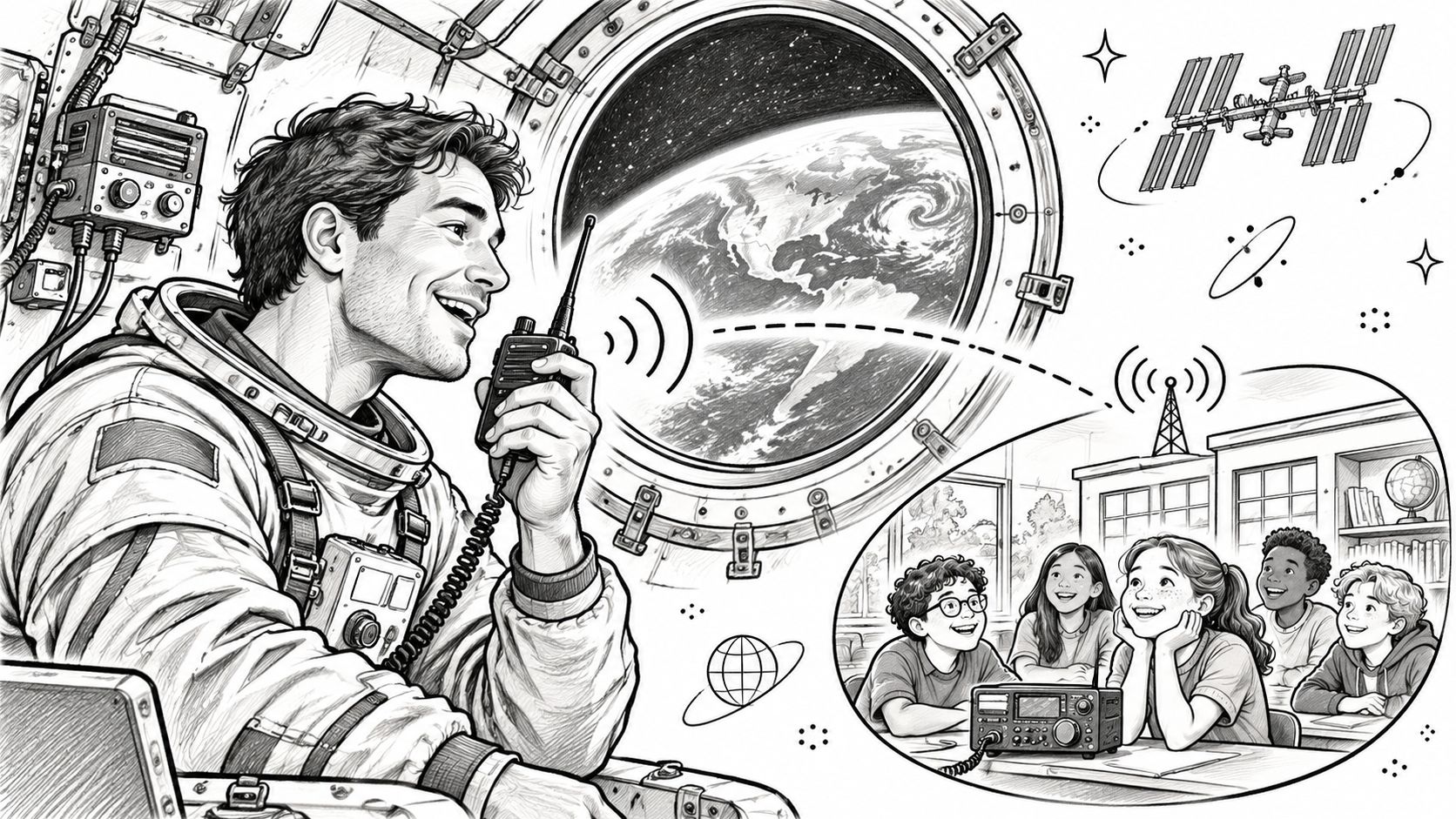
NA1SS, aboard the International Space Station, connects amateur radio with educational outreach through Amateur Radio on the International Space Station, or ARISS. For a school audience, the attraction is immediate: students can ask questions of someone working in orbit.
The operating challenge is less forgiving than an ordinary club demonstration. Organizers must work within an assigned contact opportunity, and the audience needs to be ready before it begins. Don't build the program around an assumed contact until the arrangements are confirmed.
Rehearse the handoff, not just the questions
Say a school plans an auditorium gathering. Students should practice approaching the microphone, reading clearly, and yielding promptly to the next speaker. The radio team should rehearse audio routing and confirm that the audience can hear without creating feedback.
- Prepare questions: Put them in a clear order, with pronunciation notes where useful.
- Separate roles: Give radio operation, student coordination, and audience hosting to different people.
- Prepare an alternative: Have an explanation of orbital communication ready if the live exchange can't proceed.
A public-address system can make the contact accessible to a larger audience, but it also adds another audio path to test. Keep unnecessary equipment out of the operating chain.
Planning takeaway: Build the school program around a confirmed contact arrangement, rehearse the microphone handoff, and prepare a worthwhile learning activity that doesn't depend on hearing an astronaut.
2. KC4AAA at Amundsen-Scott South Pole Station
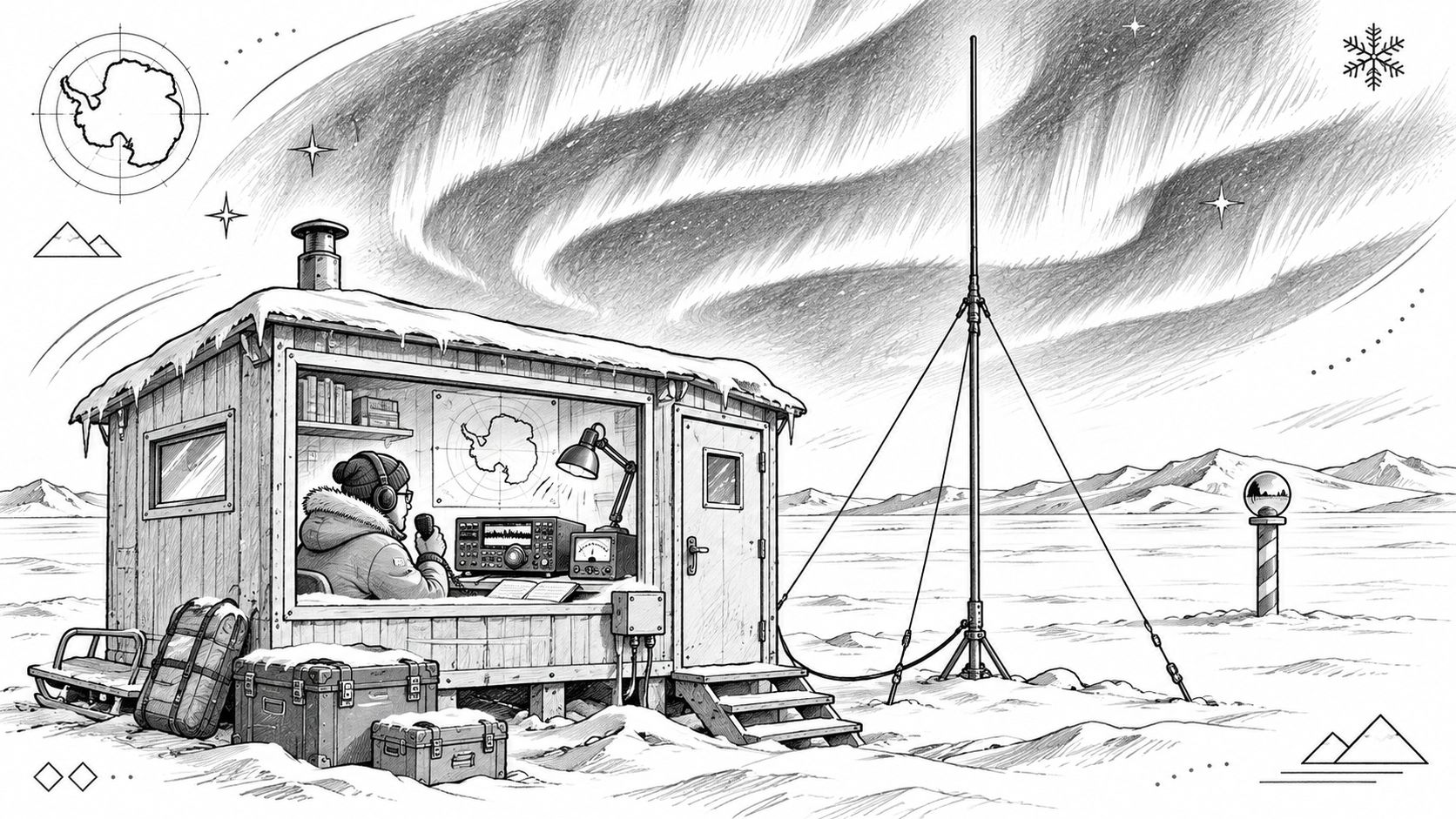
A remote station can attract attention without elaborate promotion. KC4AAA, associated with Amundsen-Scott South Pole Station, illustrates the appeal of a location that operators can't casually visit or expect to hear whenever they tune in.
Scarcity also creates a planning problem. Interested callers may mistake a tentative opportunity for a guaranteed schedule. Work responsibilities, available operators, equipment, and radio conditions must take priority over outside expectations.
For a club planning a remote commemorative activation, the useful distinction is between announced availability and promised contacts. You can publish your intended operating window. You can't promise that every listener will hear you.
Make limited access manageable
Consider a club operating from an isolated research outpost with the host's permission. The announcement should explain that operation is subject to site duties and conditions. A designated information page should carry updates so callers aren't relying on copied, outdated messages.
At the radio, keep exchanges concise when demand is high. Give the callsign clearly, explain how callers should respond, and avoid letting an informal conversation consume the entire opening.
A scarce location doesn't justify rushed or careless operating. Accurate logging and clear identification matter more when a disappointed caller may not get another opportunity.
Scarcity is a reason to communicate more carefully, not a reason to promise more activity.
Planning takeaway: Publish realistic operating intentions, identify where changes will appear, and let the host site's work determine the schedule. Build anticipation around access without treating access as guaranteed.
3. W1AW at ARRL Headquarters
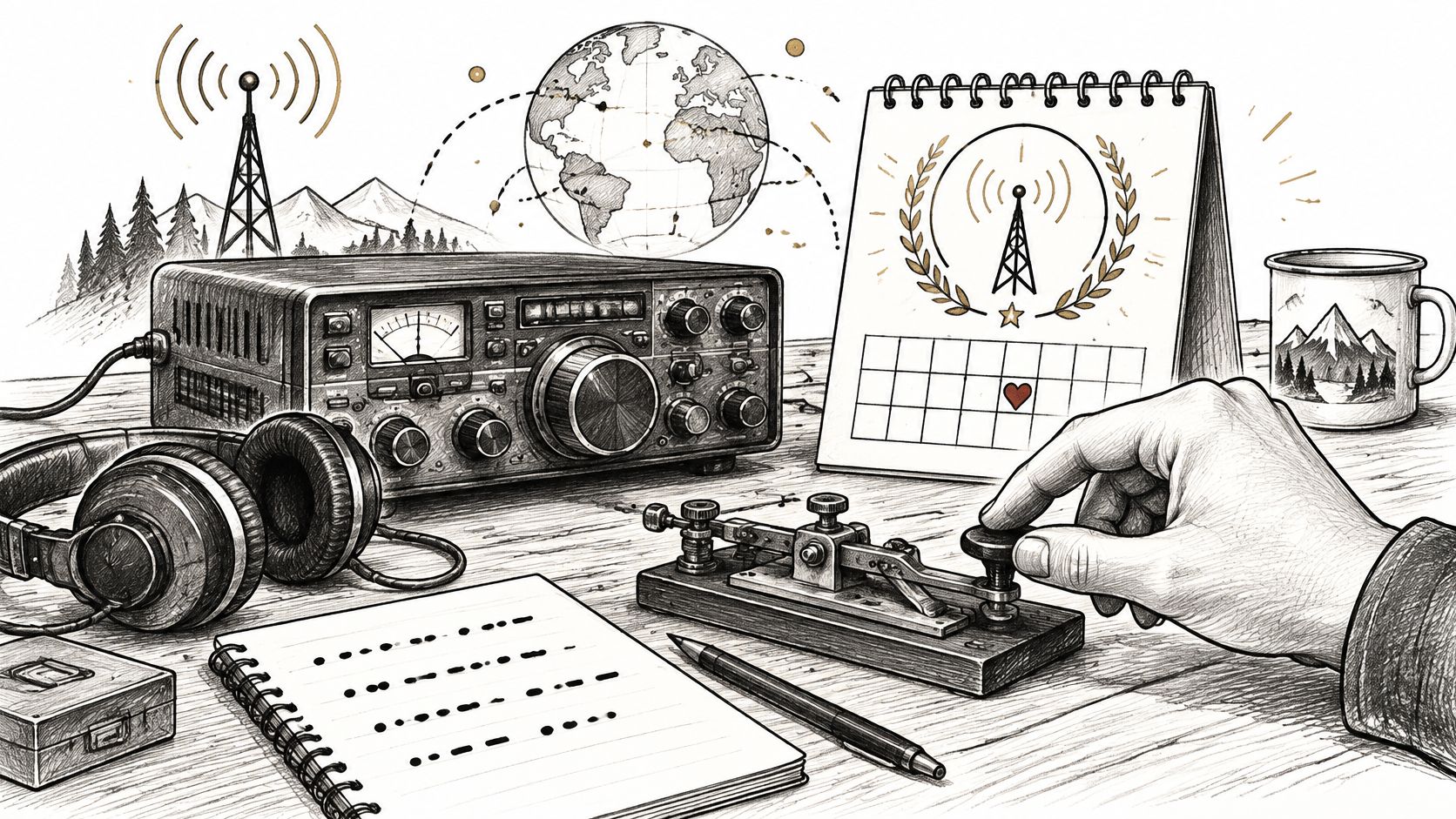
W1AW, the ARRL headquarters station in Newington, Connecticut, offers a different lesson: predictability can matter as much as rarity. Its code practice and bulletin transmissions give listeners a reason to return, while commemorative operations add an occasion to that established identity.
W1AW is a permanent station, not a temporary special-event callsign. That distinction matters when a club borrows the model. A recurring listening service and an anniversary activation have different staffing needs and different promises to their audiences.
A local club might offer regular Morse practice, then organize a commemorative operation around its history. The practice sessions build familiarity. The special operation gives members and visitors a reason to participate together.
Publish a schedule people can actually use
A schedule needs more than a date and a band name. State the time reference, intended mode, operating arrangements, and where listeners should check for changes. Distinguish transmissions intended for listening from periods when operators will accept calls.
- For newcomers: Explain what they'll hear and whether they should transmit.
- For operators: Provide the exchange and confirmation arrangements.
- For volunteers: Assign coverage before announcing availability.
The trade-off is commitment. A recurring schedule is useful only if the club can support it without exhausting its dependable operators. A modest program delivered consistently is better than an ambitious calendar that repeatedly falls silent.
Planning takeaway: Establish a manageable operating routine, then use commemorative occasions to add interest. Make it unmistakable whether visitors are attending a demonstration, listening to a transmission, or attempting a contact.
4. ARRL Field Day Special Event Stations
Field Day puts the temporary station itself on display. Operators assemble radios, antennas, shelter, and power arrangements outside their usual stations, while visitors can see what amateur radio involves.
It's also an easy setting in which to confuse operational achievement with public engagement. A busy logging screen doesn't tell a visitor why the station exists. Clubs need someone who can step away from the contact rhythm and explain what's happening.
This video provides an additional look at the Field Day setting.
Design separate paths for operating and visiting
Say a club sets up in a public park. Put the welcome point where pedestrians naturally approach, not behind the antenna supports. Keep feed lines and power cables out of walking routes, and mark any unavoidable crossings clearly.
The station should have distinct responsibilities:
- Operating team: Handles contacts, logging, and station supervision.
- Public host: Explains the equipment and welcomes questions.
- Site coordinator: Watches weather, power, access, and teardown arrangements.
A compact setup can reduce carrying and assembly work, but don't shrink the site until operators and visitors compete for the same chair. Allow enough room for safe movement and an accessible viewing position.
Field Day can demonstrate portable operating techniques without proving that every emergency scenario has been solved. Explain what the equipment is doing rather than making broad readiness claims.
Planning takeaway: Plan the visitor route as deliberately as the antenna layout. Give public engagement its own volunteer, and publish visiting hours that match actual staffing.
5. International Lighthouse & Lightship Weekend Special Event Stations
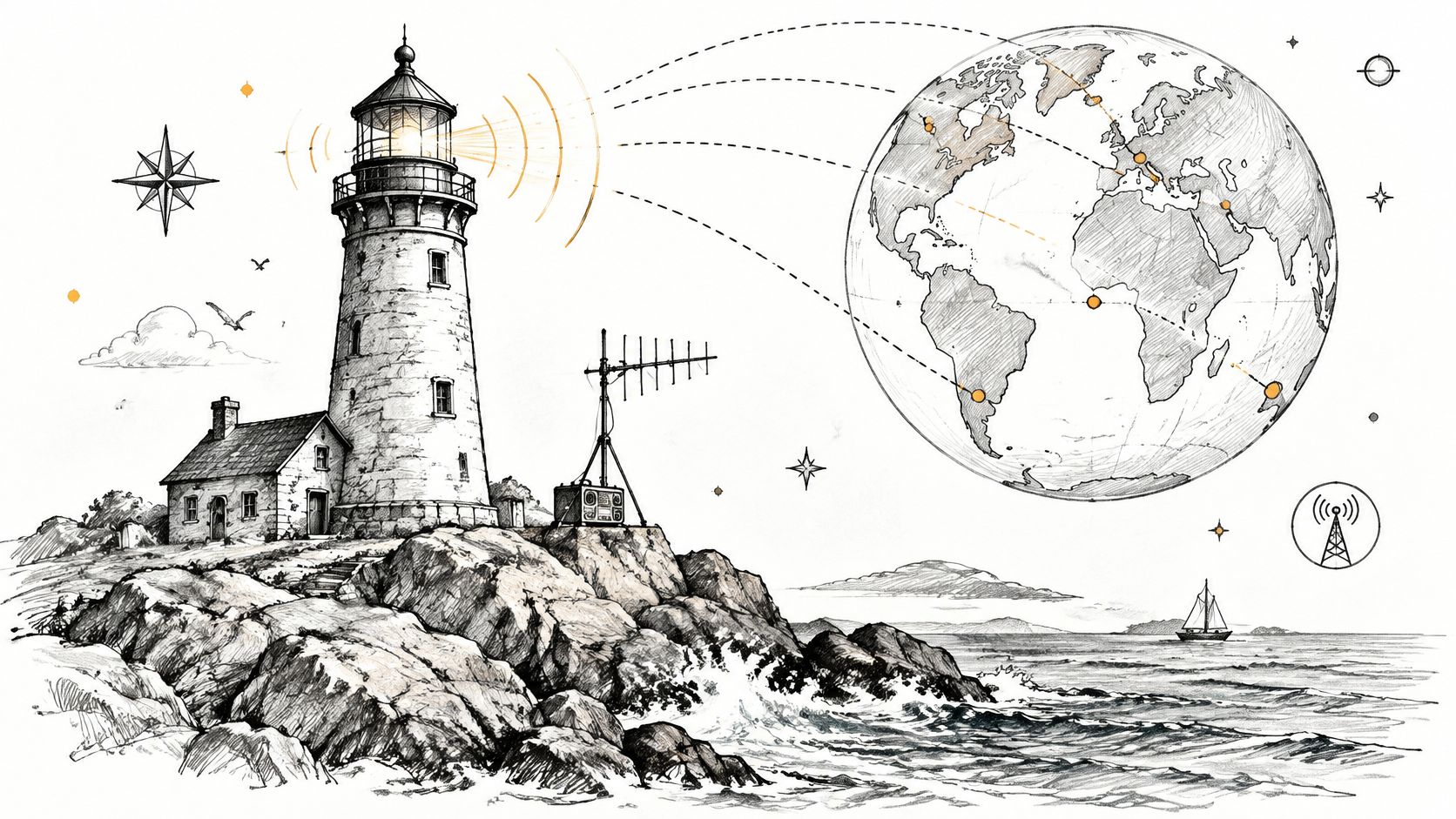
A lighthouse gives a radio activation a visible identity before anyone hears the callsign. International Lighthouse & Lightship Weekend, or ILLW, brings that connection into focus through operations associated with maritime sites.
The location is both the attraction and the constraint. Historic buildings may have restricted access, limited electrical arrangements, exposed grounds, and rules against attaching equipment to the structure. Permission to visit isn't permission to erect an antenna.
Fit the station to the site
Consider a club invited to operate beside a lighthouse visitor center. The first site discussion should cover antenna placement, public paths, equipment security, accessible entry, and opening and closing responsibilities. Establish where the station may operate before choosing an antenna that requires more space.
An information display can explain the lighthouse's history while an operator handles contacts. Keep that display readable without requiring visitors to enter the operating position.
For a Miami host coordinating radio alongside other activities, a separate event-planning inquiry can help establish hospitality arrangements without treating them as part of the radio operator's job.
Power deserves an explicit agreement. Don't assume an available outlet is approved for your equipment, or that an extension lead may cross a public doorway.
The strongest identity comes from the site itself. Use its correct name, explain its significance, and secure permission for photographs or branding where needed.
Planning takeaway: Obtain site-specific approval for the antenna, power, visitor route, and operating area. Choose equipment that respects the lighthouse rather than expecting the lighthouse to accommodate your preferred station.
6. Themed Anniversary and Commemorative Special Event Callsigns
A commemorative callsign gives an ordinary station a temporary public identity. The occasion might be a club anniversary, a local heritage celebration, or an organizational milestone.
The identifier alone won't explain the event. Operators need a short, consistent account of what they're commemorating, plus clear confirmation instructions. Callsign arrangements vary by licensing jurisdiction, so confirm the applicable process before printing signs or announcing the identifier.
A useful worked example is a radio club supporting a town heritage celebration. The station can connect visitors with local history while giving distant operators a reason to make contact. The radio activity should support the commemoration, not bury it beneath unexplained abbreviations.
Design the confirmation before opening the log
A QSL card, the traditional written confirmation of a contact, can carry the story beyond the operating site. An electronic certificate can serve a similar commemorative purpose, provided the process is clear and manageable.
- Define eligibility: State what constitutes a qualifying contact.
- Choose a format: Explain whether confirmation is electronic, printed, or available by request.
- Assign fulfillment: Name the volunteer responsible for handling requests after operation ends.
For community collaboration, use the organizer's chosen contact channel. A community connection form is separate from the radio log and shouldn't become a requirement for receiving a contact confirmation.
Keep promotional consent separate, too. Someone requesting a QSL hasn't necessarily agreed to receive unrelated marketing.
Planning takeaway: Confirm the callsign arrangements early, prepare a plain-language explanation of the occasion, and settle confirmation responsibilities before transmitting. The activation isn't finished until its promised follow-up is complete.
7. Campus and Community Special Event Station Activations
A campus anniversary can draw visitors who have never attended a radio club meeting. Place the station where people can stop safely, watch a demonstration, and ask questions. A busy walkway offers visibility but may leave little room for antennas. A quieter courtyard gives operators more space but needs clear signs and directions.
For a university club activation, coordinate with the event office and choose a supervised demonstration position. Explain what visitors can try under the control operator's direction. Keep the welcome area separate from operating equipment so conversation does not disrupt contacts.
Measure participation without complicating it
Contact totals track radio activity, not the visitor experience. Note which demonstrations prompt questions, whether signs are easy to follow, and when volunteers become overloaded.
A corporate-events benchmark reported that 93% of surveyed organizations used attendee satisfaction as a success metric, according to BizBash's corporate-events benchmarking report. That figure is not a campus-radio benchmark. The practical lesson is to ask visitors whether the demonstration made sense, rather than judging success by the log alone.
Give interested visitors an optional way to stay involved, such as the club's contact details or a community participation form. Explain who receives the information and what response to expect.
A recurring campus station only helps if visitors can find it. Publish the location, access instructions, and any changes through a channel the campus audience already uses.
Planning takeaway: Match the station location to foot traffic, approvals, and safe operating space. Staff a welcoming demonstration point, then offer visitors a clear next step that does not depend on making a radio contact.
How the seven special event stations compare on schedule, participation, and constraints
| Item | Schedule | Who Takes Part | Main Constraint |
|---|---|---|---|
| NA1SS (ARISS), Amateur Radio on the International Space Station | Scheduled, limited-time contact windows | ISS crew, schools, museums, and community audiences | Availability is limited and selection is competitive |
| KC4AAA, Amundsen-Scott South Pole Station | Occasional, short, hard-to-predict operating windows | South Pole station operators and radio operators worldwide | Remote logistics and station conditions |
| W1AW, ARRL Headquarters Special Event Station | Regular transmissions; occasional announced special activations | ARRL operators and radio enthusiasts | Special activations are infrequent |
| ARRL Field Day Special Event Stations | Annual event on the last full weekend of June | Amateur radio clubs, operators, and public visitors | Requires equipment, power, volunteers, and suitable conditions |
| International Lighthouse & Lightship Weekend (ILLW) Special Event Stations | Annual weekend, typically in August | Radio operators, clubs, lighthouse groups, and visitors | Site permissions and outdoor operating conditions |
| Themed Anniversary and Commemorative Special Event Callsigns | Limited activation period for a specific occasion | Clubs, organizations, and participating radio operators | Regulatory approval and advance planning |
| Campus and Community Special Event Station Activations | Scheduled around campus or community events | Student and volunteer operators, universities, and community groups | Depends on volunteer availability and local calendars |
Choosing the Right Special Event Station for Your Next Activation
The strongest special event stations have an identity people can explain, a schedule they can find, and an operating plan the volunteers can deliver. Their organizers resolve site access, power, antenna placement, and callsign arrangements before those decisions become public promises.
Start with the intended audience. A school contact needs rehearsal and intelligible audio. A remote operation needs realistic availability notices. A public demonstration needs safe access and someone who can welcome a visitor while the radio operator stays focused.
Choose the format your team can sustain, not the one that sounds most impressive. A straightforward local activation with clear signs and dependable staffing can serve its audience better than an ambitious operation held together by exhausted volunteers.
A practical pre-activation checklist
- Define the purpose: Write a plain-language sentence explaining the occasion and why someone should participate.
- Confirm authority: Identify the responsible licensee, control operators, site representative, and applicable callsign process.
- Walk the site: Check antenna clearances, cable routes, public access, shelter, electrical arrangements, and equipment security.
- Publish usable details: Give the location, time reference, intended operating arrangements, accessibility information, and update channel.
- Rehearse the experience: Test audio, logging, operator handoffs, visitor explanations, and the alternative activity.
- Plan the close: Assign teardown, waste removal, log handling, confirmation requests, and a brief volunteer review.
Keep the weather decision separate from enthusiasm for the event. Name who can suspend operation, where visitors should go, and how an interruption will be announced. Don't leave that discussion until the shelter is moving or water is reaching the equipment.
Finally, decide what a worthwhile outcome looks like before opening the station. It might be students understanding a live contact, visitors learning how radio works, or a commemorative log completed accurately. Count what matters, explain what happened, and leave the site ready to welcome you back.
---
The Matcha Bike offers mobile matcha service for Miami events, with professional baristas, custom menus, branded cups or cans, and a compact, self-contained setup. If your campus or community radio activation includes a hospitality area, visit The Matcha Bike to share your location and event plans so we can shape the drink experience around the gathering.