You're standing at a counter or a campus pop-up, watching two green drinks go out side by side. They look almost the same. Same color, same cup, same swirl of foam on top. You pick yours up and wonder, quite reasonably, how many calories you're about to drink.
That question doesn't have one honest answer, and that's not evasive. It's the whole point. Matcha latte calories depend on what went into your specific cup, and most of that total has very little to do with the matcha itself.
## Table of Contents - Why Two Matcha Lattes Can Differ Sharply - Two Misconceptions Worth Dropping - Breaking Down the Matcha Latte Calorie Formula - Reading the Ledger Line by Line - Grade Is Not a Calorie Category - Comparing Milk Choices and Pour Sizes - Whole Milk Portion Benchmark - Two Ways to Lower the Milk Line - Why Cup Size Misleads You - Measuring Sugar Syrup and Topping Calories - Added Sugar Versus Milk Sugar - Toppings as Their Own Decision - Calculating Calories in Your Exact Recipe - Collect Your Five Variables - Work Through a Whole Milk Example - Keep a Reusable Personal Formula - Reading On-Menu Matcha Latte Examples - What to Check on Any Panel - Reducing Calories for Campus and Custom Events - Levers That Actually Move the Total - Making It Work at Events
Why Two Matcha Lattes Can Differ Sharply
Two friends order matcha lattes at the same stand on the same morning. One asks for hers unsweetened. The other wants honey and whole milk, the way the default recipe is built. The barista whisks the same green powder for both, pours them into identical cups, and hands them over. If you set them side by side, you'd struggle to tell them apart.
Nutritionally, they're different drinks. The green color tells you matcha is present. It tells you nothing about milk volume, sweetener, or serving size, and those three variables decide most of the calorie total.
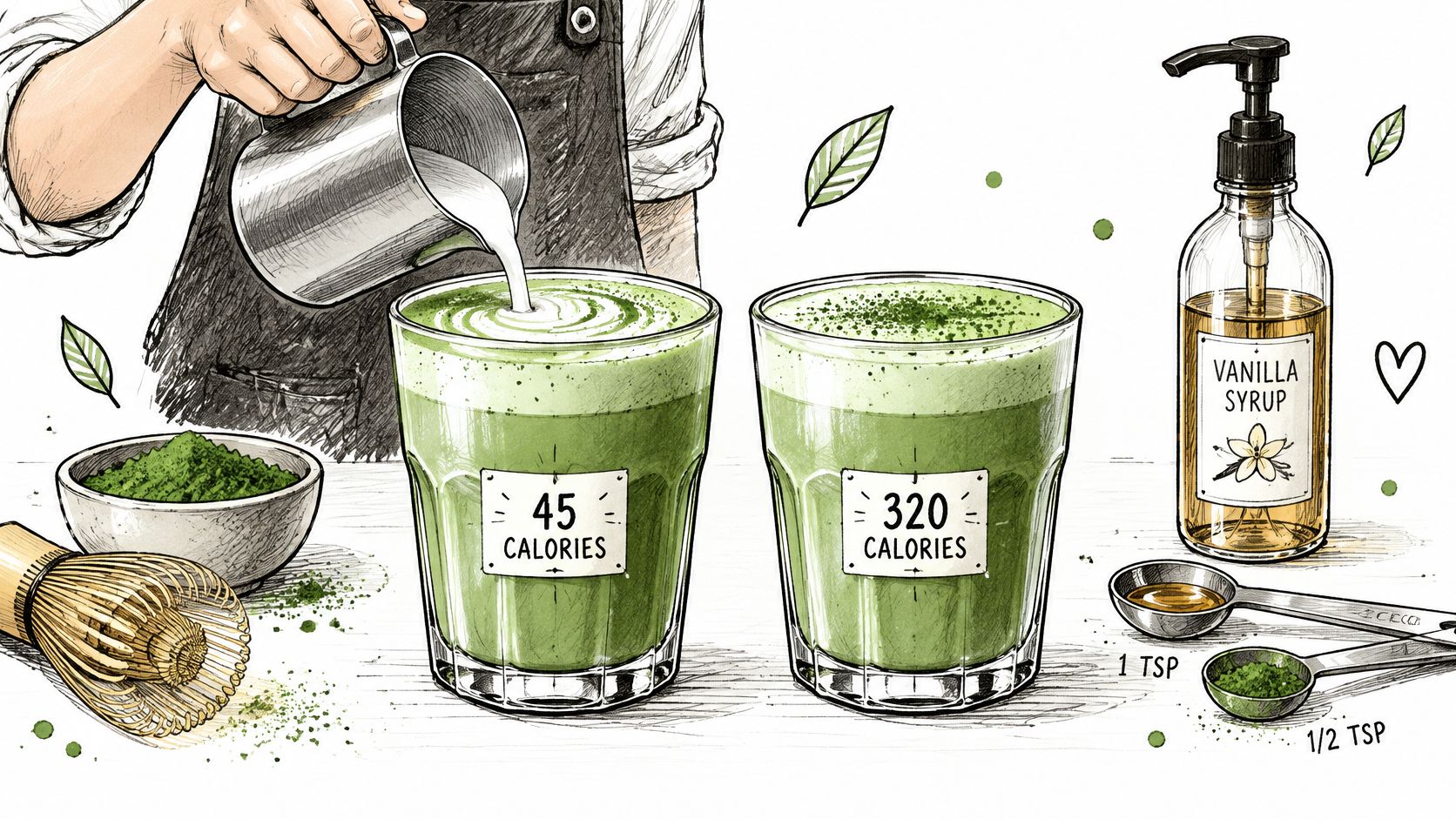
The powder itself is a minor player. A typical 2-gram serving of plain matcha powder contributes approximately 3 to 10 calories, while a whole-milk and honey latte can gain roughly 150 to 200 calories from those additions alone. Whisk that same powder with water and you've got a nearly calorie-free tea. Build a latte around it and the additions take over.
Two Misconceptions Worth Dropping
People tend to land on one of two opposite assumptions, and both mislead.
- Matcha is light, so the latte is light: The powder is light. The milk and sweetener poured over it may not be, so the powder's low total doesn't transfer automatically to the finished drink.
- Lattes are heavy, so every matcha latte is heavy: A latte built with a measured milk portion and no added sweetener can stay relatively light, even though it's still a milk-based drink.
A ceremonial-grade label describes the quality of the matcha. It doesn't answer the calorie question, because the same high-quality powder can sit in a lean drink or a rich one.
Once you stop asking what a matcha latte contains in the abstract and start asking what yours contains, the confusion clears up fast. You're no longer hunting for a single number attached to a drink name. You're reading a recipe.
Breaking Down the Matcha Latte Calorie Formula
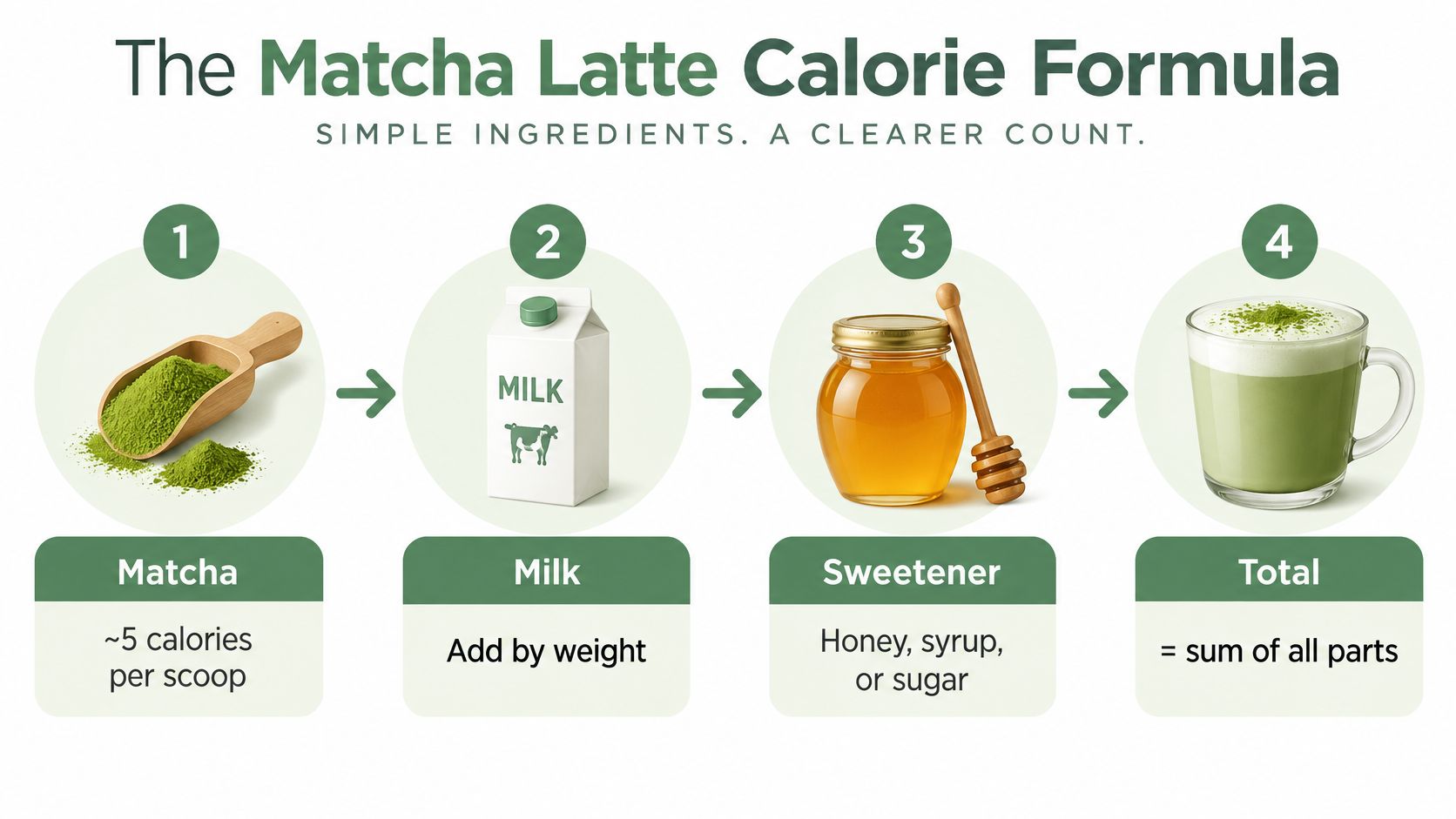
Think of your drink as a ledger. Every ingredient gets its own line, and the total at the bottom is just the sum of those lines. Nobody writes a receipt as one mysterious number with no items listed, and your latte shouldn't work that way either.
The ledger has four entries, in the order you'd build the drink. First comes the matcha. Second, the milk. Third, any sweetener. Fourth, anything layered on top, like cream or extra foam used as a topping rather than part of the pour.
Reading the Ledger Line by Line
Matcha powder opens the ledger with the smallest entry. As noted in the earlier section, a measured serving adds only a small amount of energy. It brings the flavor, the caffeine, and the tea character, but it doesn't set the calorie range.
Milk is where the ledger grows. It's the largest ingredient by weight in a conventional latte, so it usually contributes the biggest share of the total. That's a portion-size issue, not a good-or-bad ingredient issue.
Sweetener comes next, and it's the most variable line. It can be zero if you order unsweetened, modest if someone adds a light touch of honey, or substantial if a flavored syrup is pumped in freely. Two drinks with identical milk can still separate here.
Toppings close the ledger. Cream and similar additions are separate inputs, not part of the base recipe, so they belong on their own line where you can see them and decide about them.
Grade Is Not a Calorie Category
You'll see matcha described as ceremonial grade or culinary grade, and readers sometimes assume one must be leaner. Grade language speaks to quality, flavor, and intended preparation. It isn't evidence of a guaranteed calorie difference in your cup.
Practical rule: Judge the recipe, not the grade and not the color. If you can't name the milk amount and the sweetener amount, you can't estimate the drink yet.
This framing changes what you pay attention to at the counter. Instead of memorizing a number for "matcha latte," you learn which line of the ledger to question. Usually it's the second one.
Comparing Milk Choices and Pour Sizes
Milk deserves the closest look because there's so much of it in the cup. A scoop of powder weighs a couple of grams. The liquid base weighs a couple of hundred. When one ingredient outweighs another by that much, it drives the math.
Whole milk gives us a clean, documented benchmark. Whole milk provides approximately 61 kcal per 100 grams, so 200 to 250 grams contributes roughly 122 to 153 calories before matcha, syrup, or toppings enter the picture. That same portion carries naturally occurring milk sugar and fat along with the energy.
Whole Milk Portion Benchmark
| Whole Milk Amount | Approximate Calories | Naturally Occurring Milk Sugar | Fat |
|---|---|---|---|
| 200 grams | 122 calories | Approximately 10 grams | Approximately 6.4 grams |
| 250 grams | 153 calories | Approximately 13 grams | Approximately 8.1 grams |
Read the table as a starting line, not a finished drink. Matcha, sweetener, and toppings still need their own ledger entries on top of these figures.
Two Ways to Lower the Milk Line
You can shrink this entry in two distinct ways, and they feel different in the cup.
- Reduce the milk volume: Less liquid mass means fewer calories, and the drink gets smaller or more concentrated in matcha flavor.
- Choose a lower-fat milk: The pour stays the same size while the energy density of each gram drops, so the cup looks and feels unchanged.
Plant-based options like oat or almond milk fit into this same framework, but there's no single honest number for them. Formulations differ between products, and sweetened versions differ from unsweetened ones. The carton in front of you is the source that counts, so read its label per 100 grams and run the same multiplication you'd run for whole milk.
Why Cup Size Misleads You
A cup's printed volume isn't the same as the milk it holds. Ice takes up space in an iced latte, displacing liquid. Foam adds height without adding much mass. Two drinks in identical cups can contain noticeably different amounts of actual milk.
That's why a measured portion or a standard fill line beats cup size as a basis for estimating calories. If you're making lattes at home, weighing the milk once or twice teaches your eye what your usual pour really is. If you're ordering out, asking how the drink is built tells you more than the size name on the menu board.
Measuring Sugar Syrup and Topping Calories
Sweetness is the second major layer, and it's where drinks that share the same milk pull apart. The good news is that sugar math is simple, and once you know it, sweetener stops being a mystery ingredient.
Start with the conversion shown in the comparison below, then we will apply it to real portions.
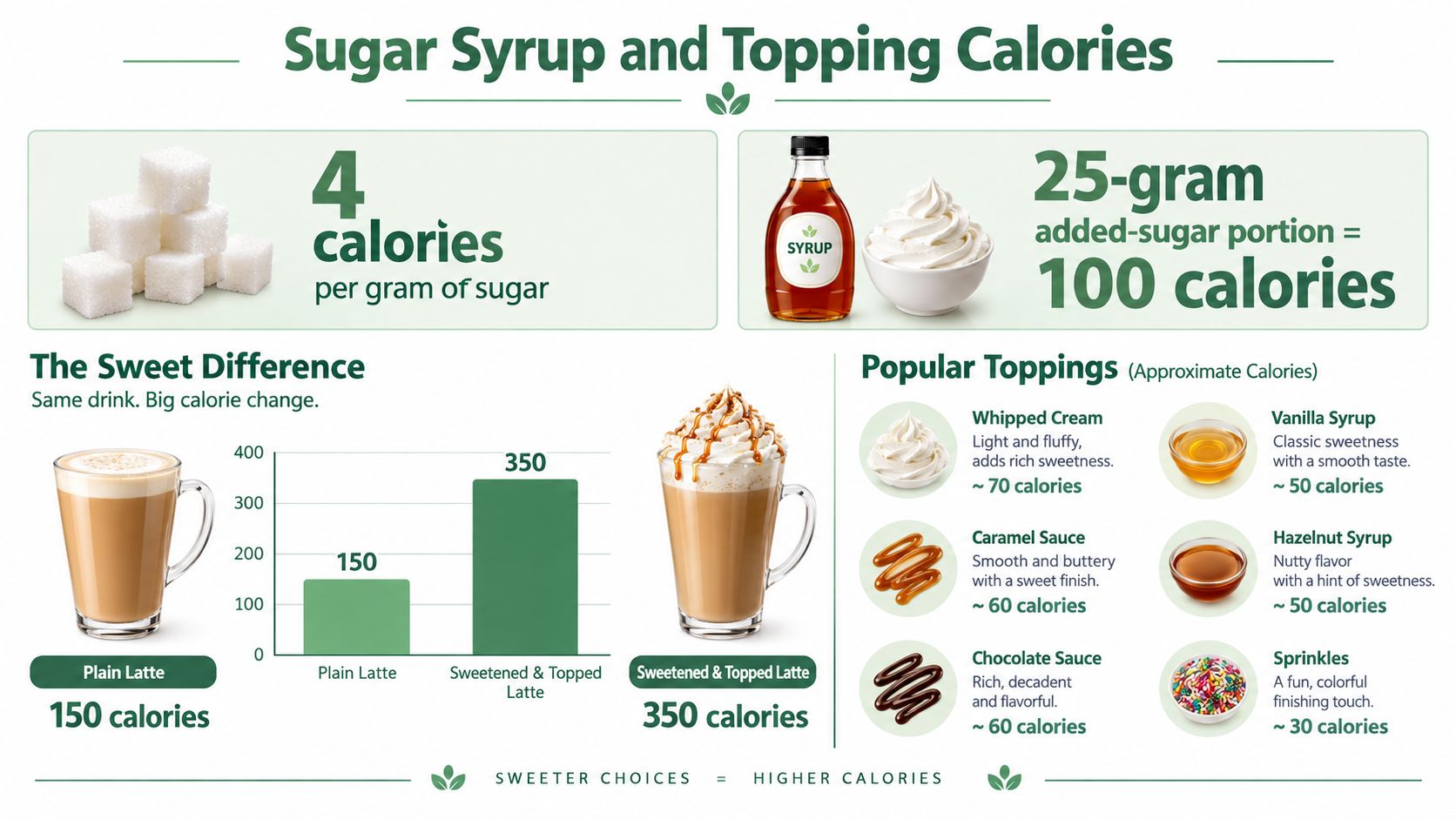
Sugar supplies approximately 4 calories per gram. So a drink with 25 grams of added sugar carries about 100 calories from sugar alone, and one with 40 grams carries about 160 calories before milk or matcha count at all. You don't need a calculator app for this. Multiply the grams by four and you've got the sweetener's ledger line.
Added Sugar Versus Milk Sugar
These two get tangled constantly, so let's separate them. The FDA Daily Value for added sugar is 50 grams on a 2,000-calorie diet, equivalent to fewer than 200 calories or 50 grams per day from added sugars. Added sugars include table sugar, syrups, and honey. Yes, honey counts here, even though it isn't table sugar. For comparison purposes it's a sweetener you chose to add.
The sugar naturally present in milk is a different category. An unsweetened dairy latte can contain milk sugar while containing no added sugar at all. A syrup-sweetened version, by contrast, can spend a significant share of that daily 50-gram benchmark in a single serving.
When you compare two lattes, ask about added sugar specifically. Total sugar blends the milk's natural sugar with the sweetener, and that blend hides the choice you actually control.
Toppings as Their Own Decision
Cream and other toppings sit on top of the sweetener question, nutritionally. Treat them as their own ledger line rather than folding them into the base drink. A latte can be unsweetened and still gain richness from a topping, or sweetened and free of toppings. Keeping the lines separate lets you rank recipes by sweetener type and measured amount instead of assuming every sweet-tasting matcha drink is built the same way.
The short video below offers a useful visual for how these layers come together in a finished cup.
Calculating Calories in Your Exact Recipe
Now you can estimate your own drink instead of borrowing someone else's number. You need five pieces of information, and none of them require lab equipment.
Collect Your Five Variables
- Grams of matcha: Your scoop size, which sets the small opening entry.
- Milk type and measured mass: The biggest variable, ideally weighed or poured to a fill line.
- Sweetener type and amount: Grams if you have them, or pumps and spoonfuls converted using the product label.
- Serving size: The full drink as served, accounting for ice displacement in cold versions.
- Foam and toppings: Anything added beyond the base build.
Work Through a Whole Milk Example
Take the documented benchmark from the milk section. If your latte contains 200 to 250 grams of whole milk, that line contributes roughly 122 to 153 calories. Add the matcha line on top of it. Then add your sweetener line using the 4-calories-per-gram conversion. If you skip sweetener entirely, that line is zero and the milk figure does nearly all the work.
Notice what's missing from this example. There is no invented figure for oat or almond milk, because your carton's label supplies that number. Swap in the per-100-gram value from whatever milk you use, multiply by your measured mass, and the method stays identical.
Keep a Reusable Personal Formula
Once you've run the numbers for your usual order, write the recipe down as a formula rather than a single total. Then changing one variable becomes a quick edit. Half the syrup? Adjust one line. Smaller pour? Adjust another. You'll also spot immediately which single change produces the largest reduction, and it's usually the milk portion or the sweetener, not the matcha.
When a café menu doesn't publish nutrition details, ask for measured sweetness or half-sweet preparation and note what you receive. That request turns a vague drink into a repeatable one you can estimate at home.
One caution about borrowing published figures. Published examples range from 124 calories for a 12-ounce latte with 18 grams of sugar to 220 calories for a 16-ounce commercial latte with 29 grams of sugar. Those are two specific recipes at two specific sizes. They describe those drinks, not yours, and they can't establish a universal range for every matcha latte sold.
Reading On-Menu Matcha Latte Examples
Menu boards and nutrition panels reward a specific reading habit. Don't start with the calorie number. Start with the serving size, then check the sugar, then look at the calories with those two facts in hand.
The two published examples from the previous section show why. The 12-ounce latte lists a lower total alongside 18 grams of sugar, while the 16-ounce latte lists a higher total alongside 29 grams of sugar. Size and sweetness move together here, so comparing the calorie figures without the sizes would mislead you about both drinks.
What to Check on Any Panel
- Serving size: Confirm the values describe the full drink you're holding, not a portion of it.
- Added sugars: Look for this line specifically, separate from total sugars that include milk sugar.
- Milk-based ingredients: Note whether the base is dairy or a plant-based alternative, since that shapes the largest ledger line.
- Full-drink values: Check whether toppings or default syrup are included in the stated total.
Resist the urge to reverse-engineer what's missing. If a panel doesn't state the milk type, matcha weight, or toppings, you can't reliably back those out of the calorie total. Treat published figures as examples of particular recipes, not as standards every café follows.
This is also where transparent menus earn their keep. A vendor that publishes calories and added sugar by named recipe, the way a mobile matcha service with a defined menu can do for its standard builds, gives you something sturdier than a category-wide guess. You're comparing actual drinks with known portions, which is the only comparison that was ever going to help.
Reducing Calories for Campus and Custom Events
Lowering the total doesn't require abandoning the drink or swapping out good matcha. The powder was never the problem. You're adjusting the larger ledger lines, and small measured changes there add up quickly.
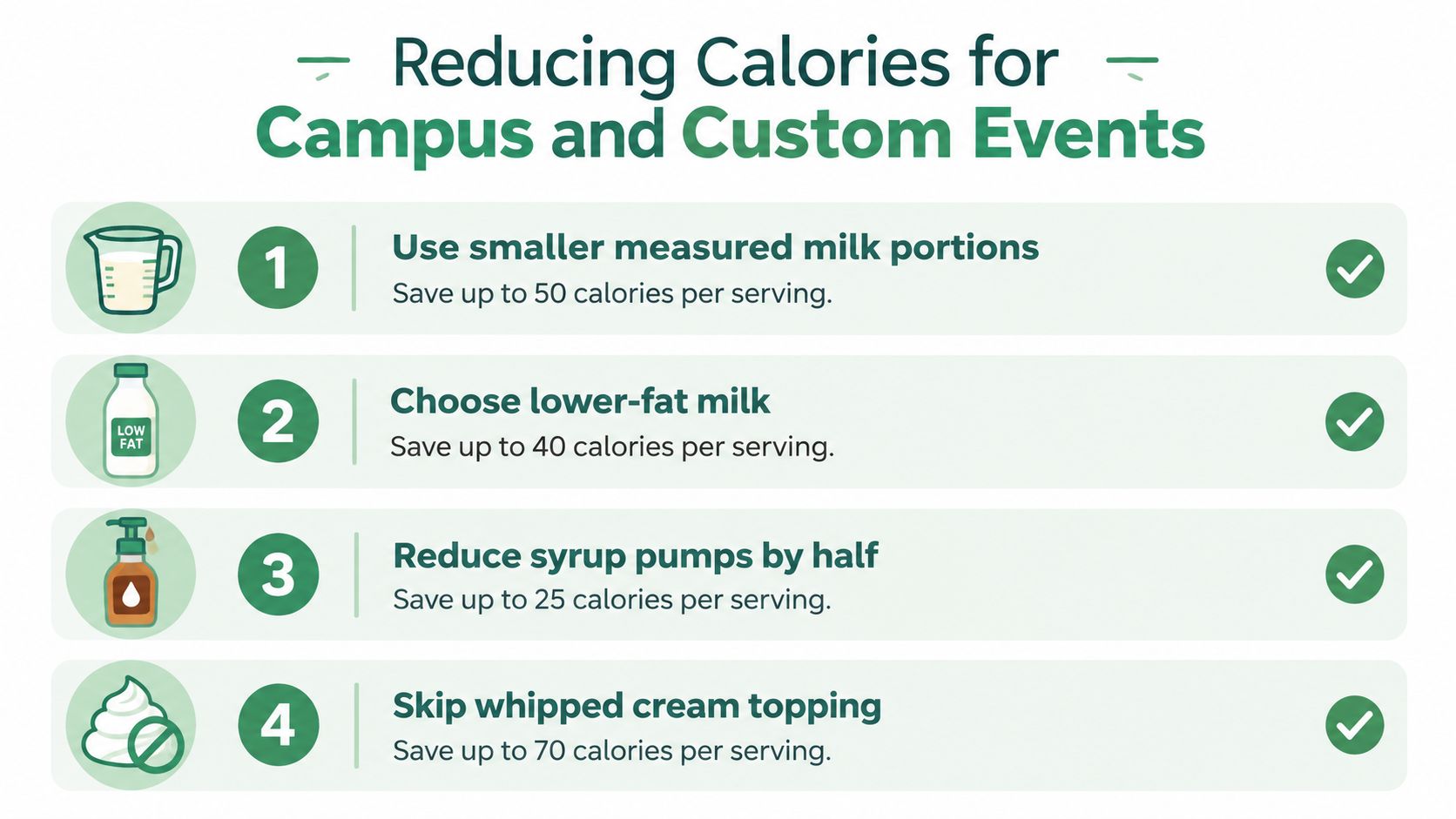
The infographic below gathers the main levers in one place before we talk through how to use them.
Levers That Actually Move the Total
- Smaller measured milk portions: A defined pour keeps the largest ledger line consistent from cup to cup.
- Lower-fat milk: Same drink volume, lower energy density, for people who don't want a smaller cup.
- Unsweetened or reduced-syrup preparation: Cutting the sweetener line is often the fastest reduction available, and half-sweet is a reasonable middle step.
- Toppings by choice, not default: Skipping or portioning cream removes a whole ledger line rather than trimming one.
Combine two or three of these and the drink becomes substantially lighter while the ceremonial-grade matcha stays exactly the same. That's the ledger logic paying off. You changed the lines that carried the weight.
Making It Work at Events
For campus service and custom events, consistency matters as much as the recipe itself. Whisk-to-order preparation with measured sweetening means the drink a guest gets at the start of an event matches the one served an hour later. A standardized process across a vendor's whole setup keeps that true even when service gets busy.
Hosts planning a menu can ask for this directly. When you arrange a custom event menu with defined recipes, you can request unsweetened and reduced-syrup options alongside the standard build, and publish calories and added sugar per named drink. Guests then choose based on real numbers instead of guessing from the drink's name.
Try this with your usual order tonight. Estimate each ledger line, find the largest one, and change only that. One repeatable modification you actually enjoy beats a perfect recipe you abandon in a week.
---
If you're planning a campus gathering, brand activation, or private event in Miami and want matcha lattes built to order with measured sweetening and clear, recipe-level options your guests can choose from confidently, visit The Matcha Bike to explore custom menus and book a pop-up. Their whisk-to-order ceremonial-grade matcha service makes it easy to offer unsweetened, reduced-syrup, and standard builds side by side, so every guest gets the version that fits.