You've whisked the matcha, the next guest is waiting, and the milk looks ready. Then the white foam disappears into the green, or a promising heart spreads before the cup reaches the counter. At a campus stop or Miami event, matcha latte art has to work through the handoff, not just look good beside the pitcher.
Start with the cup in front of you. Are you making a fast campus signature, a premium event pour, a recognizable brand mark, or an iced drink that needs to stay presentable outdoors? Those situations call for different designs and different limits on how much finishing work belongs in each order.
For The Matcha Bike's mobile, made-to-order service, the practical approach is to separate everyday patterns from showcase finishes. Keep the matcha recipe consistent, choose a design the serving cup can accommodate, and rehearse the pour at the actual station. A clean heart handed over promptly is a better service decision than an elaborate swan that leaves the next guest waiting.
These designs give baristas distinct ways to balance creativity, speed, and presentation, without making the decoration more important than the drink.
## Table of Contents - 1. Heart - Make the heart your baseline - 2. Rosetta - Protect the green between the leaves - 3. Tulip - Define the event version before service - 4. Swan - Give the showcase pour a service window - 5. Sakura (Cherry Blossom) - Keep the seasonal version restrained - 6. Stencil or Dusted Logo Design - Design for powder rather than a screen - 7. Cold Foam Ripple on Iced Matcha - Test the handoff, not just the first photograph - 7 Matcha Latte Art Designs Compared - Build a Matcha Art Service That Scales - Establish a baseline everyone can repeat - Put extra effort where guests can enjoy it
1. Heart
Best for a daily campus signature, the heart gives baristas a clear house standard without requiring an elaborate finishing routine. At a busy University of Miami counter, it's a sensible default for hot drinks when guests want a polished cup and a prompt handoff.
The design also connects with specialty-coffee history. David Schomer reported developing heart-shaped latte art in 1988, during the broader emergence of modern American latte art described in Tasting Table's account of its development. For matcha, the useful inheritance is controlled flow and contrast, rather than espresso's crema.
Make the heart your baseline
Whisk a smooth, concentrated but pourable matcha base. Start with a controlled stream that integrates milk into the drink, then bring the pitcher close to the surface and allow a white pool to expand. Lift slightly, narrow the stream, and draw through the center to form the point.
- Milk texture: Aim for glossy microfoam, not a dry mound. A practical steaming target is approximately 60, 65°C, followed by tapping and continuous swirling, according to Complete Home Barista's milk-temperature guidance.
- Pour control: Keep the cup tilted while establishing the white pool, then straighten it as you finish.
- Service decision: If the heart spreads, inspect the foam and base before changing the drawing motion.
The comparison below helps distinguish the heart's broad shape from the rosetta's finer layers.
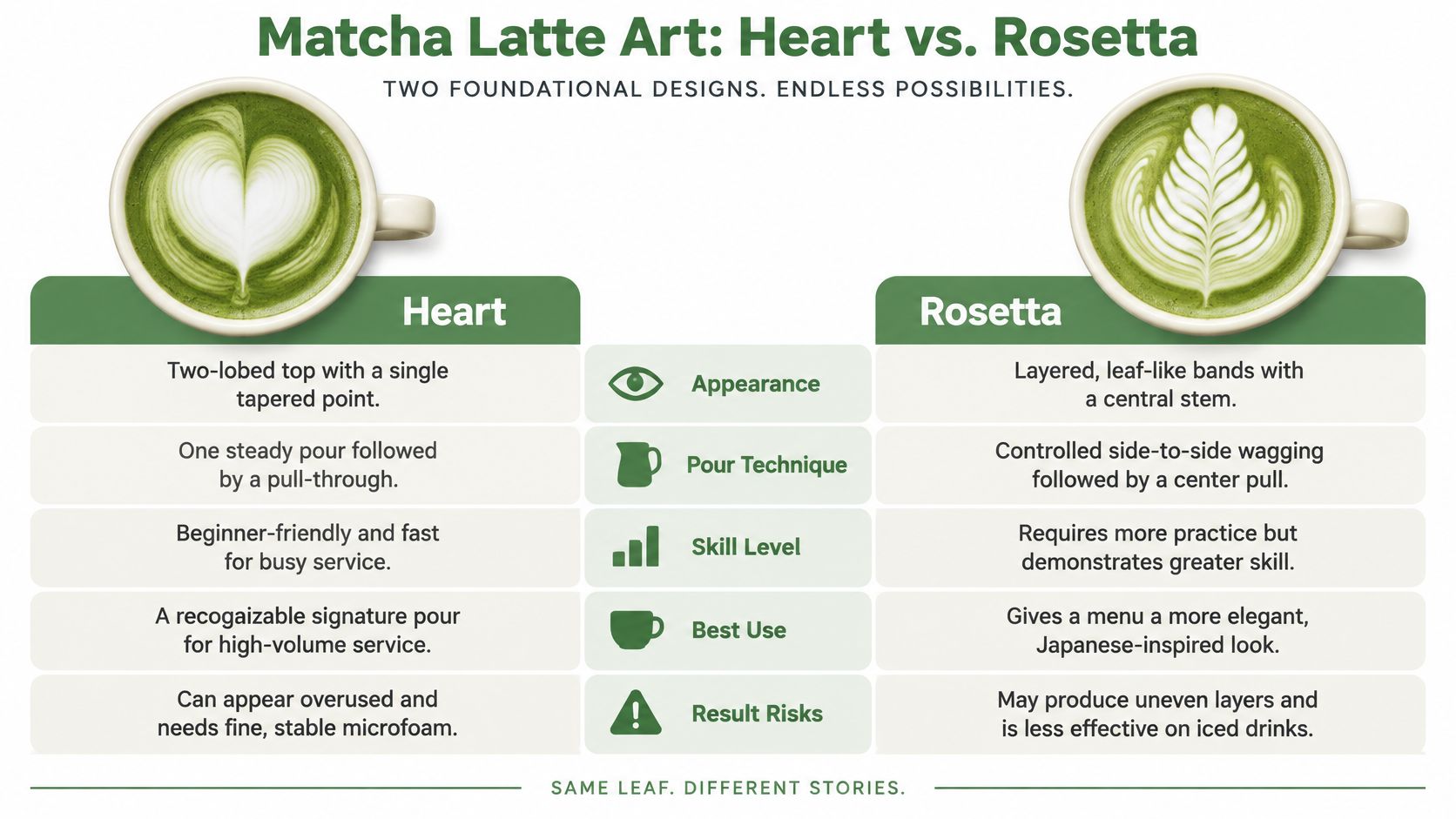
Use a clean, centered silhouette as the training reference. Don't require every barista to copy another person's wrist movement exactly.
2. Rosetta
A rosetta suits the guest who pauses to watch the pour. Its fern-like layers make it a useful recognizable signature for unhurried campus orders, provided the barista can produce it without repeatedly correcting the pattern.
Build the drink before drawing on it. Integrate the initial milk, lower the pitcher near the surface, and introduce small side-to-side movements while moving backward across the cup. Finish with a narrow pull-through that establishes the central stem.
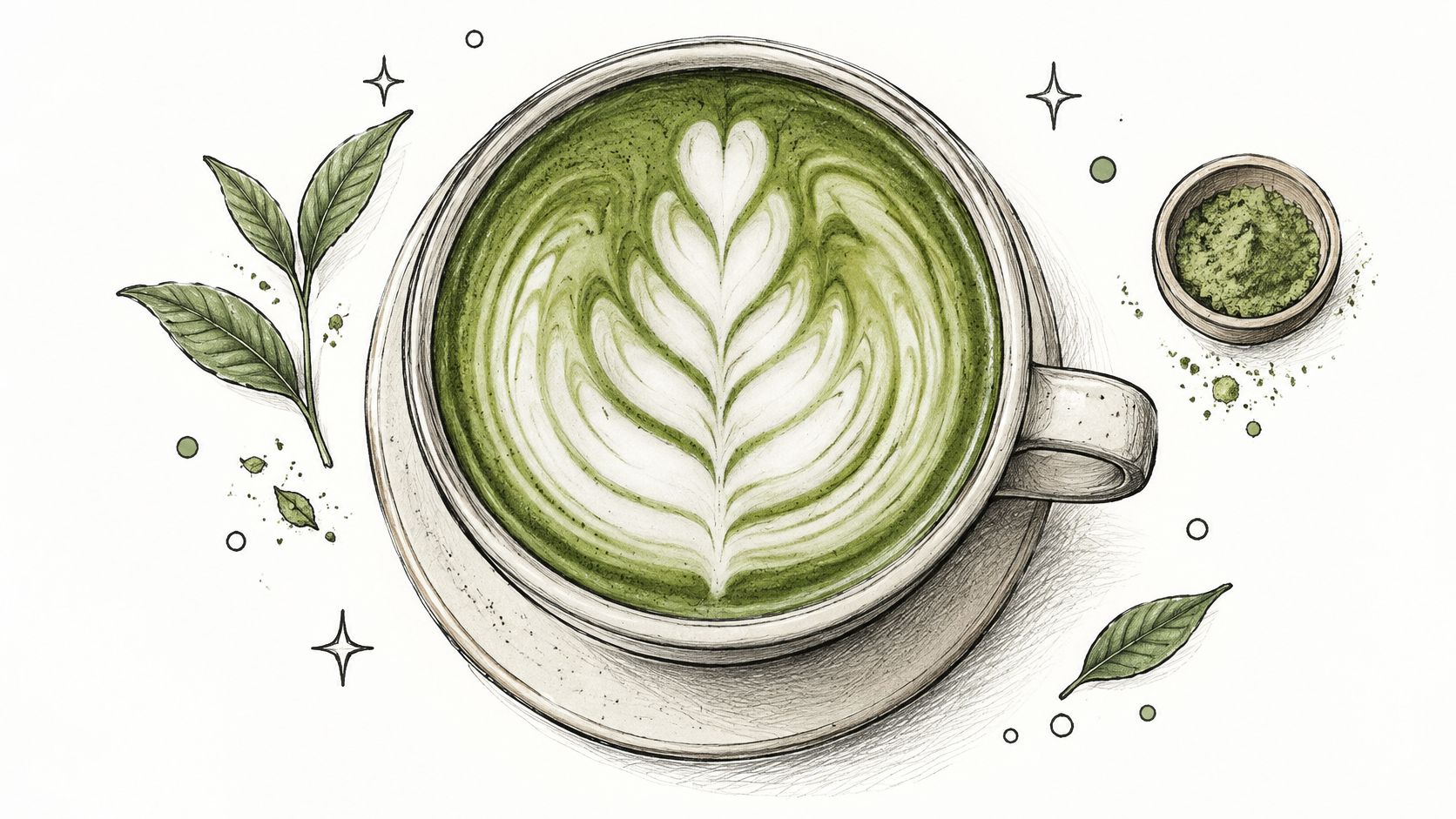
This illustration offers a visual reference for white-on-green contrast, although it depicts a heart rather than a rosetta.
Protect the green between the leaves
Small, controlled movements are more useful than dramatic shaking. Leave visible green between the white layers, and begin the pattern while there's still room to finish without spilling.
Matcha preparation matters here: whisking affects particle dispersion, foam, aroma release, and taste distribution, as discussed in this explanation of whisking and matcha taste perception. Standardize the powder dose, water, whisking motion, and interval before asking baristas to compare rosettas.
A detailed pattern won't rescue an uneven base. Fix the green canvas before refining the leaves.
For The Matcha Bike's campus and mobile service, treat the rosetta as an optional signature rather than a promise attached to every order. During a faculty gathering with a relaxed arrival flow, it can provide a visible moment of craftsmanship. During a class-change rush, return to the heart rather than squeezing a rushed rosetta into an unsuitable service window.
3. Tulip
At a hosted breakfast or a brand's guest reception, the tulip offers a practical middle ground between a simple heart and a showcase swan. Stacked petals create a deliberate finish, while a defined house version gives the team something concrete to rehearse.
Unlike a rosetta's continuous wave motion, make the tulip through separate pushes of milk. Establish a rounded surface shape, pause the flow, then place the next petal so it nudges the previous shape outward. Finish with a narrow line through the stack.
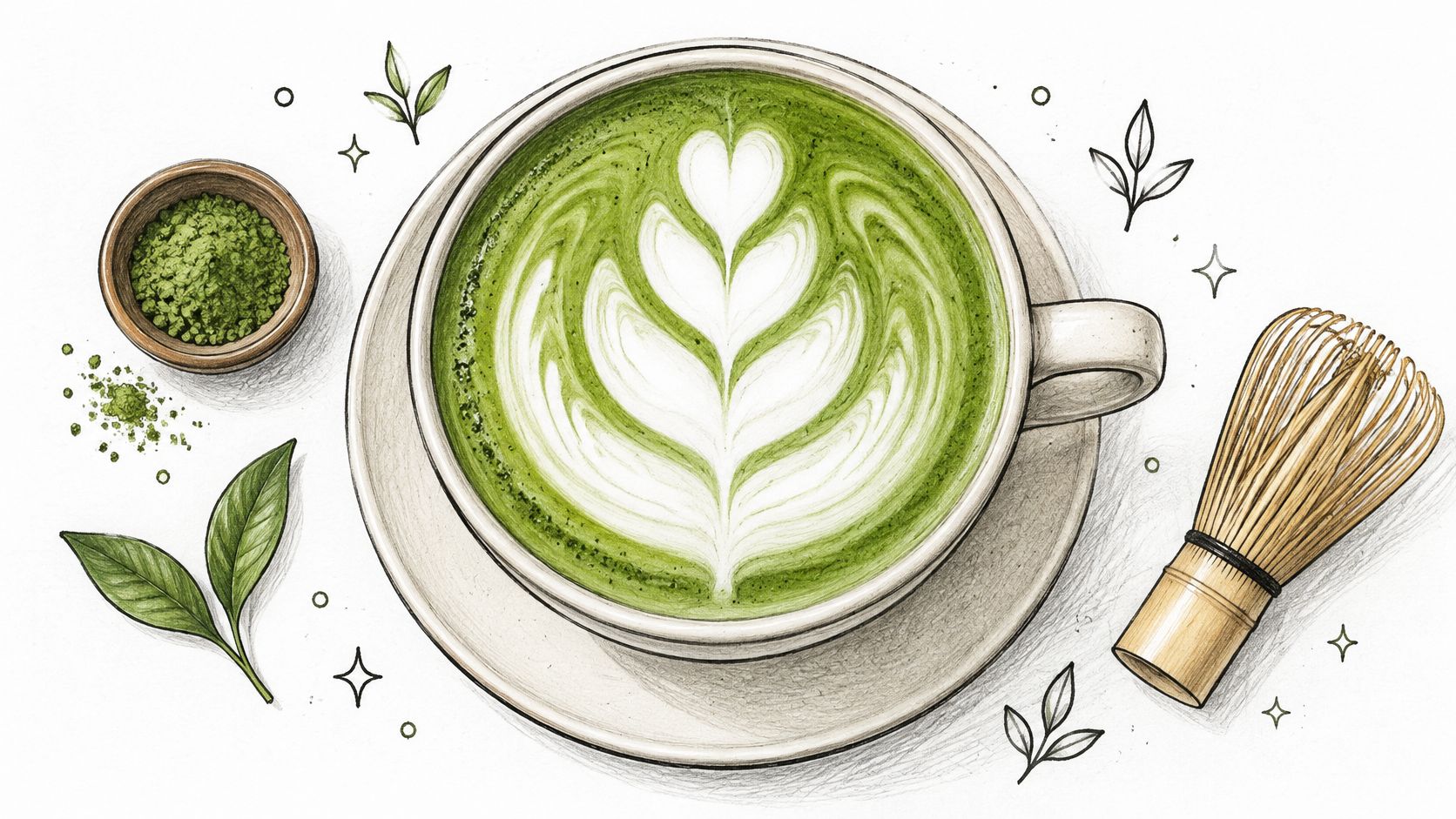
The illustration below shows the contrast to aim for, rather than the tulip's specific petal structure.
Define the event version before service
Choose a modest petal stack and keep it consistent. Adding more layers because the previous cup looked good makes it harder to maintain a predictable workflow when guests arrive together.
- Rehearse the actual recipe: Use the event's matcha, sweetening, milk, and serving cup rather than a separate practice combination.
- Keep the pitcher moving: Swirl between preparation and pouring so the milk stays integrated.
- Set a fallback: If distinct petals aren't forming, serve a clean heart rather than repeatedly attempting repairs.
For baristas exploring opportunities to join The Matcha Bike, the tulip makes a useful training exercise in repeatability. Compare cups for placement, green separation, and a clean finish, not just petal count.
At a corporate wellness morning, offer the tulip when the station has room for that finishing attention. Don't let the visual brief override drink temperature, orderly handoffs, or the guest's preferred milk.
4. Swan
Reserve the swan for a planned showcase moment. A wedding host's drink, a campaign photograph, or a featured pour at a private reception gives the barista a reason to spend extra attention on the design.
Build the silhouette deliberately: establish the body, use controlled leaf-like movements for the wing, then shape the neck and head with a finer stream. Rehearse the orientation so the finished bird faces the guest or camera at handoff, rather than requiring someone to turn a full cup.
Use the supplied video as a movement reference during practice, then test those movements with your own matcha recipe.
Give the showcase pour a service window
A concentrated base may provide stronger contrast, but don't keep adding powder solely to make the silhouette darker. Taste the finished latte and keep it within the approved recipe.
Service boundary: Schedule the elaborate pour around the queue. Don't schedule the queue around the elaborate pour.
Before an event, ask the team to rehearse both the design and the handoff. Decide where the photographer will stand, where the finished cup will land, and who will continue taking orders while the showcase drink is prepared.
For a mobile station, that division of attention matters as much as the barista's drawing skill. Avoid attempting the swan while reaching around supplies or answering menu questions mid-pour.
If the wing looks strong but the neck fails, don't keep drawing until the surface becomes muddy. Use the practice result to simplify the planned design, and protect ordinary service from repeated showcase attempts.
5. Sakura (Cherry Blossom)
A cherry-blossom finish fits a seasonal matcha menu when the decoration connects to the drink rather than sitting beside an unrelated flavor story. For a strawberry-inspired special, a restrained berry accent can support the blossom theme, provided the finished latte still tastes balanced.
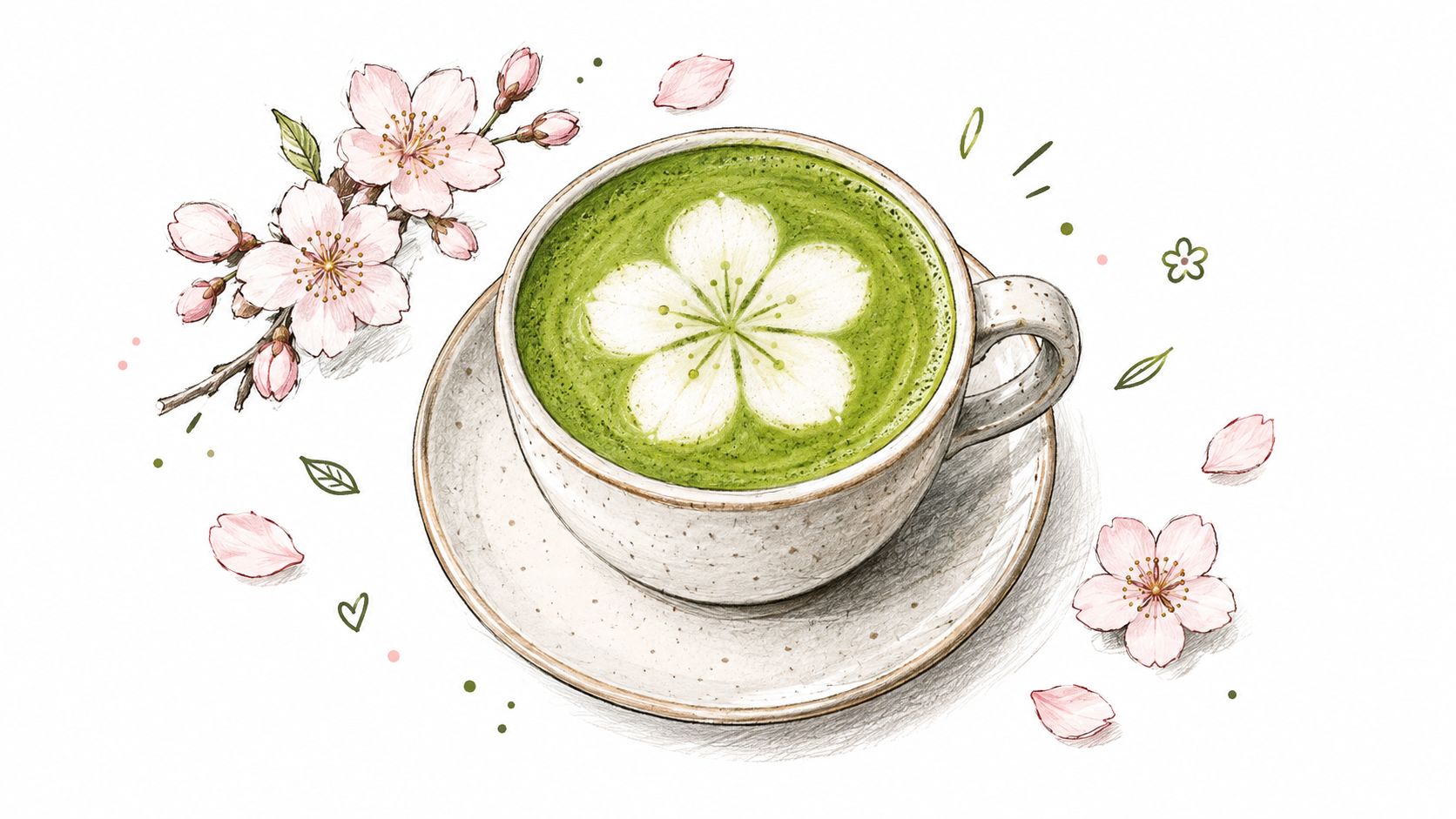
Etching offers more placement control than free-pouring every petal. Pour a smooth surface, place small foam marks, and draw them into petal shapes with a clean, food-safe fine tool while the surface remains workable.
This illustration shows the intended blossom motif.
Keep the seasonal version restrained
Use a single blossom as the standard event treatment rather than covering the cup with flowers. A simplified motif gives different baristas a more manageable reference and leaves the green base visible.
- Flavor first: Test any strawberry component in the complete drink before approving it as decoration.
- Clean tools: Keep food-contact tools protected at the station and clean them between uses.
- Immediate finishing: Complete the petal strokes directly after pouring instead of setting unfinished cups aside.
A sakura-inspired finish could complement a seasonal menu conversation around Strawberry Dream, but it shouldn't be presented as an existing decoration option without confirmation. Planners can discuss the drink concept through The Matcha Bike's event service.
For a spring campus gathering, show the team an approved reference cup and agree on how simplified the rush-period version should be. Avoid attaching a claim of ceremonial authenticity to the motif. It's a contemporary presentation choice inspired by cherry blossoms, and it should be described that way.
6. Stencil or Dusted Logo Design
For a brand activation, a readable mark matters more than a complicated pour. A stencil lets the team work from the same template, making it a practical candidate when an agency wants a logo or campaign motif carried through the beverage presentation.
Start with a smooth foam surface. Hold a clean, food-safe stencil close above it without touching, apply a light dusting through a fine-mesh sifter, and lift the stencil straight upward.
Design for powder rather than a screen
Ask for a simplified mark with bold shapes and open spaces. Fine lettering and closely packed details may look good in a digital proof but still fail the drink test.
- Approve the finished cup: Test the actual stencil, powder, foam, and cup together.
- Control the dusting: Apply a light coat rather than burying the surface under powder.
- Choose the right brand surface: If the mark won't read clearly, put the detailed identity on the co-branded cup and use a simpler drink motif.
The Matcha Bike offers custom menus and co-branded cans and cups, so the foam doesn't have to carry the entire visual identity. At an experiential activation, a recognizable symbol on the drink can complement fuller campaign artwork on the packaging.
Freshness also affects the green you're trying to reproduce. Matcha color can dull with exposure to oxygen, light, heat, and prolonged storage, a consideration discussed in the Foods paper addressing matcha quality and supply. Keep working stock protected in airtight, opaque packaging and compare batches under consistent lighting.
Don't promise identical color from an artwork mock-up alone. Approve the presentation with real ingredients before the event.
7. Cold Foam Ripple on Iced Matcha
For an outdoor Miami gathering, choose an iced visual on its own terms rather than promising a hot-latte rosetta over ice. A cold foam ripple combines a visible white topping with green contrast, while leaving room for an appealing layered presentation.
Build the iced matcha using the approved drink recipe, then add chilled, pourable cold foam. Draw a clean food-safe tool through the surface in a restrained wave, stopping before the white and green become fully mixed.
Test the handoff, not just the first photograph
Use a clear cup when sidewall layers are part of the presentation. Keep the foam and cups chilled before assembly, finish near the pickup point, and hand the drink over promptly.
Matcha patterns depend on the relationship between the green suspension and milk foam rather than espresso crema; Satsu Matcha's latte-art guidance provides background on those preparation considerations. For mobile service, test visual stability under your actual conditions instead of assuming a successful practice pour will hold outdoors.
Handoff test: A ripple is service-ready when it still looks intentional where the guest receives it, not only where the barista finishes it.
For an event rehearsal, photograph the cup immediately and again after a realistic pickup delay. Carry it along the expected handoff route, including any movement between the bike and serving area.
If the pattern washes out, change a single variable before trying again: foam texture, matcha concentration, ice arrangement, or finishing sequence. Keep the drink's flavor fixed as the acceptance standard.
At a crowded outdoor pop-up, an attractive layered cup with a simple ripple is a better choice than intricate etching that won't remain legible through pickup.
7 Matcha Latte Art Designs Compared
| Design | 🔄 Complexity & Resources | ⚡ Service Speed | 📊 Expected Visual Impact | 💡 Ideal Use |
|---|---|---|---|---|
| Heart | ⭐ Beginner-friendly; needs well-textured steamed milk and a matcha base | ⭐ Fast; one pour and a pull-through | High-contrast, familiar heart shape | High-volume service and consistent signature drinks |
| Rosetta | Intermediate; needs controlled milk texture and side-to-side pouring | Moderate; takes practice to form even layers | Elegant, layered leaf pattern | Signature menu items and Japanese-inspired presentation |
| Tulip | Advanced; needs consistent foam and several controlled pours | Slower; repeated pours reduce peak-hour throughput | ⭐ Striking, stacked petal design | Premium drinks, weddings, and brand events |
| Swan | Advanced; needs precise pouring, fine foam, and a stable matcha base | Slow; best made selectively | ⭐ Distinctive, photogenic silhouette | Showcase cups, private parties, and social content |
| Sakura (Cherry Blossom) | Detailed; needs a fine tool or toothpick and soft foam | Moderate to slow; simplified versions are faster | Seasonal five-petal blossom with cultural associations | Spring promotions and limited-time menu items |
| Stencil or Dusted Logo Design | Low pouring skill; requires a prepared stencil and matcha or cocoa powder | ⭐ Fast and repeatable once the stencil is ready | 📊 Consistent logo, monogram, or motif | Branded activations and corporate events |
| Cold Foam Ripple on Iced Matcha | Beginner-friendly; needs chilled cold foam, a tool, and preferably a clear cup | ⭐ Fast; simple ripple technique | Layered wave pattern suited to iced drinks | Warm-weather service, outdoor events, and iced menus |
Build a Matcha Art Service That Scales
The strongest matcha latte art program starts with a design assigned to a service situation. Choose the heart for fast daily orders, the rosetta for an approachable signature, and the tulip for premium moments with a manageable finishing routine. Reserve the swan for showcase drinks, sakura for seasonal storytelling, stencils for brand consistency, and cold foam ripples for iced presentation.
Before launch, test each chosen pattern with the actual matcha recipe, milk, cup, and station layout. Include the handoff in that rehearsal, especially when the drink must move from a mobile bar to a guest or photography area. A design that works in a practice cup still needs to earn its place in service.
Establish a baseline everyone can repeat
For The Matcha Bike, whisk-to-order preparation and consistent processes across the fleet provide a practical starting point. Build the art standard around that preparation rather than asking baristas to improvise the base for different patterns.
Define what an acceptable cup looks and tastes like. The green should be uniform, the foam should remain integrated, and the approved design should be recognizable without requiring an explanation.
- Train the fallback: Every barista should know when to simplify a tulip or rosetta to the house heart.
- Separate preparation from decoration: Confirm the recipe first, then assess the finishing motion.
- Approve substitutions: Test each milk option before promising the same visual result across the menu.
- Review the complete handoff: Include lids, pickup delays, transport movement, and the guest's drinking experience.
Put extra effort where guests can enjoy it
At a campus counter, a recognizable finish should support reliable service rather than compete with it. At a private reception, a planned showcase pour can receive more attention because the team has allowed for it.
Be equally clear with event planners about what belongs on the drink and what belongs on the packaging. A detailed logo may be better suited to a co-branded cup, while a clean foam motif gives the beverage its own visual character.
Consistency is the house standard; complexity is an optional feature. Keep the recipe dependable, give the team permission to simplify, and choose finishing work that guests can appreciate without waiting for it.
---
The Matcha Bike brings whisked-to-order ceremonial-grade matcha to University of Miami campus service and Miami events, with custom menus and co-branded cups for planned activations. Visit The Matcha Bike to discuss your event format, seasonal flavors, and a presentation approach that fits your guests and service flow.