
“Just buy ceremonial grade” is incomplete advice. The name can help you find matcha intended for drinking, but it doesn't tell you enough about the leaves, the supplier, or the cup you'll receive. For a campus drink or a Miami event, a better question is: What can the operator verify, and can the barista repeat the pour?
## Table of Contents - What Ceremonial Grade Matcha Actually Is - A crop grown with powder in mind - How Shaded Tencha Becomes Matcha Powder - From living leaf to prepared tencha - Turn the process into a purchasing specification - Flavor Chemistry Behind a Ceremonial Pour - Translate chemistry into taste - Ceremonial Grade Matcha Versus Culinary Grade - Ceremonial-Style Powder Versus Culinary Powder - Evaluate the finished recipe - Quality Cues That Beat the Grade Label - Build a file for the actual lot - Treat availability as part of quality planning - Ceremonial Matcha on Bikes and at Events - Write the recipe for another barista - A Miami mobile-service example - Choose a Pour and Plan Your Next Service - Give the planner a usable brief - Pay for the cup, not the adjective
What Ceremonial Grade Matcha Actually Is
Ceremonial grade matcha generally describes a shaded-leaf tea powder selected for whisking and drinking, with the tea itself at the center of the experience. Think of the name as a buying clue, not a regulated seal. A tin still needs an identifiable origin, useful production information, and a flavor that suits the drink.
Its cultural roots matter, too. Matcha belongs to Japan's long-established tea-ceremony tradition, rather than being a modern invention designed for flavored beverages. Sencha later became more accessible because it was cheaper, easier to prepare, and less closely associated with formal ceremony.
A crop grown with powder in mind
The regional picture makes that distinction concrete: more than 96% of Nishio's tea-growing area is devoted to tencha, while Japanese government reporting recorded a 24.3% increase in matcha exports in 2017, reaching almost ¥14.36 billion, approximately US$129 million at the time, the highest export value since 1988, according to Japan's government account of matcha production and international demand.
Those details connect specialized production with expanding international interest. Nishio's growers aren't making ordinary green tea and deciding afterward to turn it into powder. They're organizing production around tencha, the leaf material destined to become matcha.
The traditional tools help make that relationship visible.
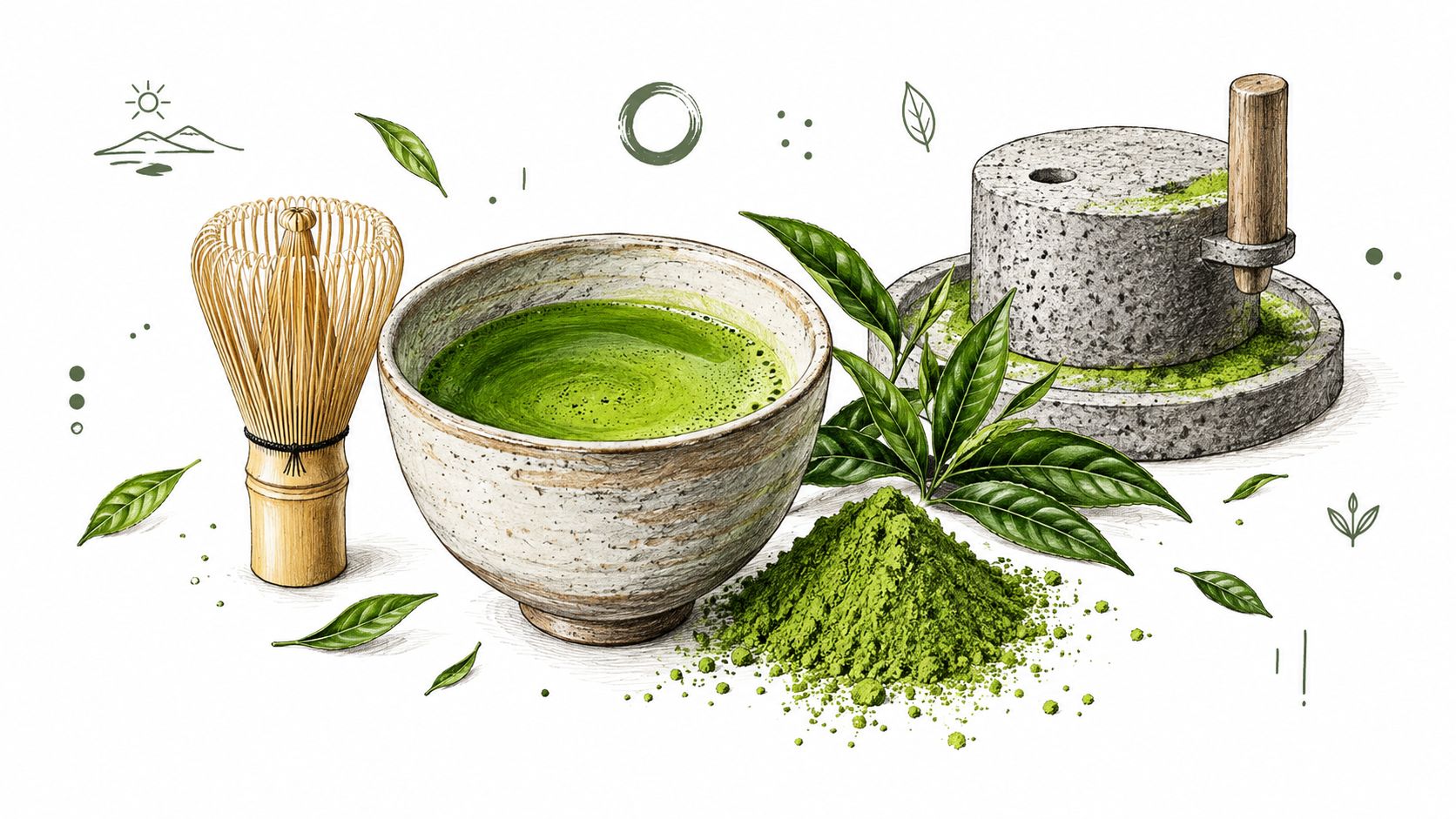
Buying perspective: Respect the tradition, but evaluate the powder you're actually being served.
For a University of Miami student, that means a matcha drink should offer more information than a premium-sounding adjective. For an event host, it means the beverage specification should describe the tea and its intended flavor, not just repeat the wording on a supplier's bag.
A useful starting definition is therefore practical: specialized tencha-based powder, prepared for a whole-leaf drinking experience. Tradition explains why this product exists. Traceable lots and controlled service help establish whether a particular purchase delivers what you expect.
How Shaded Tencha Becomes Matcha Powder
Before matcha reaches a tin, growers and processors make decisions that affect its appearance and taste. The path begins with the living plant, not with the grinder.
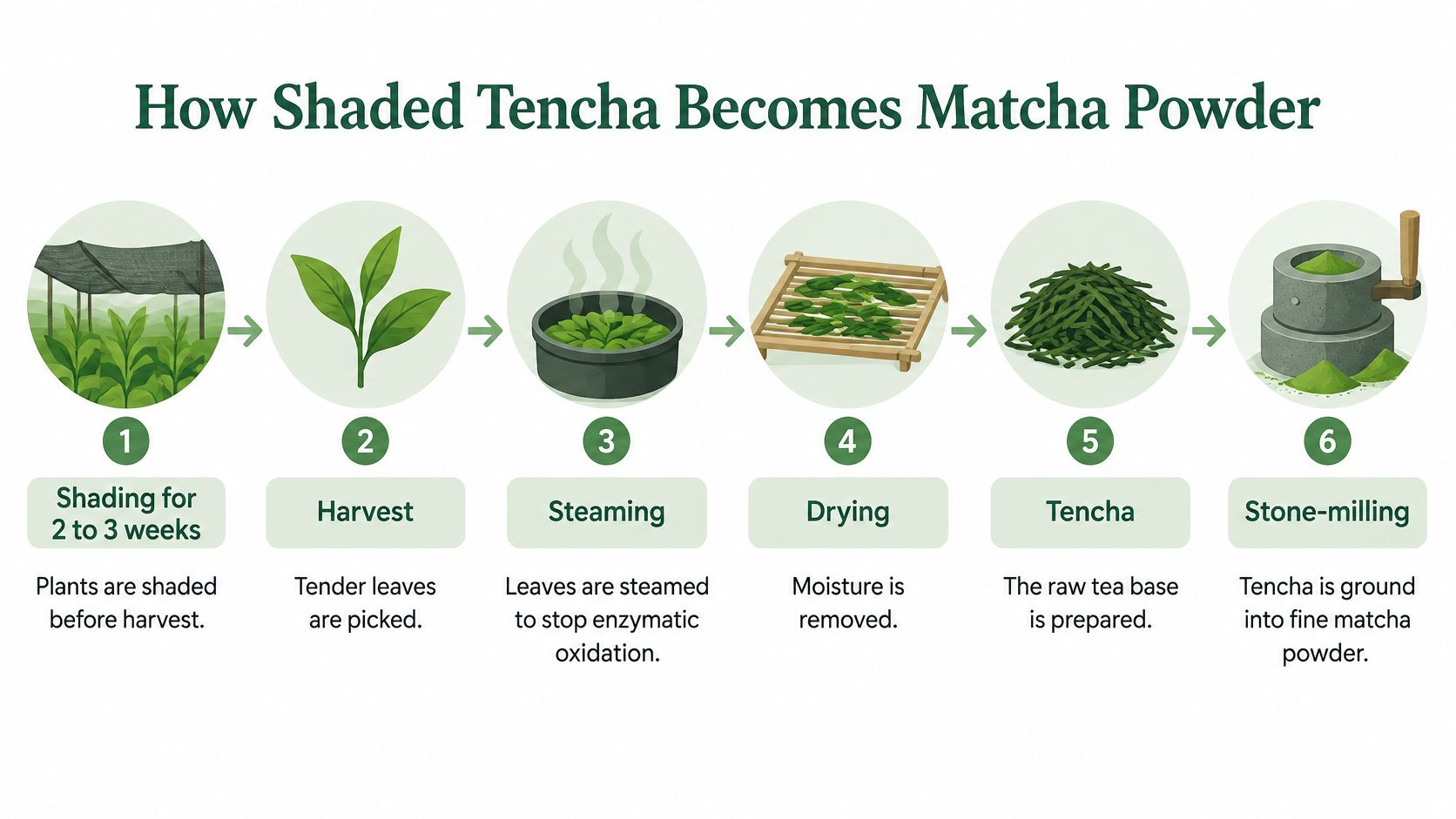
Tea plants are shaded for roughly 2, 3 weeks before harvest, then the leaves are steamed, processed into tencha, de-stemmed, de-veined, and finely milled; a review of matcha production and composition also explains how reduced light suppresses catechin formation while preserving or increasing chlorophyll, caffeine, L-theanine, and other amino acids.
The production sequence is easier to follow when you can see the leaf change form.
From living leaf to prepared tencha
Shading changes the growing conditions. It isn't merely a way to keep the leaves looking attractive. The resulting chemical balance helps explain why matcha typically has a brighter green appearance, more umami, and less astringency than unshaded green tea.
After harvest, steaming stops enzymatic oxidation. The leaves are dried and prepared as tencha, with stems and veins removed before fine milling. This preparation distinguishes the material going into the mill from an undifferentiated mixture of tea leaves and tougher structural parts.
- Shading and harvest: Ask how the leaves were grown and what the supplier knows about harvest timing.
- Tencha preparation: Confirm that the powder comes from tencha rather than accepting “green tea powder” as an equivalent description.
- Milling: Request milling information when available, then evaluate the finished texture in a whisked sample.
Fine milling matters because the powder becomes part of the drink. A buyer should assess how it disperses and feels in the mouth, not judge the unopened package alone.
Turn the process into a purchasing specification
For a mobile bar, translate that production story into a short specification: lot-level origin, available harvest or milling details, an ingredient declaration showing 100% powdered tea, and sensory acceptance criteria. Those criteria might include vivid green color, restrained bitterness, and an umami-led finish.
Ask the supplier to explain missing information rather than treating every blank as proof of a bad product. Then taste the lot under consistent conditions. Documentation describes what the seller knows; a repeat tasting checks whether the delivered powder meets your intended use.
For another view of leaf processing and preparation, watch the accompanying video.
Flavor Chemistry Behind a Ceremonial Pour
A whisked bowl isn't the same kind of beverage as a strained leaf infusion. Matcha is a suspension of the ground leaf, so the drink contains leaf material that would otherwise be discarded after steeping. That distinction helps explain why powder selection affects both the sensory experience and the compounds consumed.
A peer-reviewed comparison of ceremonial grade 1, ceremonial grade 4, and food grade found that amino acids and caffeine decreased as grade declined, while some polyphenol-related metabolites increased in lower-grade material; the same comparative discussion of matcha grades and composition reports a representative 2-gram portion containing approximately 50.3 milligrams of L-theanine and 72.5 milligrams of caffeine, alongside a separate ceremonial-grade sample containing 48 milligrams of theanine and 66.2 milligrams of caffeine.
Those are sample results, not guaranteed serving specifications. Cultivar, shading duration, harvest timing, and processing can change composition, so a supplier's grade name can't substitute for information about the powder in use.
Translate chemistry into taste
Umami is the savory depth a drinker may describe as rounded or broth-like. Amino-acid character supports that impression, while catechins contribute to bitterness and astringency. The amount of powder in the cup also matters, so a concentrated serving shouldn't be confused with an inferior lot.
It helps to separate the sensations during a tasting:
- Umami: Notice whether the tea has a savory center and a rounded finish.
- Bitterness: Assess its intensity and whether it overwhelms the other flavors.
- Astringency: Pay attention to the drying sensation rather than treating every sharp impression as bitterness.
- Texture: Evaluate whether the particles are evenly dispersed or distracting.
The visual below separates whole-leaf intake from the flavor experience; the caffeine range is addressed in the service discussion.
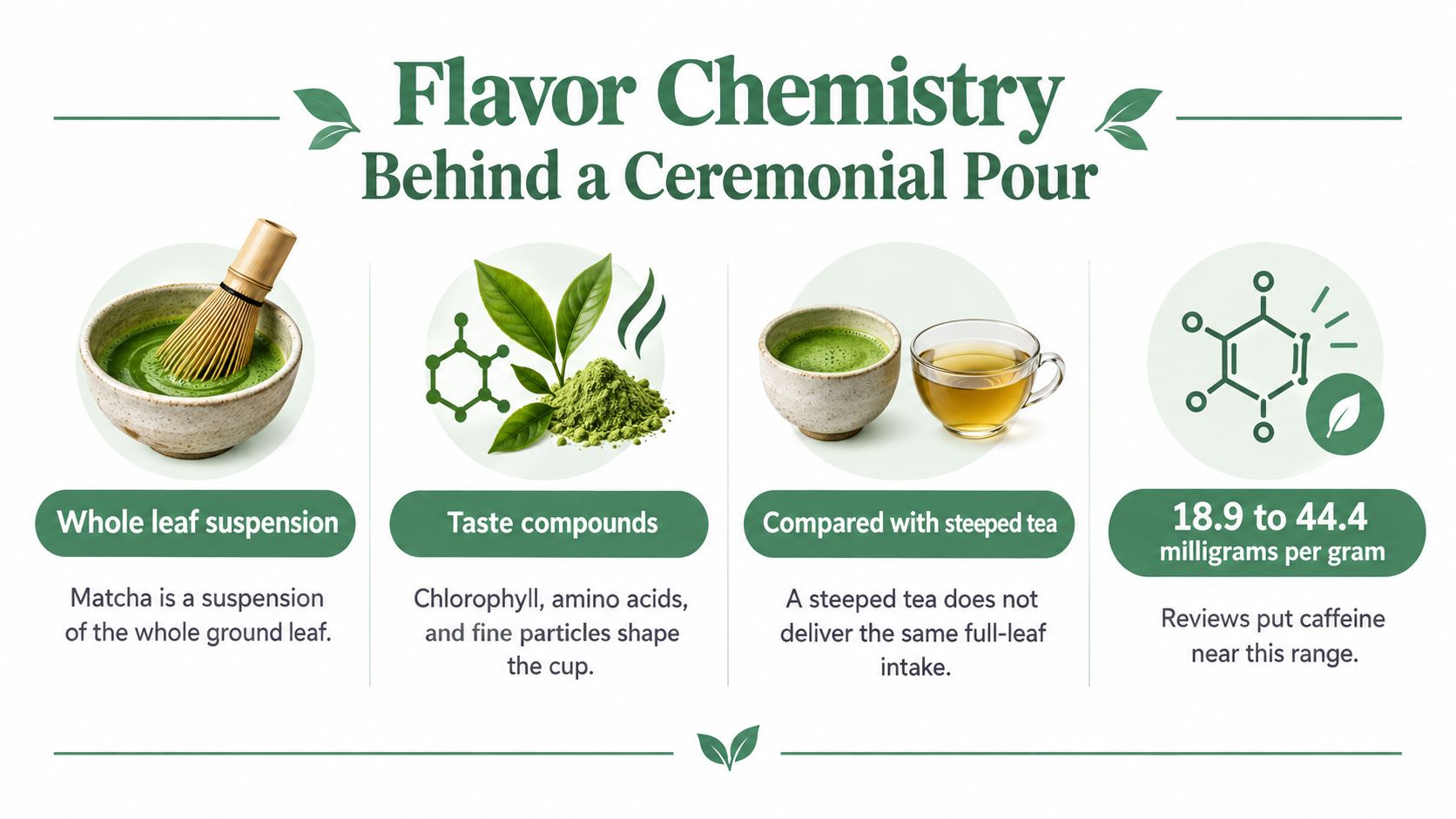
A composition result describes a sample. It doesn't promise how every guest will feel after drinking it.
That boundary matters for campus menus and wellness events. The chemistry gives operators a reason to control ingredients and preparation, not permission to promise calm, focus, or a particular caffeine experience.
For a beverage lead, the useful conclusion is operational: select a powder with the desired balance, then keep preparation consistent enough that guests can recognize it. Weighing and repeatable whisking help separate a genuine lot difference from an inconsistent cup.
Ceremonial Grade Matcha Versus Culinary Grade
Start with the menu, not the most expensive tin. A straight whisked pour, a lightly sweetened latte, a strawberry drink, and a baked good ask the powder to do different jobs.
My purchasing recommendation is to reserve the finer, more delicate lot for recipes where guests can taste its character. For a recipe dominated by other ingredients, evaluate a culinary or food-grade option in the finished product before deciding whether the premium powder earns its additional cost.
Ceremonial-Style Powder Versus Culinary Powder
These are purchasing targets, not certified boundaries. Sellers use the names as market tiers, so the delivered lot still needs a tasting.
| Decision point | Ceremonial-style powder | Culinary or food-grade powder |
|---|---|---|
| Typical intent | A drink in which the tea is the main attraction | A recipe in which matcha shares attention with other ingredients |
| Flavor role | Aim for a balanced, umami-forward finish | Look for recognizable tea character in the complete recipe |
| Color expectation | Seek vivid green in the prepared drink | Judge the color after mixing or baking |
| Sweetness tolerance | Assess it plain before adding measured sweetness | Test it with the recipe's actual sugar, fruit, or dairy |
| Best menu job | Straight whisked tea or a restrained latte | Flavored drinks, desserts, and baked goods when the lot performs well |
For a plain, usucha-style serve, there's little room to hide an unpleasant finish. The drink should be selected around the leaf rather than corrected afterward with escalating sweetness.
A lightly sweetened campus drink offers more flexibility. Test the powder with the intended milk and sweetener, then ask whether you can still identify the tea. A prestigious label doesn't help if the final recipe tastes mostly of syrup.
Evaluate the finished recipe
A strawberry seasonal latte needs a different tasting conversation. The question isn't whether fruit is an improper addition to matcha. It's whether the fruit and tea remain distinct enough to make the drink worth ordering.
- For a tea-led menu: Choose the lot for its plain flavor, then add other ingredients carefully.
- For a fruit-led drink: Compare candidate powders in the actual recipe, not just in water.
- For baking: Judge the finished food before committing to a premium drinking powder.
Pay for qualities the guest can perceive. Using an expensive, delicate powder in a heavily masked recipe may be poor menu economics; using an aggressively bitter lot in a plain drink may be poor hospitality.
For hosts, the decision can be simple: if guests are meant to taste the tea itself, specify the finer lot and a controlled preparation. If the beverage is a branded flavor experience, develop the recipe so matcha remains an intentional ingredient rather than a color cue.
Quality Cues That Beat the Grade Label
An expensive tin can provide less useful information than a modestly priced bag. The purchase becomes more defensible when the seller can identify the lot, explain its handling, and share relevant testing.
Ceremonial grade isn't a regulated or independently certified standard, and ISO 20715 defines matcha by production method without establishing ceremonial or culinary grades, as explained in this guide to ceremonial-grade terminology and matcha safety.
Build a file for the actual lot
Ask for evidence that connects the powder on the bar to the supplier's claims. A general brand presentation isn't the same thing as documentation for the batch you're buying.
- Identity: Record origin, cultivar when known, and the batch identifier.
- Production and freshness: Request harvest timing, shading information, milling notes, and storage guidance.
- Sensory acceptance: Compare bitterness, umami, color, and foam under the same preparation conditions.
- Testing: Request a certificate of analysis identifying the batch, laboratory, test date, heavy-metal values, and pesticide-residue results.
A statement that a product is “tested” leaves important questions unanswered. Which batch was tested, what was measured, and what were the results? Sensory quality and safety documentation answer different questions, so neither should replace the other.
Purchase rule: A cheaper lot with documented origin and testing can be the more honest buy than an expensive tin supported only by the word ceremonial.
Treat availability as part of quality planning
Supply pressure makes lot verification more important, not less. In 2025, tencha at a Kyoto auction reached about ¥8,235 per kilogram, up 170% year over year; an importer reported paying 75% more for the highest-grade crop and expected lower grades to rise 30, 50%, while heat damage reportedly reduced yields by as much as 25% in some Uji orchards and Japan's tea production was about 25% below its level two decades earlier, according to Associated Press reporting on matcha prices and constrained supply.
Those are dated market observations, not a current price quotation. For an operator, they support a practical question: can the selected lot cover the planned service?
Approve replacement lots before they reach guests. Disclose meaningful origin or harvest changes, compare samples side by side, and distinguish an intentional recipe adjustment from an undisclosed downgrade. A familiar menu name shouldn't conceal a materially different tea.
Ceremonial Matcha on Bikes and at Events
At a mobile bar, quality depends on what the barista can repeat during service. A carefully selected powder still needs a written recipe, a scale, controlled liquids, and an agreed whisking method.
Reviews report approximately 18.9, 44.4 milligrams of caffeine per gram, meaning a 2-gram serving may provide roughly 38, 89 milligrams, and report about three times more catechins in a matcha preparation than a comparable loose-leaf infusion because the leaf material is consumed, according to this review of matcha composition and preparation.
Write the recipe for another barista
Weigh powder rather than trusting scoop volume. Fix the liquid mass and temperature, and record sweetener by weight so staff can adjust a recipe deliberately instead of compensating by eye.
Whisking is particle dispersion, not merely a way to create an attractive surface. Even dispersion helps limit settling and cup-to-cup concentration differences, although matcha remains a suspension rather than a completely dissolved drink.
- At opening: Confirm the approved lot and recipe before service begins.
- During preparation: Use the scale and specified liquid measurements.
- When a drink tastes wrong: Check execution before changing the formula.
- Between locations: Keep the same recipe records so staff aren't working from memory.
A Miami mobile-service example
One local option is The Matcha Bike, operated by Storkee Coffee, which describes a mint-green fleet serving the University of Miami campus and Miami pop-ups. Its event service includes whisk-to-order ceremonial-grade matcha, custom menus, and co-branded cans or cups, with professional baristas handling preparation, service, and breakdown.
The mobile format gives planners a concrete setup to evaluate.

Campus service is commonly near Merrick Fountain, with weekly Instagram location updates and a rotating menu that includes returning flavors such as Strawberry Dream. For students, checking the update is more useful than assuming yesterday's location and menu will apply.
For brand activations, wellness mornings, weddings, corporate functions, and private parties, a self-contained bike offers a different planning proposition from a utility-heavy beverage station. The operator describes indoor and outdoor suitability alongside Miami-based licensing and insurance.
Hosts should still confirm placement, access, service scope, and venue approval. Compact equipment reduces some dependencies; it doesn't eliminate the need for a clear event brief.
Choose a Pour and Plan Your Next Service
Your next decision doesn't need to begin with a technical questionnaire. Start by deciding whether you want to taste the tea on its own or enjoy it as part of a flavored drink.
For a University of Miami student, faculty member, or staffer, check the campus Instagram updates for the current location and menu. Choose a straight whisked pour when you want to explore umami, or a seasonal option such as Strawberry Dream when fruit is part of the appeal. The campus and mobile-service website is a starting point for finding the service and available information.
Give the planner a usable brief
An event inquiry should explain expected drink volume, the indoor or outdoor setting, the flavor direction, and whether cups or cans should carry the event identity. Those details help the operator discuss a suitable menu and setup instead of guessing what “matcha catering” means to you.
Then send a short set of buying questions:
- Origin: Where does the current lot come from?
- Production notes: Are harvest or milling details available?
- Ingredients: Is the powder entirely tea, with sweeteners added separately?
- Sensory target: What should guests notice in the finished drink?
- Documentation: Can relevant batch-testing information be shared?
- Service continuity: How is the dose measured, and how would a harvest or lot change be communicated?
Pay for the cup, not the adjective
You don't need every supplier to provide an identical document package. You do need clear answers about what is known, what isn't available, and how the operator checks the delivered tea.
Ceremonial grade matcha is worth paying for when the drink lets the leaf show and the team can repeat the cup. For a student, that might mean discovering a plain preparation you enjoy. For a planner, it means approving a tea, a recipe, and a service plan rather than buying a premium-sounding menu description.
---
For campus pours and Miami events, The Matcha Bike offers whisk-to-order ceremonial-grade matcha, rotating flavors, and customized mobile beverage service. Visit to explore the menu or discuss an event, and ask how the selected tea and preparation will fit the drinks you want to serve.