You booked the room, ordered the urn, and titled the invite "Wellness Hour." Three people hover by the door. Everyone else stays at their desks. The intent was solid. The event gave nobody a reason to cross the hallway.
Most corporate wellness event ideas die the same way. A lukewarm coffee station, a slide deck on stress, and a calendar hold that feels like another meeting. People show up out of politeness, then leave before the Q&A. Foot traffic never builds, dwell time is awkward, and the catering tastes different depending on who poured it.
A freshly whisked matcha bar fixes those three problems at once. It is something employees want, it gives them a place to stand and talk, and a whisk-to-order process keeps the drink consistent from the first cup to the last. Pair that anchor with a short wellness format and the event stops feeling optional.
The shift is already underway. WTW's 2024 Wellbeing Diagnostic Survey collected responses from 3,610 employers across 82 markets, representing more than 18 million employees. Only 21% currently describe wellbeing as a foundational part of their human-capital strategy, and that figure is projected to rise to 46% within three years. Employers tend to stress emotional and physical wellbeing, while employees report more trouble with financial wellbeing. Build around that feedback, not a generic agenda.
Here are ten formats you can put on the calendar this quarter. Each one uses a mobile beverage stop as the draw, with timing, trade-offs, and a way to run it.
## Table of Contents - 1. Matcha Wellness Morning - 2. Mindful Matcha Break - 3. Campus or Office Wellness Fair with Beverage Stations - 4. Sunrise Run or Walk Club with Post-Workout Matcha - 5. Hydration and Habit Challenge - 6. Matcha Mixology and Latte Workshop - 7. Lunch-and-Learn on Caffeine, Energy, and Nutrition - 8. Seasonal Flavor Launch and Staff Naming Contest - 9. Wellness Week Pop-Up Across Departments - 10. Outdoor Wellness Brunch or Picnic - 10 Corporate Wellness Event Ideas at a Glance - Roll In Your First Wellness Event
1. Matcha Wellness Morning
Catch people on the way in, before inboxes win. Set a 30 to 60 minute window between 8:00 and 9:30 a.m. A bike or compact cart whisks drinks to order while a short stretch, breathing drill, or mobility flow runs beside the line. Monthly or quarterly is enough. Weekly burns out volunteers and the facilities team.
Say a 90-person office runs this on the first Thursday. Arrivals grab a drink, join two rounds of hip openers, and are at their desks by 9:15. The association sticks: the workplace, not a benefits portal, is where the reset happens.
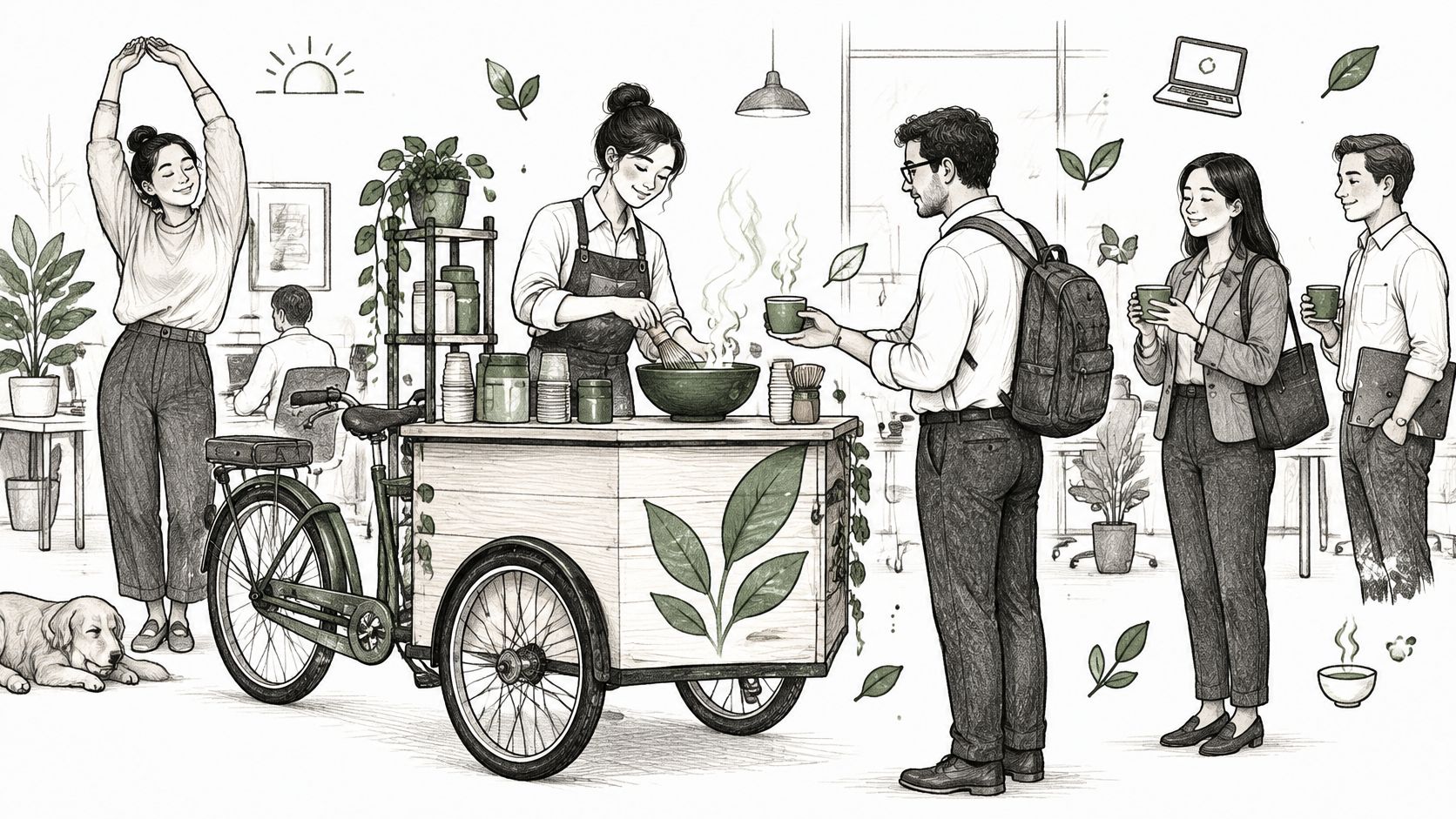
Post the menu the day before, with ingredients and sweetener levels. Offer a non-caffeinated pour such as hojicha or a herbal infusion. Ask an internal volunteer or a low-cost instructor to lead movement so you are not paying a full class rate for a ten-minute flow.
Practical rule: If the line is longer than the stretch, you scheduled the service window too tight. Add a second whisk station or cut the guest list by floor.
A campus or office pop-up through The Matcha Bike fits this without a permanent cafe build-out. The trade-off is morning load-in. Confirm elevator access and a spot that does not block badge readers.
2. Mindful Matcha Break
Deadline weeks do not need a meditation course. They need a defined pause under 20 minutes when energy drops. Call it a focus reset, not a mindfulness seminar. Optional framing matters. Mandatory calm makes people resentful.
The bike prepares drinks while a facilitator leads one breathing pattern, seated or standing. Rotate the clock so the same team's standup is not always the casualty. A neutral room beats a glass conference room where passersby stare.
Intensive programs lose people fast. A RAND-referenced analysis.pdf) puts participation near 46% for health-risk assessments and clinical screenings, then 21% for fitness initiatives, 16% for chronic-disease management, 10% for weight management, and 7% for smoking cessation. A drop-in drink and a short reset beat enrollment forms.
Say a product team in crunch week gets a 3:15 p.m. slot on Tuesday and Thursday only. No sign-up. People who skip it are not chased. Track servings, peak queue, repeat faces, and one QR question on energy or usefulness. Treat the break as an engagement gateway, not a clinical service. Google's Search Inside Yourself work and adaptations of Mindfulness-Based Stress Reduction show the topic has a long workplace history. You still do not need their full curriculum to run twenty useful minutes.
3. Campus or Office Wellness Fair with Beverage Stations
A fair with twelve booths and no reason to enter is a ghost town by 12:40. Put the drink station at the entrance so every attendee starts there, cup in hand, then wanders. Health plans, fitness studios, nutrition coaches, and the benefits desk get the spillover traffic they would not earn on a flyer.
Cap it at two hours at midday. A punch card that requires four booths before a small prize beats a raffle nobody understands. Confirm power, load-in path, and insurance with the host before you print the map.
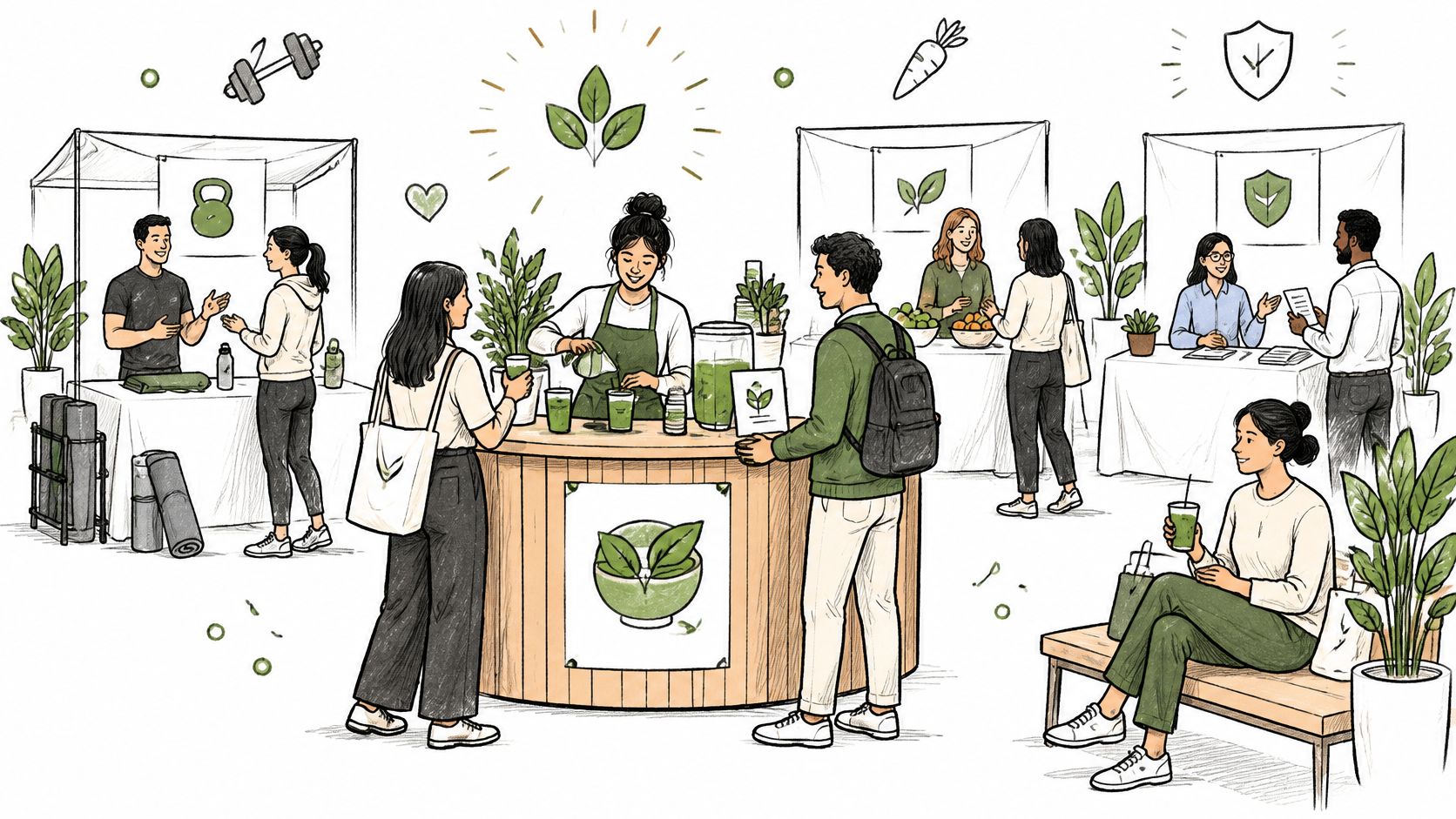
Say a university wellness week stacks campus health, recreation, and two student groups in a lobby. The line at the cart is the photo. The quiet win is the benefits table three steps past it.
- Entrance first: Nobody should reach a booth without passing the drinks.
- Short menu: Three pours, posted sweetener levels, one caffeine-free option.
- Staff the corners: Booth owners who sit behind a table get skipped. Stand in front of it.
Full-service pop-up logistics for this kind of fair live on the events page. The trade-off is vendor sprawl. More than eight booths and people graze, then leave without talking to anyone.
4. Sunrise Run or Walk Club with Post-Workout Matcha
A standing run club fails for the same reason most wellness perks do: the reward is abstract and the logistics drift. Fix a start time, set two or three pace groups, and park a drink service at the turnaround so the finish line becomes the reason people show up next week.
A large randomized trial published in JAMA in 2019 followed 32,974 employees at a major U.S. warehouse retailer, and after 18 months intervention-site employees were 8.3 percentage points more likely to report regular exercise (69.8% versus 61.9%) and 13.6 percentage points more likely to report actively managing weight (69.2% versus 54.7%). The same trial found no significant differences in clinical markers, healthcare spending, absenteeism, or job performance. The honest sell is repeat participation.
Say a Miami office meets at a park entrance at 7:15 a.m. Walkers, easy joggers, and a faster group share the route and regroup where the cart is waiting. Email the pin and the menu on the same weekday every week. Community models like parkrun proved that a free, repeating 5K with a gathering point outlasts one-off fun runs, and corporate clubs work the same way if the start line stays put.
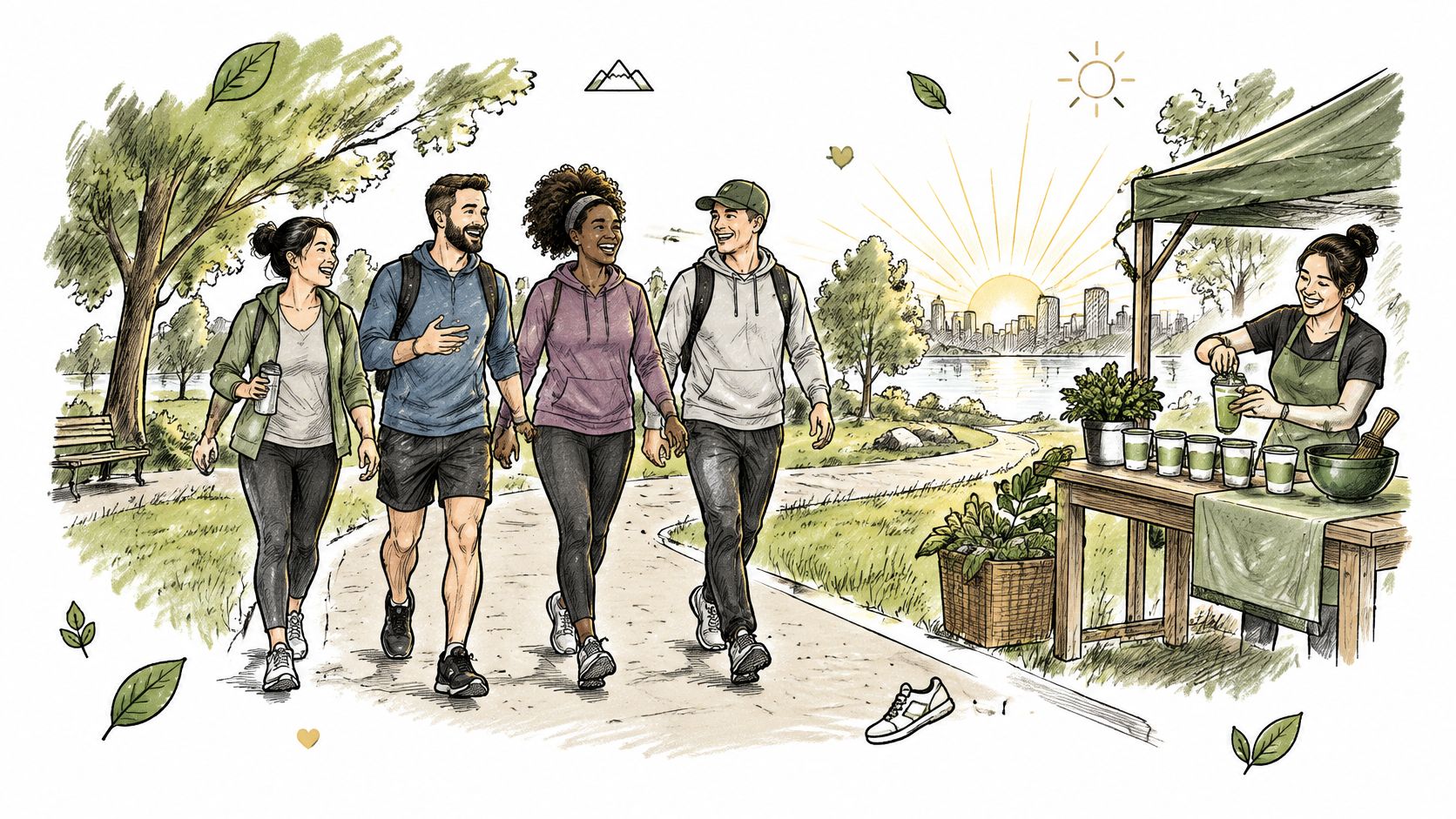
Timing is the whole job. Service should end before the first hard meeting, and the post-workout pour is what turns scattered finishers into fifteen minutes of dwell time at the cart. If the budget sits under $500, coordinate a matcha drop-off for the group rather than a full bike setup; the inquiry form lists ranges from under $500 up to $2,500+. To book in Miami, send the date, headcount, and location through The Matcha Bike's event inquiry form, which usually takes less than 60 seconds to complete.
Publish a rain rule and a daylight cutoff in the first email so nobody is guessing at 6 a.m.
5. Hydration and Habit Challenge
A four- to six-week challenge works when the goal is almost boring. Drink water daily. Take a ten-minute walk. Lights out by a set time. Calorie targets and public leaderboards push out the people you most want in the room.
Points redeem for a drink or a short cart visit, not a gift card that has nothing to do with the habit. A shared spreadsheet or a simple app is enough. Opaque scoring breeds arguments.
Say four departments compete only as teams, never as individuals. At week three the leading team does not "win" a ranking blast. They get a fifteen-minute service window on their floor. Everyone else still redeems points on a shared Friday. That structure creates repeat visits without shaming the least active group.
I would rather see offer-to-attendance and repeat redemption than a step total nobody trusts. Individual rankings feel motivating in week one and cruel by week four. Skip them.
The trade-off is duration. Six weeks needs a named owner or the tracker goes stale. If you cannot staff a weekly nudge, run four weeks and stop while people still care.
6. Matcha Mixology and Latte Workshop
Some teams will not stretch in front of their boss. They will whisk a bowl. Cap the group at 10 to 20 so instruction stays personal. A barista walks ceremonial-grade preparation, a sweetener-free version, and a fast latte or tonic. A side-by-side taste of ceremonial and culinary grade teaches more than a slide about "quality."
Send everyone out with a recipe card. The event fails if the skill dies in the conference room.
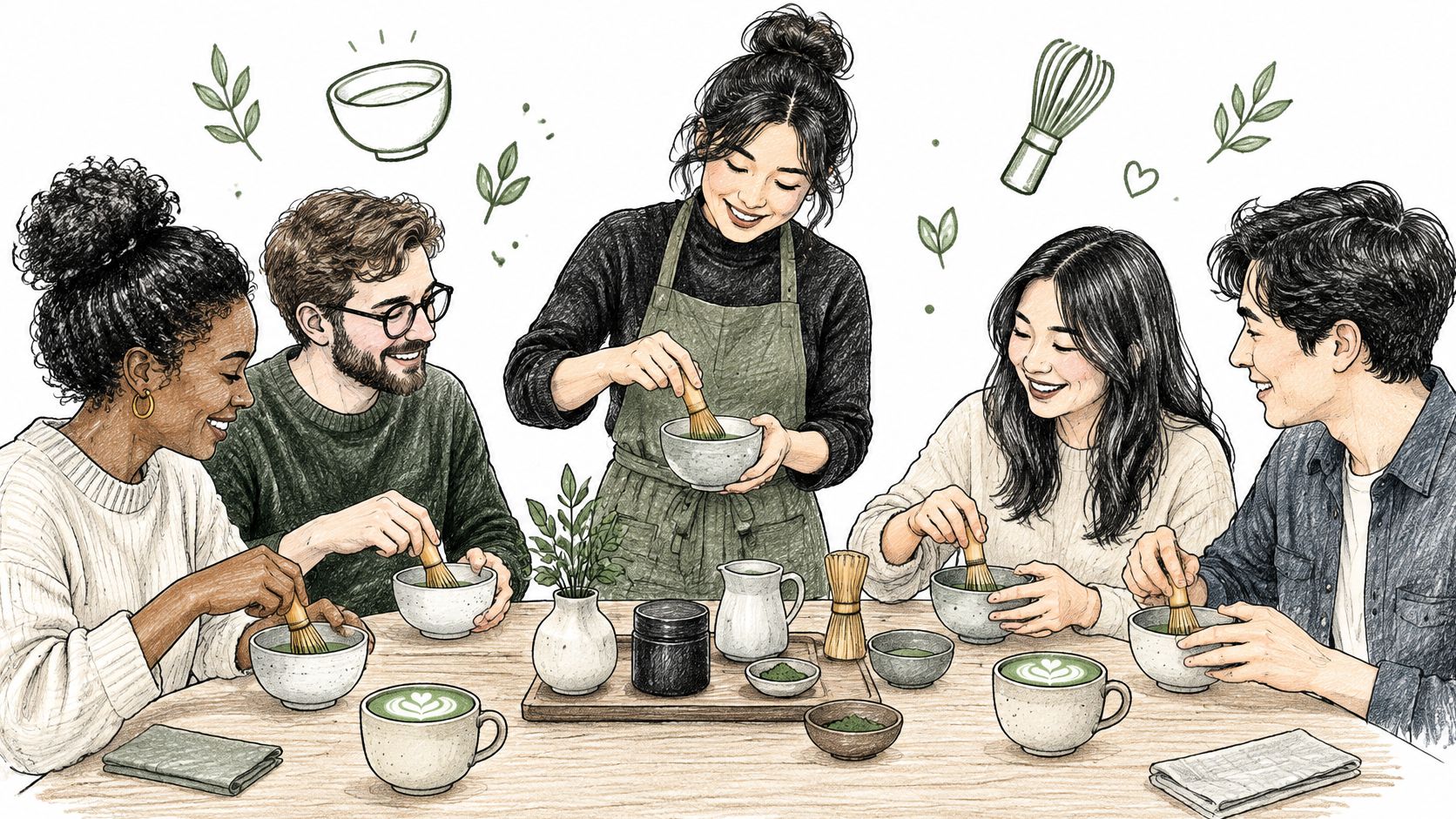
Hands-on beats a tasting flight. If guests only sip what you made, you ran catering with extra steps.
Say a student org books a wooden-table session between classes. Half the group has never held a whisk. The other half wants the latte ratio for their apartment. Both leave with a card. Corporate catalogs are full of generic barista classes. This version stays on one ingredient so you are not managing an espresso machine, dairy pitchers, and a power drop the venue does not have.
Trade-off: small groups mean several sittings if the whole company wants in. Book two waves rather than cramming thirty people around one bowl. Allergen and sugar notes belong on the card, not in a speech nobody remembers.
7. Lunch-and-Learn on Caffeine, Energy, and Nutrition
Keep the room fed and the claims boring. A registered dietitian or other qualified clinician covers caffeine timing, afternoon energy, and ordinary food choices. The drink in hand is a practical example, not a cure. Do not let anyone on the mic promise focus, weight loss, or medical benefit from a latte.
Slides go out the same day for people who could not leave their desk. Ten minutes of Q&A beats a forty-minute monologue.
Usefulness is the metric that matters, not the headcount on the sign-in sheet. In the 2024 Workplace Wellness Survey, 53% of respondents said their employer offered access to a financial-wellness program, about half of those offered a program participated, and about half of participants rated it extremely or very useful. Borrow that ladder for this lunch. Track who was offered the session, who attended, who finished a two-question survey, and whether they called it useful.
Say you pair the nutrition talk with a five-minute pointer to an existing financial-wellness benefit, because money stress often outruns smoothie advice. The drink still ties the hour together. The trade-off is presenter quality. A charismatic vendor with a product to sell will undo a careful brief. Contract the clinician, not the supplement rep.
8. Seasonal Flavor Launch and Staff Naming Contest
A new flavor nobody named is just a menu update. A flavor the staff named is a story. Open submissions for a week, moderate them, and reveal the winner at a scheduled service so the cup and the announcement land together.
Set rules in writing. No trademarks, no inside jokes that only one team gets, no names you would not print on a cup. Limited window, two or three weeks, creates urgency without a fake countdown.
Say a South Florida brand activation needs a campus moment. Students submit names, staff pick three finalists, and the winning pour shows up in co-branded cups for a short run. People photograph their own name on a can. That is cheaper reach than a boosted post, and it is theirs.
- Moderate early: Reject off-brand names before the public vote.
- Reveal in person: The winner should taste the drink the day you announce it.
- Short run: Scarcity works. A permanent flavor does not need a contest.
The trade-off is intellectual property and brand safety. If marketing and HR disagree on a name, you do not have a winner yet. Hold the pour.
9. Wellness Week Pop-Up Across Departments
One lobby party misses the night shift, the satellite floor, and anyone who cannot leave a workstation. Deloitte's 2025 Well-being at Work survey found that 66% of managers face at least one organizational barrier to supporting employee well-being, including rigid scheduling requirements (32%), competing work demands (26%), and unsupportive workplace culture (20%). Treat access as an operations problem.
Publish the rotation before the week starts. A compact cart visits buildings, departments, or residence halls on a posted clock. Each stop gets the same short menu plus a one-card resource, not a new program. Stagger windows for shifts. Offer a pre-order pickup for people who cannot queue. Keep a caffeine-free, lower-sugar pour so the format itself is not the barrier.
Say a dispersed campus runs Monday at the academic quad, Tuesday at a staff building, Wednesday at an evening window for later shifts. Attendance logged by stop tells you where to return. Equivalent access is the point. If remote staff only get a photo, you did not include them. Ship a simple at-home kit or a virtual tasting note so the week is not building-only.
Insurance and venue rules change by door. Clear each stop before you print the schedule. The trade-off is crew fatigue. Three tight stops beat seven rushed ones that taste inconsistent.
10. Outdoor Wellness Brunch or Picnic
A lawn, light food, a few low-stakes games, and a drink service people can walk up to. Two to three hours is the ceiling. Longer and the energy drops into side conversations about work.
Book a covered backup the same day you book the grass. Post allergens for every item, including sweeteners and milk alternatives. Ask venue staff about permits early. A compact, self-contained bar matters here because outdoor sites often lack the power and the footprint a full catering line expects.
Say a department picnic runs 11:00 to 1:30 on a campus lawn. Games stay optional. The cart is the landmark so people who arrive late can still find the group. No speeches past five minutes.
If the weather plan is "we'll see," you do not have a plan.
The trade-off is noise, heat, and bugs. Shade, water, and a hard end time matter more than a photo backdrop. People remember whether they were comfortable, not whether the playlist was clever.
10 Corporate Wellness Event Ideas at a Glance
Shortlist by the constraint you have: time, space, headcount, or budget. Every format pairs a wellness activity with a mobile beverage service, so foot traffic, dwell time, and drink consistency get handled at one stop instead of three vendors.
| Format | Best For | Time Commitment | Planning Effort | Group Size |
|---|---|---|---|---|
| Matcha Wellness Morning | A social, low-pressure start to the workday | 30, 60 minutes | Low | Full team or department |
| Mindful Matcha Break | Teams seeking a short afternoon reset | 15, 20 minutes | Moderate; needs a quiet space and facilitator | Small to medium groups |
| Campus or Office Wellness Fair with Beverage Stations | Large employers and campus communities with multiple wellness resources | About 2 hours | High; requires coordinating vendors and logistics | Large groups |
| Sunrise Run or Walk Club with Post-Workout Matcha | Employees or students seeking recurring activity and social connection | Recurring weekly or biweekly | Moderate; requires route and schedule coordination | Groups with varied activity levels |
| Hydration and Habit Challenge | Teams building healthy habits over time | 4, 6 weeks | Moderate; requires tracking and communication | Teams or individual participants |
| Matcha Mixology and Latte Workshop | Teams seeking an interactive, hands-on activity | About 60, 90 minutes per session | Moderate; requires supplies and instruction | 10, 20 participants |
| Lunch-and-Learn on Caffeine, Energy, and Nutrition | Workplaces seeking practical, evidence-based nutrition education | 30, 45 minutes | Moderate; requires a qualified presenter | One room or department |
| Seasonal Flavor Launch and Staff Naming Contest | Groups seeking a participatory beverage launch | 2, 3 week contest window plus a reveal service | Moderate; needs flavor development and contest moderation | Employees or students |
| Wellness Week Pop-Up Across Departments | Large or dispersed workplaces and universities | One week of rotating daily stops | High; requires coordinating multiple locations | Organization-wide, across departments |
| Outdoor Wellness Brunch or Picnic | Employees or students seeking relaxed outdoor connection | 2, 3 hours | Moderate; requires weather, food, and venue planning | Group sized to the outdoor space |
Budget narrows the list quickly. Under $500 fits a coordinated matcha drop-off for a group; full bike setups sit in the higher inquiry bands.
Roll In Your First Wellness Event
The formats that last are easy to enter and specific enough to remember. A wellness morning, a twenty-minute reset, a fair with the drinks at the door, a club with a finish-line cup. Pick one. Put a date on the calendar this month. A single repeatable stop beats a six-event series that never leaves the planning doc.
Start with the constraint you have. If the building is hybrid, do not design for the people who are already in the lobby. Offer a second window, a pickup slot, or a card remote colleagues can use. If leadership wants proof, measure attendance, repeat participation, queue time, and a one-question usefulness score. Do not promise clinical change or a drop in healthcare spend from one activation. That is not what these events do well.
Match the topic to the complaint you hear. Movement clubs help people who want a social workout. Short breaks help teams under deadline pressure. A lunch with a qualified presenter helps when the questions are about caffeine and everyday food, as long as nobody turns the cup into a health claim. Contests and seasonal pours help when you need a branded moment. Rotating pop-ups help when one room would leave whole departments out.
Logistics decide whether the idea survives contact with the building. Publish the menu, the sweeteners, and the caffeine-free option before the day. Keep groups small when the activity is hands-on. Keep fairs short. Name an owner for any challenge that runs past two weeks. Clear insurance and access per location, not just for the flagship lobby.
If you are planning events in Miami, The Matcha Bike brings a self-contained, compact setup with professional baristas and full service to corporate functions, wellness mornings, and brand activations. You tell the team where to roll in and they shape the drink experience around your event. The inquiry form takes less than 60 seconds to complete. Budgets under $500 can start as a coordinated drop-off rather than a full bike setup, with follow-up options after you write in.
Run the smallest version that still has a line, a start time, and a way for someone who missed the slot to get an equivalent. Then repeat it. Repetition is the program.
---
The Matcha Bike is a mobile matcha service for Miami wellness mornings, campus gatherings, and corporate pop-ups, with ceremonial-grade matcha whisked to order and a compact bar that does not need a full catering build-out. If you are choosing corporate wellness event ideas that people will walk toward, start with the drink stop and the format that fits your building. Visit The Matcha Bike and send the inquiry with your date, headcount, and where you want the bikes to roll in.