Buying a tin marked ceremonial grade and whisking until it foams isn't a reliable recipe. You can use excellent powder and still serve a bitter, lumpy bowl if the water, dose, and whisking change between pours. Ceremonial matcha preparation works best when you choose the drinking style first, then write down a preparation you can repeat.
## Table of Contents - What Ceremonial Matcha Preparation Means - Buy for the bowl you intend to make - Store the Tin and Judge Freshness - A storage routine that survives daily use - Separate a powder problem from a preparation problem - Usucha Spec and Whisking Procedure - Run the bowl in the same order - Koicha, Usucha and Milk Drinks Compared - Does premium matcha belong in milk? - Write a separate iced or flavored build - Keep Every Bowl on Spec - Give each control an owner - Diagnose before adjusting - Practice the Spec or Book a Whisked Service - Choose who owns the preparation
What Ceremonial Matcha Preparation Means
Ceremonial grade is a market label, not a quality guarantee or a recipe. It doesn't tell a barista how much powder to weigh, how hot the water should be, or whether the tea will suit a straight bowl better than a latte. Treat it as a seller's description, then look for useful information.
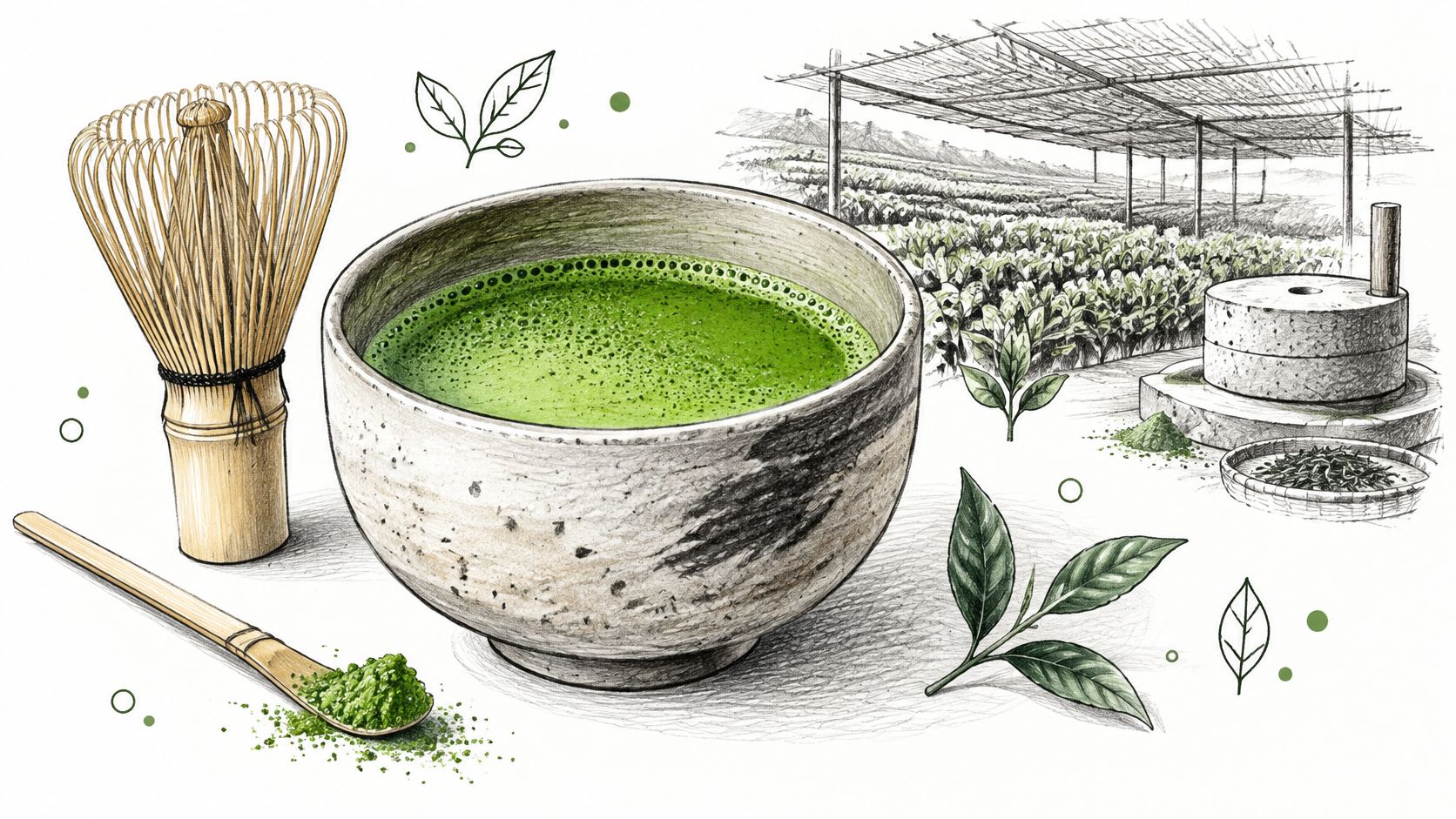
Tea Delight's discussion of matcha production and marketing describes the ceremonial-versus-cooking distinction as a recent marketing convention rather than a universal Japanese grading system. It also explains the agricultural foundation: shading increases chlorophyll and contributes to higher theanine concentrations, associated with umami, before the leaves become tencha, with stems and veins removed and the leaf dried without ordinary rolling, then milled.
That production method matters more than decorative language on a tin. You're preparing powdered leaf directly in water, not steeping leaves and throwing them away. The powder remains part of the drink, so particle texture and careful mixing are immediately noticeable.
Buy for the bowl you intend to make
Look for a named origin, cultivar information when available, and a clear description of the intended preparation. Harvest or packing information helps you assess the purchase, but none of those details should replace tasting.
A useful buying check includes:
- Appearance: Look for lively green powder rather than a dull olive cast, while allowing for differences between teas and lighting.
- Aroma: Seek a fresh vegetal or sweet sea-vegetable character. A flat, cardboard-like smell deserves caution.
- Intended use: Ask whether the seller recommends the powder for straight drinking, thick tea, or milk drinks.
- Transparency: Favor a specific explanation of flavor and production over a ceremonial label with no supporting detail.
Buying rule: Pay for a powder whose flavor you want to drink, not a grade word you hope will fix the preparation.
Don't expect identical flavor from every well-made matcha. Some bowls lean toward rounded umami; others have a brighter vegetal edge. Your preparation should reveal that character without adding avoidable clumps or harshness.
Store the Tin and Judge Freshness
A written recipe can control preparation, but it can't restore aroma that the powder has already lost. Treat the tin as a working ingredient, not an open countertop display. The practical objective is to limit unnecessary exposure to moisture, warmth, light, and air.
Choose a package you can use comfortably rather than buying a large supply because its unit price looks attractive. If a seller provides harvest, milling, or packing information, read what the date describes. A harvest date and a packing date aren't interchangeable.
A storage routine that survives daily use
- Mark the opening date: Write it on the tin so anyone preparing drinks can identify the working batch.
- Close it between bowls: Portion the powder, replace the lid, and move the tin away from the wet whisking area.
- Keep it cool and dark: Use a dry cupboard away from the kettle, direct sunlight, and other heat sources.
- Handle cold storage carefully: If you refrigerate the tin, let it return to room temperature while sealed before opening. That helps avoid condensation reaching the powder.
- Use dry utensils: Don't put a damp scoop into the container or sift over a steaming bowl.
Make the first unsweetened bowl your acceptance check. Smell the dry powder, then the hydrated tea, and taste before adding anything that could cover a defect. You're looking for a clear, appealing aroma and a texture appropriate to finely milled tea, not a gritty slurry.
More whisking can break up a mixing problem. It can't put fresh aroma back into stale powder.
Separate a powder problem from a preparation problem
A dull color alone isn't enough to reject a tin. Check the aroma and prepared flavor alongside it, and consider whether the lighting makes the powder look different.
Likewise, grit doesn't automatically prove staleness. First rule out poor sifting, incomplete wetting, or an unsuitable powder texture. If a carefully prepared bowl still tastes flat and smells papery, set that batch aside rather than sweetening it into service.
Keep a short note with the tin: opening date, dry aroma, and the first bowl's flavor. That gives the next person a useful reference instead of leaving them to guess what the batch should taste like.
Usucha Spec and Whisking Procedure
Usucha spec for one consistent bowl
The service targets below follow Matcha Matcha's preparation guidance, including 1.0 g ± 0.1 g powder, 75 mL ± 5 mL water, 70, 80°C water, and 15, 20 seconds of whisking.
| Control | Target | Acceptable band | Pass check |
|---|---|---|---|
| Matcha powder | 1.0 g | 1.0 g ± 0.1 g, about 1 g sifted | Scale reading, not a heaped scoop |
| Water volume | 75 mL | Published range 70, 100 mL; use 75 mL ± 5 mL for this service spec | Strength stays in the same range |
| Water temperature | 70, 75°C | 70, 80°C | Sweet umami, not harsh bitterness |
| Whisk time and path | 15, 20 seconds, narrow W or M | Wrist-driven, not a circle | Fine foam, no dry clumps on the bottom |
| Sift timing | Fine mesh just before water | Every bowl, especially in humid air | Powder wets evenly instead of reclumping |
The wider published water range isn't permission to pour by eye. Choose the tighter service band so different staff members aren't preparing noticeably different strengths under the same menu name.
Run the bowl in the same order
- Check the heated water with a thermometer, rather than assuming the kettle setting equals the temperature reaching the bowl.
- Preheat the bowl, discard that water, and dry it, so the preparation starts with a warm vessel and a dry surface for sifting.
- Rest the bamboo whisk briefly in warm water, then shake off excess water to condition the tines.
- Weigh and sift the powder immediately before hydration, keeping humid air from undoing the sift.
- Add a small splash from the measured water and work a smooth paste, so dry pockets are wetted before the bowl is diluted.
- Add the remaining measured water, preserving the intended powder-to-water ratio.
- Whisk with a narrow, brisk W or M from the wrist, rather than making broad circles that mostly move liquid around.
- Slow down and lift through the center, refining the surface bubbles rather than chasing maximum foam height.
- Inspect the surface and bottom, because an attractive foam cap can conceal dry clumps underneath.
Teas.co.uk's preparation guide supports the paste-first method and warns that water around 90, 100°C can produce a harsher, more bitter profile, while water that's too cool can leave poorly wetted agglomerates.
Pass the bowl on texture and taste, not foam height. If the drink seems weak, check the scale and water measure before changing the recipe. Don't compensate by overheating the water.
Koicha, Usucha and Milk Drinks Compared
How the bowl changes by style
| Style | Powder and water | Motion | Additions | Best use |
|---|---|---|---|---|
| Koicha | Much more powder, very little water | Knead into thick tea; don't chase foam | None in formal practice | Ceremonial thick tea |
| Usucha | Small powder dose with enough water for a thin bowl | Brisk W or M | None in formal practice | Everyday straight bowl |
| Iced | Start with a measured hot paste, then account for chilling dilution | Whisk before adding ice | Ice after the powder is wet | Cold straight tea |
| Milk or fruit | Prepare a measured base strong enough for the finished drink | Suspend fully before pouring | Measured milk, sweetener, or fruit afterward | Lattes and layered drinks |
Japan Past and Present's account of the tea ceremony distinguishes koicha, thick tea made with comparatively more powder and little water, from usucha, a thinner, frothy preparation. It also states that formal ceremonial bowls contain no sweeteners, flavorings, or additional ingredients.
Those are different preparations, not stronger and weaker versions of a single café recipe. Koicha calls for deliberate kneading and a powder suited to concentrated drinking. Applying the usucha foam target to it would mean judging the wrong endpoint.
Does premium matcha belong in milk?
It can, but premium doesn't automatically mean better for a latte. Milk changes the balance of sweetness, texture, and tea intensity, while fruit and syrup introduce flavors that can obscure delicate notes.
The IAFOR Journal of Cultural Studies case study offers a useful framework by distinguishing preparation contexts rather than treating ceremonial as a universally standardized category. For a bar lead, the practical consequence is straightforward: evaluate the powder in the finished drink you intend to sell.
Taste the unsweetened base first, then build the milk drink with measured ingredients. If its attractive tea character disappears, test a different powder before assuming the answer is a heavier dose.
A good latte powder should taste good through the milk. It doesn't need to win a straight-bowl tasting first.
Write a separate iced or flavored build
For iced tea, hydrate the powder before introducing ice. Record the water used for the base and the ice added afterward, because a cold drink should remain balanced as it sits.
For a fruit drink, establish a clump-free tea base before assembling the finished pour. Don't rely on sweetness to conceal poor mixing.
Layering needs its own test: fruit thickness, milk choice, and pour speed affect where each component settles. Pour gently over a spoon or along the vessel wall when necessary, and standardize the order that works with your ingredients rather than assuming every strawberry preparation behaves alike.
Keep Every Bowl on Spec
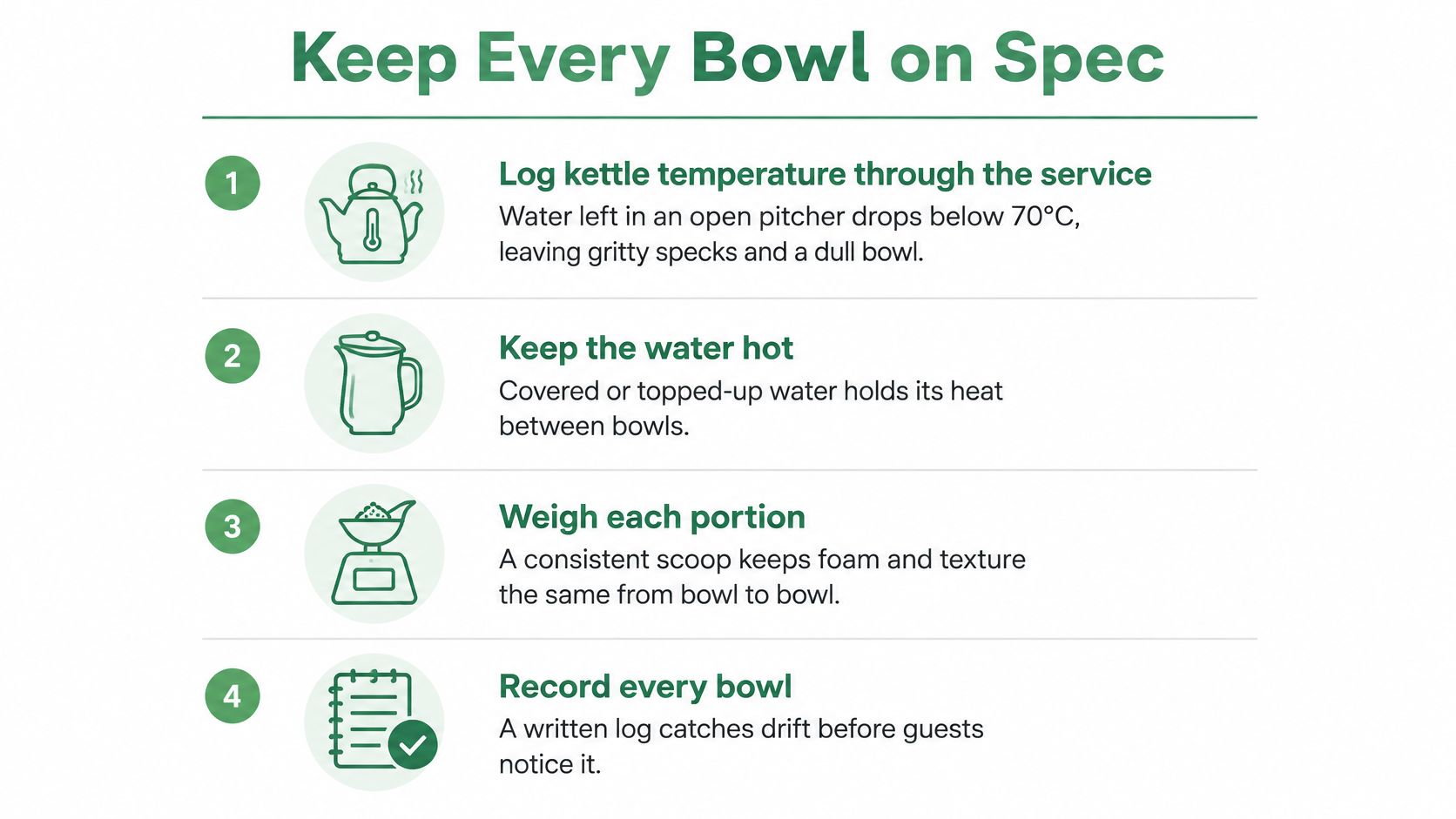
The difficult part of service isn't remembering the recipe. It's keeping the working conditions stable while guests arrive, tools get rinsed, and different people take over the station. Put the controls where the barista can see and use them without leaving the preparation area.
Keep this checklist beside the working station.
Give each control an owner
During a busy service, assign responsibility for weighing and temperature checks rather than assuming everyone is watching. Another person can handle cups, additions, and handoff, provided the preparation barista still controls the base.
Use a log that records the working powder batch, kettle check, and any recipe adjustment. Record exceptions as well as routine checks: a replacement tin, a new whisk, or a changed milk can explain why the finished drink suddenly tastes different.
| Symptom | Check first | Useful response |
|---|---|---|
| Uneven strength | Powder weight and water measure | Verify the tools before changing the recipe |
| Dry specks | Sieve, hydration, and paste step | Correct wetting before increasing whisk speed |
| Harsh flavor | Actual pouring temperature | Recheck the water rather than adding syrup |
| Streaky texture | Whisk condition and motion | Inspect the tines and narrow the stroke |
| Inconsistent finished latte | Milk, ice, and sweetener measures | Standardize the complete build |
Inspect bamboo whisks during cleaning. Remove a whisk with broken tines from service, and replace one that no longer performs reliably rather than asking staff to compensate with more force. Rinse promptly and let the whisk dry in a ventilated place instead of leaving it soaking.
Diagnose before adjusting
Foam collapse alone doesn't identify the cause of a poor bowl. Taste, inspect the bottom, and check preparation records before blaming temperature, powder, or arm speed.
Change a single control during a test so the result tells you something useful. If you change powder, water, and whisking together, you won't know which adjustment helped.
Use the video as a movement reference, then judge the actual bowl against your written endpoint.
Consistency includes the handoff. Serve the completed drink promptly, and don't let finished bases accumulate while the team catches up on cups or garnishes. Arrange the station around complete drinks, not a queue of partially prepared bowls.
Practice the Spec or Book a Whisked Service
At home, repetition teaches more than switching tins after every disappointing bowl. Keep the powder and preparation unchanged across several sessions, and note the aroma, bitterness, texture, and residue. Use the same bowl when possible so the vessel doesn't introduce another variable.
Once the result is dependable, choose a deliberate experiment. Try a different powder in the same preparation, or keep the powder and test a milk build. Don't change both and expect a clear comparison.
Choose who owns the preparation
- For personal practice: Keep the scale, thermometer, sieve, and whisk together so accurate preparation is easier than improvising.
- For a shared home routine: Leave the recipe beside the tools, including what a finished bowl should look and taste like.
- For a crowd: Decide who will manage preparation, ingredient measures, service, and cleanup before selecting flavors.
The Matcha Bike began at the University of Miami with a standard of high-quality matcha, intentionally chosen ingredients, and consistent care. For hosts considering a whisked matcha event service, our drinks use ceremonial-grade matcha and are whisked to order, with a menu that rotates with the season, setting, and what the team is excited to make.
The choice is practical, not ceremonial versus casual. Practice at home when you want the skill in your own hands; choose a staffed service when you need that attention applied across a guest list. In either setting, the preparation has to support the powder rather than relying on its label.
---
The Matcha Bike offers whisk-to-order matcha with professional baristas and a full event setup, bringing measured preparation to campus gatherings, weddings, and brand activations. Visit The Matcha Bike to share your setting and discuss a drink experience shaped around your event.