You've booked the food, confirmed the room, and worked out where everyone will sit. Then you notice the gap in the plan: who's making drinks while guests arrive, and what will someone order if they don't want alcohol? A meal caterer may handle dinner beautifully without providing the beverage service your event needs.
A good drink station gives guests something worth ordering without pulling them away from the occasion. Choosing one starts with understanding the service, the space it needs, and the experience you want every guest to have.
## Table of Contents - What Beverage Catering Is Built to Do - A drink station isn't a banquet kitchen - Beverage Setups Compared by Event Size - Match the equipment to the room - Check the constraints that can overturn your choice - Menus That Treat Every Guest Equally - Build choice around different needs - Make information easy to find - Permits Insurance and Venue Checks - Establish what covers the event - Check insurance separately - How a Beverage Catering Day Runs - Turn the inquiry into a service plan - Prepare, serve, and close - Agree on capacity before the deposit - Mobile Matcha Carts in Real Events - Different occasions, different priorities - Choose a Beverage Partner for Your Date - Match the scope to the budget
What Beverage Catering Is Built to Do
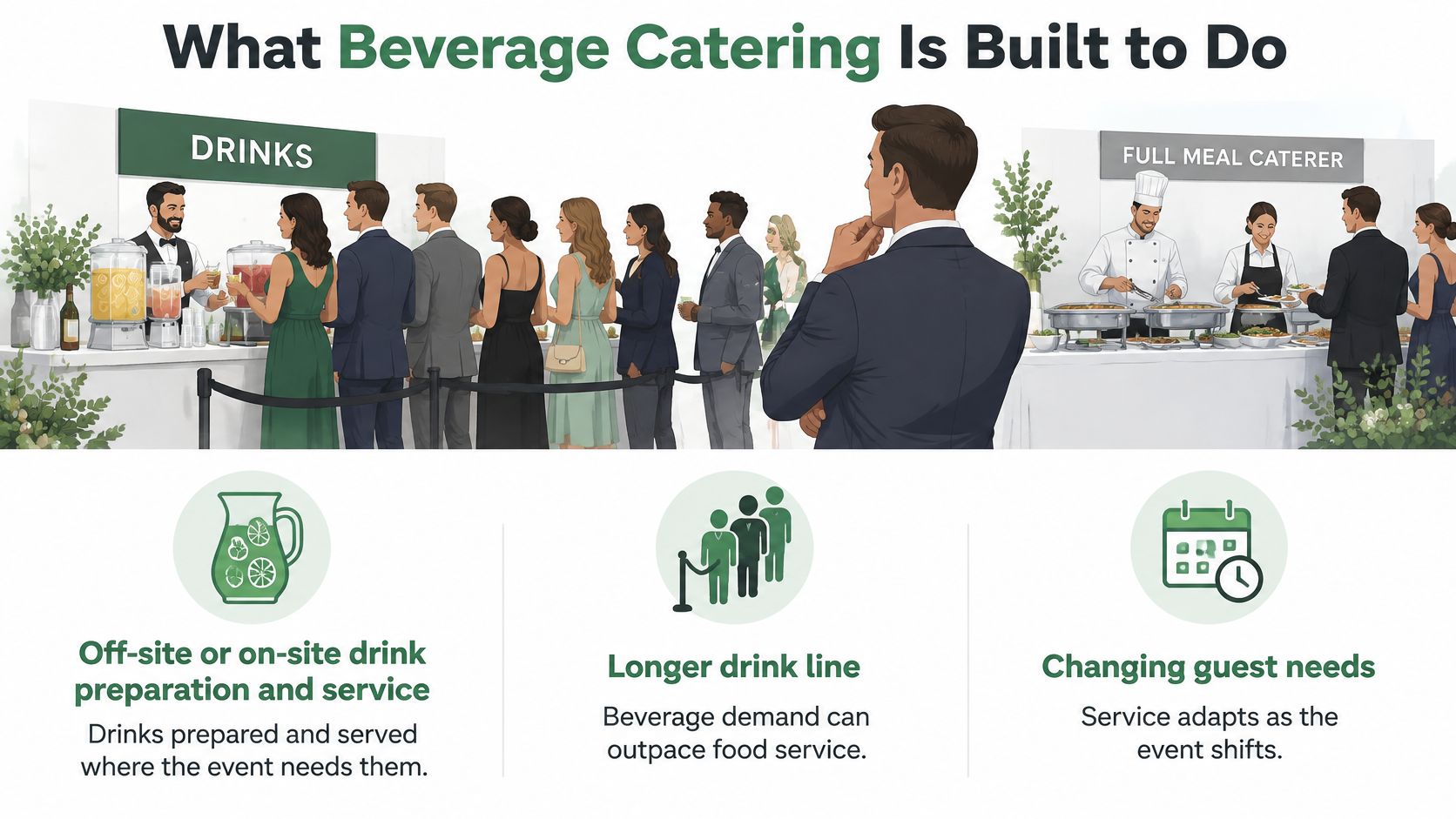
Say you've hired a full meal caterer for a reception. The food comes out on schedule, but the longest line forms beside the drinks table. Guests are searching for ice, asking which pitcher contains dairy, and waiting while someone leaves to find more cups.
The problem isn't necessarily the menu. Nobody owns the complete drink-service job.
Beverage catering means preparing and serving drinks at an event venue, with some preparation potentially completed off site. Staff, ingredients, equipment, and a portable station travel to the guests rather than asking guests to visit a restaurant or café.
The service includes more than the pour. Someone has to organize orders, replenish supplies, keep preparation surfaces clean, and remove the station afterward.
A drink station isn't a banquet kitchen
A beverage caterer doesn't need to provide a plated meal. A focused drinks operation can work with a smaller physical footprint than a full meal caterer, although its equipment still needs a safe, practical place to operate.
Think of the deliverable as several connected responsibilities:
- The drink: A repeatable recipe, suitable ingredients, and the right serving temperature.
- The queue: A clear place to order, wait, and collect without blocking other guests.
- The station: An intentional appearance, readable menu, and organized working area.
- The finish: Supply removal, waste handling, and an agreed handover to the venue.
This is part of a substantial service industry. IBISWorld's U.S. catering-services industry profile estimates a 2026 market size of approximately $15.7 billion, about 13,658 businesses nationwide, and a five-year revenue compound annual growth rate of 6.7%.
Those figures describe catering services overall, not beverage catering alone. The relevant connection is operational: caterers prepare, transport, set up, and serve at changing venues.
That model supports weddings, graduation parties, business lunches, and trade shows. A focused mobile beverage service can also fit campus gatherings and brand activations, where the drink station may be an attraction rather than an accompaniment to dinner.
Before choosing strawberry, citrus, or vanilla, decide what physical service format your event can accommodate.
Beverage Setups Compared by Event Size
Beverage catering setups by scale and utilities
| Setup | Guest range | Utilities and footprint | Best occasions | Staffing |
|---|---|---|---|---|
| Staffed cocktail bar | Size to peak orders and bartender capacity | Confirm power, water, ice access, glassware storage, and back-bar space | Weddings and galas | Bartenders meeting local licensing and training rules |
| Mobile cart or bike | Size to menu speed and available pour stations | Compact, potentially self-contained; verify actual power and water needs | Campus, wellness, and brand pop-ups | Baristas managing setup, service, and breakdown |
| Drop-off drinks | Small groups that can manage their own distribution | No staffed station; chilled drinks still need suitable storage | Offices and casual parties | No service staff after delivery |
| Zero-proof station | Small gatherings through large events, with capacity matched to demand | Small-bar footprint, preparation area, and clear labels | Sober-curious and mixed crowds | A dedicated server |
| Espresso or batch coffee | Morning attendance and break-time demand determine capacity | Espresso needs an electrical plan; batch coffee needs safe holding and dispensing | Conferences and breakfasts | Baristas for espresso; an assigned attendant for batch service |
Choose by peak demand, not headcount alone. A room where guests arrive gradually presents a different service challenge from a conference where everyone leaves a session together. The same attendance can require different staffing, station placement, and preparation methods.
Ask the vendor to explain how the proposed setup will handle your busiest moment. A guest range without a menu and service window doesn't tell you whether the station will work.
Match the equipment to the room
A staffed cocktail bar needs working space behind the attractive front panel. Check where staff will keep replacement bottles, clean glassware, used glassware, and ice. Don't assume an empty corner is a usable bar location.
A cart or bike is useful when the station itself provides the working surface. It can suit an indoor lobby or outdoor courtyard, but self-contained doesn't mean utility-free. Confirm the actual equipment list rather than relying on the cart's appearance.
Coffee requires a separate equipment conversation. Espresso machines can create substantial electrical demands, while a whisked-tea station doesn't need an espresso machine. Batch coffee may be a better choice when guests need to collect a straightforward hot drink quickly.
Practical rule: Select the main service format first. Add accessible water and a considered nonalcoholic choice before assuming you need another full bar.
Drop-off service is different from a staffed experience. It works when the host can handle distribution, storage, and cleanup, and guests don't need someone to customize each drink. Include those host responsibilities when comparing quotes.
Check the constraints that can overturn your choice
Walk the actual delivery route before approving a large setup. Stairs, narrow doorways, a distant loading area, or an elevator restriction can make a bar impractical even when the room has plenty of space.
Outdoor service needs its own plan:
- Heat: Provide shade and discuss replenishment, cold storage, and how long prepared ingredients can remain in service.
- Ground conditions: Choose a stable, level surface that supports equipment and safe staff movement.
- Weather: Agree on shelter, relocation, and who decides whether conditions are suitable.
- Guest movement: Keep the queue away from entrances, accessible routes, and food pickup.
A zero-proof station belongs in this layout discussion too. Give it a visible location and its own service capacity, not whatever space remains after the cocktail bar is placed.
Menus That Treat Every Guest Equally
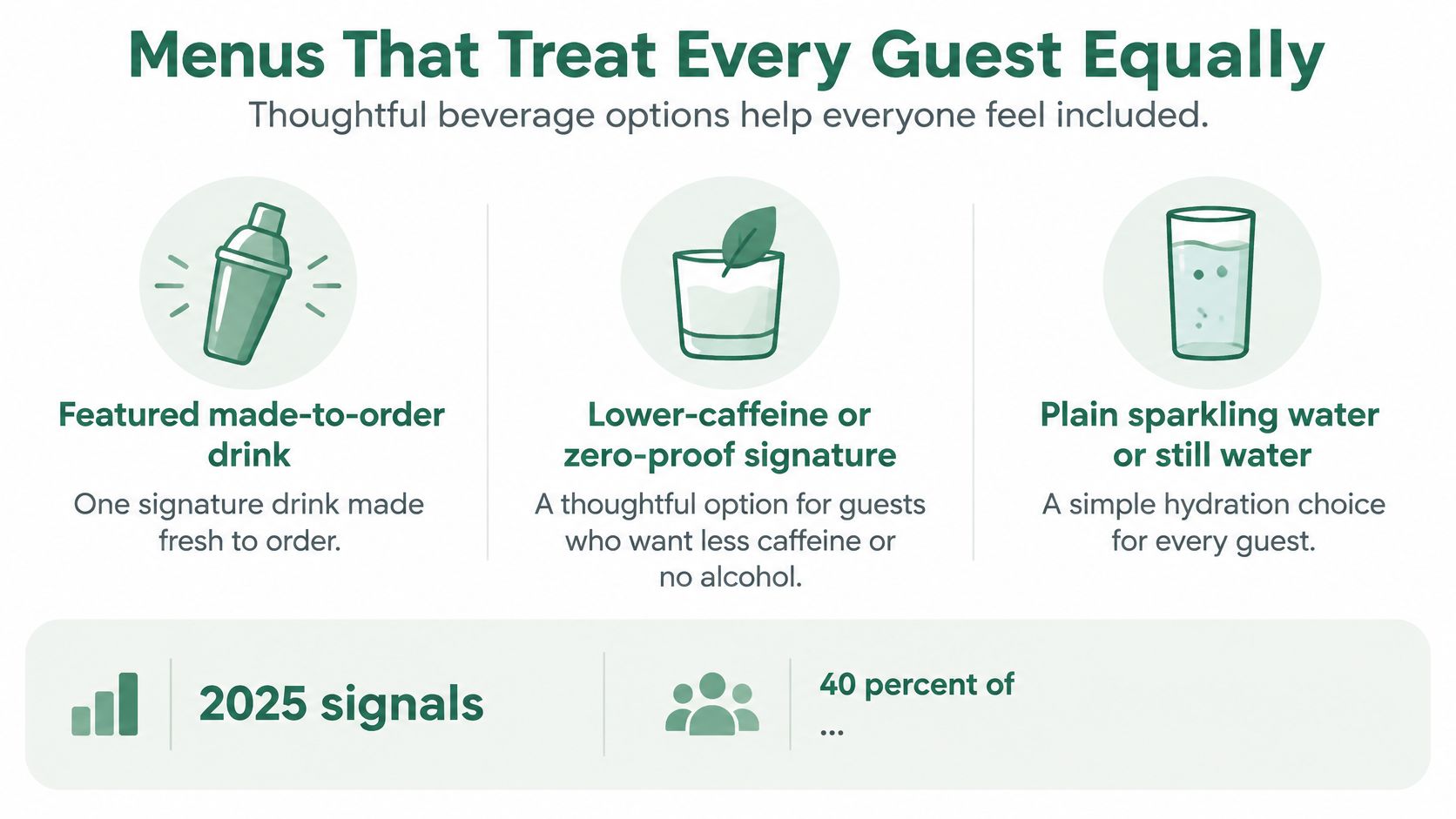
Equal choice means equal attention, not identical ingredients. A guest avoiding alcohol should be able to order something distinctive without negotiating an exception or accepting a sugary substitute.
The demand deserves serious planning: BizBash's event food-and-beverage trends coverage cites an Ipsos Consumer Tracker finding that 40% of Americans planned to drink less in 2025, alongside Keurig Dr Pepper's finding that 60% of Gen Z consumers aged 21 and older were interested in exploring no- or low-alcohol beverages.
Those findings don't tell you what every attendee will order. They do give planners a reason to stop treating nonalcoholic service as a minor accommodation.
Build choice around different needs
Organize the menu around a featured made-to-order drink, a distinct alternative, and uncomplicated hydration. For example, a strawberry-and-matcha layered drink could sit beside a caffeine-free cucumber-citrus sparkling drink, with still and sparkling water clearly available.
The important distinction is that alcohol-free and caffeine-free aren't interchangeable. Matcha contains caffeine, and ceremonial-grade matcha isn't an evening-friendly exception just because it sounds premium. Whisking a drink to order changes the preparation experience, not that distinction.
For evening service, offer a deliberately designed caffeine-free signature. Check every component, including tea bases, mixers, and garnishes, before describing a drink that way.
Give nonalcoholic signatures proper names, readable menu space, and the same attention to glassware and presentation as alcoholic drinks. When comparing prices, consider ingredients, preparation labor, and service rather than assuming an alcohol-free drink should automatically cost less.
Make information easy to find
Guests shouldn't have to discuss pregnancy, recovery, religion, or health at the front of a queue. A simple menu note can invite them to choose according to their preferences without explaining why.
Use labels that answer practical questions:
- Milk and allergens: Identify dairy and nut-containing ingredients, and explain whether shared tools create cross-contact concerns.
- Sweetening: Name the syrup or sweetener and indicate whether sweetness can be adjusted.
- Caffeine: Identify caffeinated drinks. Give an approximate amount only when the vendor can support it from the ingredient specification and recipe.
- Alcohol: Distinguish alcohol-free choices from low-alcohol choices rather than grouping them together.
A guest who skips alcohol should still be able to name a drink they were excited to order.
Seasonal changes don't require rebuilding the whole operation. Keep the preparation method and ingredient checks consistent while rotating a fruit component or flavor pairing.
Our approach to consistent preparation is part of The Matcha Bike's story. For any event menu, the useful test is the same: can guests understand their options and order confidently without receiving a lesser experience?
Permits Insurance and Venue Checks
Rules change by jurisdiction and venue. Treat this as a booking checklist, not legal advice, and confirm requirements with the venue and relevant local authorities before committing.
Alcohol service needs particular care. Establish who is legally responsible for supplying and serving it, which authorization covers the event, and whether staff must complete local server training. Don't assume a bartender's qualification authorizes every off-site service arrangement.
Alcohol-free service also needs checking. Preparing open drinks can bring health-department requirements into play, including permits, food-handler credentials, and an approved handwashing arrangement.
Establish what covers the event
Start with the activity and address, not a broad claim that a vendor is licensed. A document may apply to a business operation without settling every requirement for a particular venue or temporary event.
Request a clear explanation of:
- Service authorization: Which permit or license covers the proposed preparation and service activities?
- Food safety arrangements: Where will staff wash hands, store ingredients, and handle utensils?
- Venue permission: Does the property permit outside vendors and the proposed drink service?
- Alcohol responsibility: Who purchases, transports, supplies, and serves alcohol when it's included?
A compact cart doesn't remove these questions. Neither does a private invitation list or a menu without spirits.
Check insurance separately
Request a certificate of insurance, often called a COI, and have the venue confirm its requirements. Ask about general liability coverage and, where alcohol is involved, the relevant liquor liability arrangements.
A certificate provides evidence of coverage, but the venue may also require an additional-insured endorsement or other documentation. Have the vendor's insurance representative address those requests rather than assuming that listing the venue's name settles them.
For Miami campus or private-venue work, prepare an approval packet containing the requested insurance evidence, applicable permits, equipment description, and load-in plan. Give the venue an identified contact who can answer questions about the operation.
Booking checkpoint: Don't pay a deposit while required coverage or permission remains unresolved.
Request documents during the inquiry, not during setup. Confirm the venue's alcohol policy in writing, check that documentation will be current on the event date, and pause the booking if the vendor can't demonstrate the required coverage.
Send these questions before approval:
- License holder: Who holds the liquor license, if alcohol will be served?
- Insurance documentation: Who must be named on the COI, and is a separate endorsement required?
- Health authorization: What health permit or approval covers the drink preparation at this address?
How a Beverage Catering Day Runs
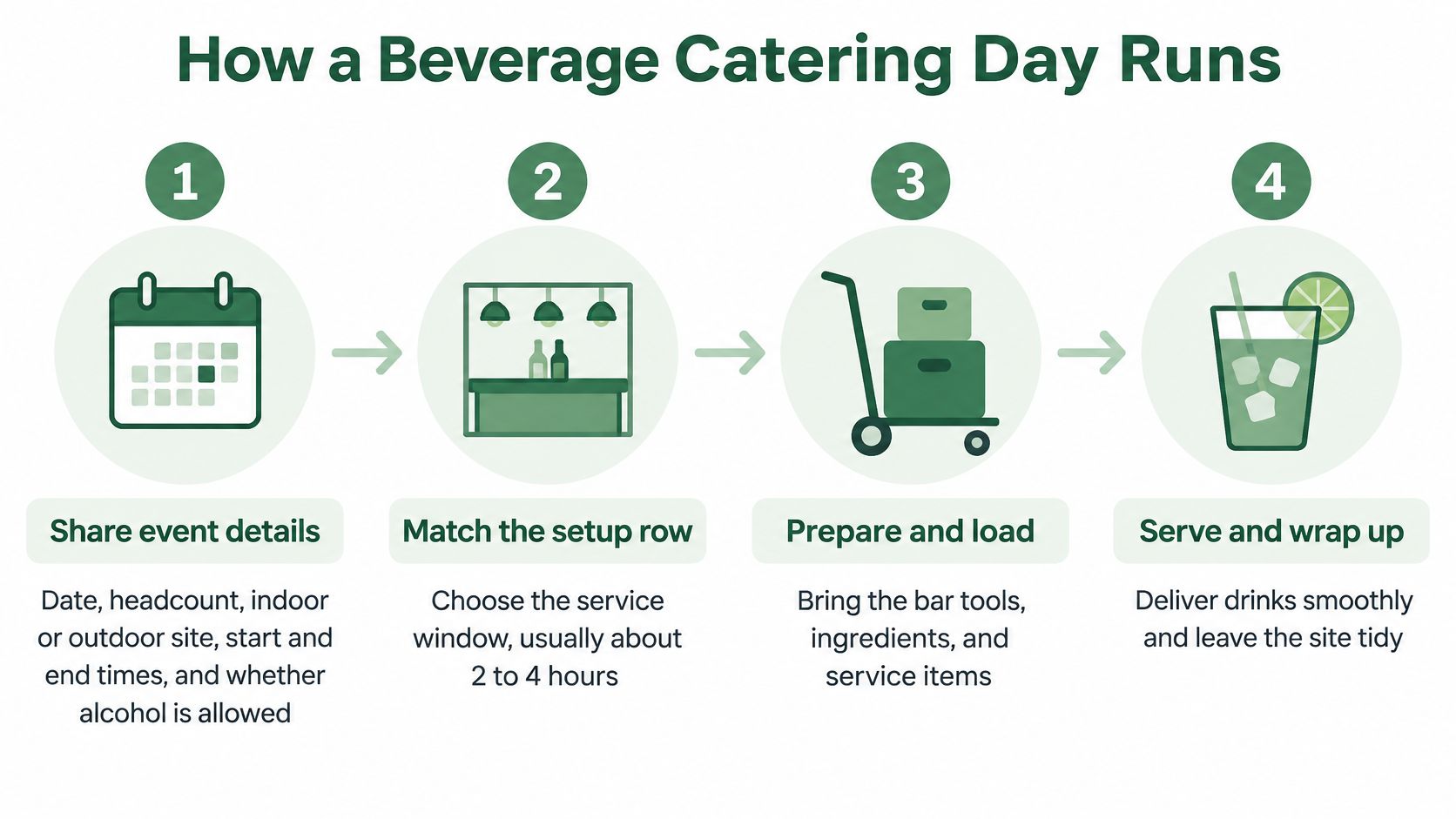
A smooth event starts with decisions made before anyone loads a vehicle. The host supplies the event details, the vendor translates them into an operating plan, and the venue confirms that the plan works in the space.
The sequence below shows where each responsibility belongs.
Turn the inquiry into a service plan
- Share the event details. Send the date, address, expected attendance, indoor or outdoor location, service start and end times, and alcohol rules. Include arrival patterns, such as guests gathering after a ceremony or leaving a presentation together.
- Define the service window. Distinguish guest-facing service from setup and breakdown access. A drink station doesn't have to operate throughout the entire event, but the venue must allow staff enough access to prepare and leave properly.
- Lock the menu and serving format. Confirm recipes, customization choices, cups or glassware, and the proposed order-taking method. A menu with elaborate garnishes and individual adjustments needs a different operating plan from a short list of repeatable drinks.
- Map the working area. Mark the load-in route, station position, utility connections, ingredient storage, handwashing arrangement, and waste location. Assign responsibility for each item so the host and vendor aren't both assuming the other will supply it.
Prepare, serve, and close
- Stage and transport supplies. The vendor organizes ingredients, tools, serving items, and suitable storage before departure. At the venue, staff set up and check the station before opening service.
- Manage the live station. Staff take orders, prepare drinks, replenish supplies, and monitor guest flow. A growing queue should trigger an agreed response, such as assigning help to order-taking or replenishment, rather than improvising an unapproved recipe change.
- Break down and hand over. Confirm who removes rubbish, handles leftover ingredients, and cleans the working area. Staff should leave the space in the condition agreed with the venue.
A cart carries its working surface with it, which can simplify positioning and assembly. A larger cocktail setup may require more separate handling of bar sections and glassware, so its access plan should reflect that work.
Agree on capacity before the deposit
Ask the vendor to state an expected drinks-per-hour capacity for the actual menu, including the staffing proposed. Then compare that with attendance, likely participation, repeat orders, and the busiest arrival period.
Don't treat capacity as a reason to run staff at their limit. Identify who handles payment if needed, ingredient replenishment, and finished-drink pickup while the preparer works.
Record staffing and service capacity in the proposal. Use the expected drink mix and serving sizes to plan cups, ingredients, and ice, with the vendor allowing for weather, waste, and replenishment access.
Your final brief should fit on a concise page: place, attendance, service window, menu, utilities, access, responsibilities, and contacts. Agree on a final confirmation deadline before event day, leaving room to resolve changes rather than merely acknowledge them.
Mobile Matcha Carts in Real Events
In its U.S. catering-services report, Grand View Research reports that event catering accounted for 61.74% of revenue in 2022 and that 48% of caterers identified corporate events as their largest growth area, while 35% identified weddings as a major source of sales growth.
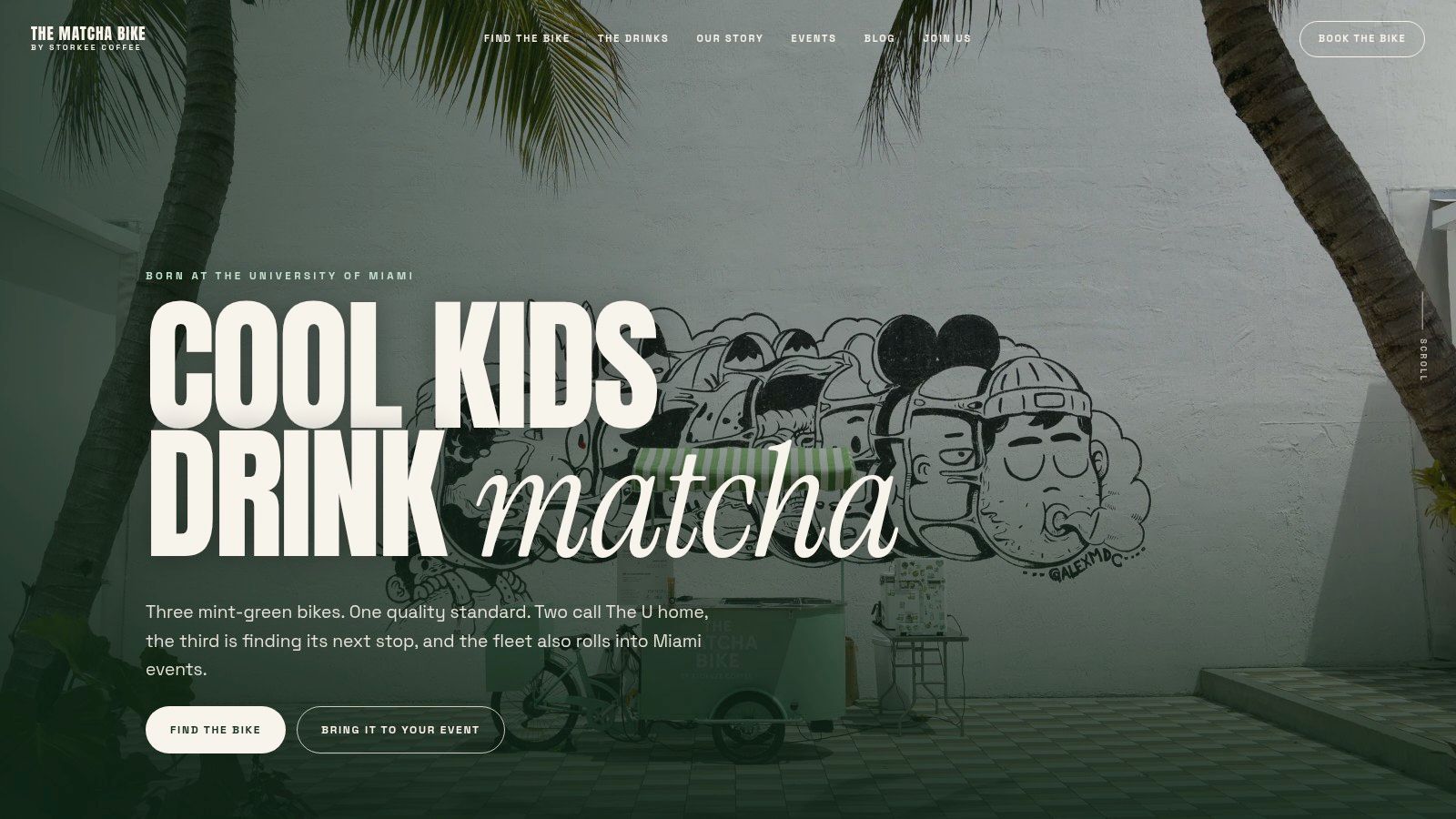
A mobile station can take a different role in each setting. The format is visible in this website screenshot.
Different occasions, different priorities
- Corporate wellness morning: Place the cart where employees can order without blocking lobby circulation.
- Campus gathering: Choose a recognizable collection point and keep the queue clear of classroom access.
- Wedding or private party: Coordinate presentation with the celebration while keeping the menu legible.
- Brand activation: Give campaign graphics a visible position without covering ingredient information.
We began at the University of Miami with high-quality matcha, intentionally chosen ingredients, and the same care in every drink. Independently operated by Storkee Coffee, The Matcha Bike has also carried out an activation with Alo Wellness Club in Miami.
Clients tell us where to roll in, and we shape the experience around the event. Our event inquiry page gives organizers a place to share that context.
For a closer look, watch the video below.
When venue space is tight and drink preparation is part of the attraction, the cart-or-bike format is a useful starting point.
Choose a Beverage Partner for Your Date
Book against a written brief, not the prettiest photograph. The right partner can explain how its station, menu, staffing, and documents fit your venue.
Send the date, city, guest count, indoor or outdoor setting, alcohol rules, and budget band. Add the service format you prefer and any essential guest requirements.
Match the scope to the budget
For Miami hosts, campus organizers, and South Florida planners considering ceremonial matcha, our service options address different levels of support. Our inquiry form offers estimated budget ranges of under $500, $500 to $1,000, $1,000 to $2,500, and $2,500+; these are inquiry categories, not guaranteed package prices.
For budgets under $500, we can coordinate a group matcha drop-off and send follow-up options after the inquiry. A staffed pop-up brings professional baristas and full setup; event service includes a custom menu and flavors, branded cans and cups, and a self-contained compact setup.
Before accepting any proposal, check the essentials:
- Scope: What arrives, what remains on site, and who handles cleanup?
- Guest access: Can attendees understand ingredients and find a suitable drink?
- Venue fit: Has the property accepted the setup and required documents?
- Commercial terms: Are service hours, inclusions, exclusions, and payment conditions written clearly?
Choose the vendor whose plan fits the actual event. A thoughtful booking should leave you knowing who is responsible, what guests can order, and how the station will operate.
---
The Matcha Bike offers mobile matcha beverage catering with professional baristas, custom event menus, and a compact setup for Miami gatherings. Visit The Matcha Bike to share your date, venue, guest count, and budget so we can shape the drink experience around your event.