You've made two iced matchas from the same whisked base. In one, thick honey sinks and clings to the bottom. In the other, clean syrup disappears into the milk in seconds. Same matcha, two completely different cups.
That's why the best sweetener for matcha isn't a single winner. It's a match between the sweetener's flavor, how it mixes, and the drink you're building. A neutral syrup protects umami and grassy aroma in an iced latte. Honey or maple adds a deliberate flavor to a hot drink. Stevia and monk fruit cut sugar but can bully a delicate whisked matcha if you dose them carelessly.
This roundup covers seven common options, from simple syrup to coconut sugar. For each one, you'll get the flavor it brings, the format where it works best, and the mixing move that keeps it from ruining the cup.
## Table of Contents - 1. Simple Syrup (Cane Sugar Syrup) - Why Cafes Default to It - 2. Honey - 3. Agave Nectar - Where It Earns Its Place - 4. Maple Syrup - Getting the Mix Right - 5. Stevia - 6. Monk Fruit (Luo Han Guo) Sweetener - 7. Coconut Sugar - How each matcha sweetener compares on sweetness, mixing, vegan status, and best use - Match Your Sweetener to the Drink You Are Making
1. Simple Syrup (Cane Sugar Syrup)
If you want sweetness that doesn't argue with matcha, start here. Simple syrup is granulated sugar dissolved in water, usually 1:1 or 2:1, heated until clear and cooled. Because it's already liquid, it blends instantly into cold matcha with no grit, gritty sediment, or undissolved crystals at the bottom of the cup.
Why Cafes Default to It
Its neutral sweetness lets ceremonial-grade matcha do the talking. You taste the vegetal, savory notes first, then sweetness, rather than tasting caramel, flowers, or fruit before the tea. That's why chain cafes build iced matcha lattes on a classic syrup base, and why flavored lines like Torani use a sugar syrup base for vanilla and other matcha menu additions.
The health logic is dose control, not magic. The World Health Organization healthy diet fact sheet recommends free sugars provide less than 10% of total daily energy intake, about 50 grams on a 2,000-calorie diet, with added benefit below 5%, or about 25 grams. A measured 5 to 10 grams in one drink keeps that in view.
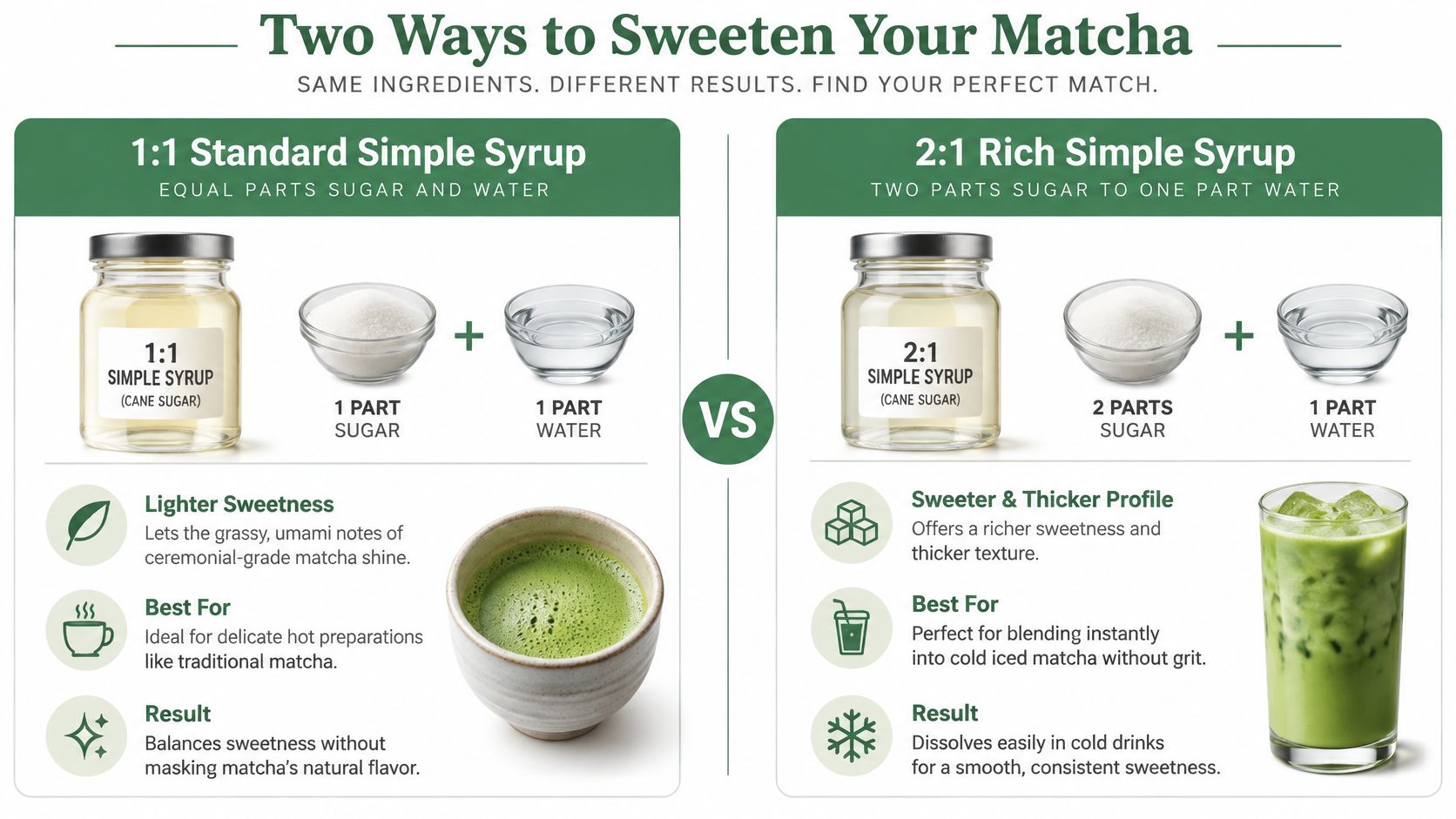
- Batch it ahead: Chill 1:1 syrup in labeled squeeze bottles for events.
- Dose before ice: Add syrup before milk or ice so it mixes evenly.
- Fix the pump count: Keep the same count per size across shifts.
- Date every batch: Label when you made it for food safety.
For fast iced service, I wouldn't start anywhere else.
2. Honey
Honey doesn't just sweeten matcha. It changes its mood. Brewed from flower nectar and made mostly of fructose and glucose, it carries floral aromatics that shift with the source flowers. In a hot matcha latte, that reads as rounded, warm, and a little plush.
Use it where that warmth is welcome. Honey-sweetened matcha lattes suit a cozy cafe menu, and honey pairs naturally with lavender or citrus in seasonal builds. In a plain iced matcha, though, a strong wildflower honey can sit on top of the tea instead of blending into it. Mild options like orange blossom or clover respect the matcha more.
Don't sell it as a health workaround. The World Health Organization guidance on sugar-sweetened beverages classifies sugars naturally present in honey as free sugars, the same category targeted for reduction, so its real advantage is flavor complexity, not exemption from sugar guidance.
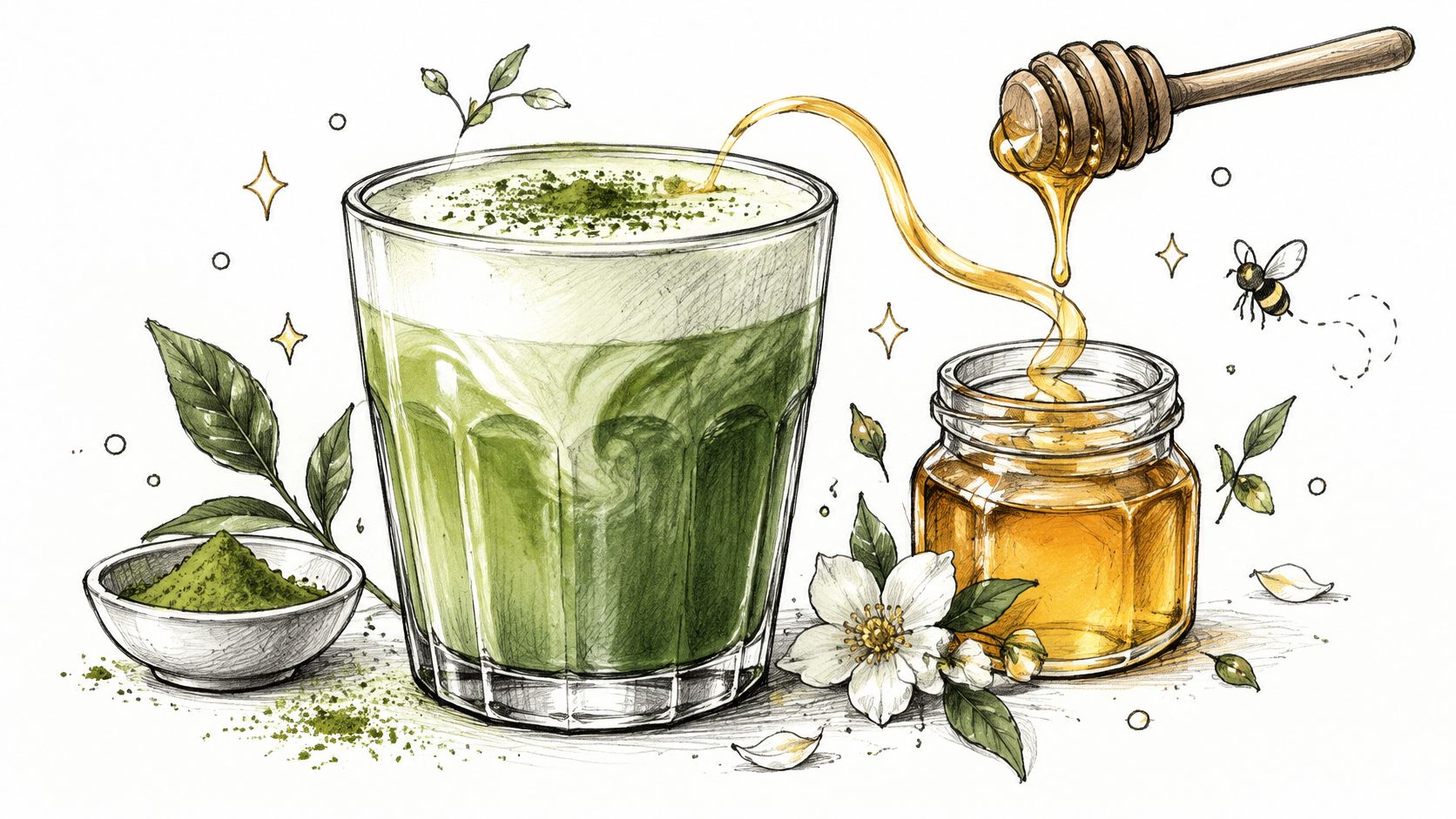
Dissolve honey in the hot matcha base first. If cold milk or ice hits it before it melts in, you'll drink unsweetened matcha through a straw and find the honey later.
Disclose honey on the menu for vegan guests, and store it sealed at room temperature. It crystallizes and thickens in the fridge, which makes service messy. Kept warm and dosed lightly, it's the best pick when you want floral sweetness as a feature, not a background note.
3. Agave Nectar
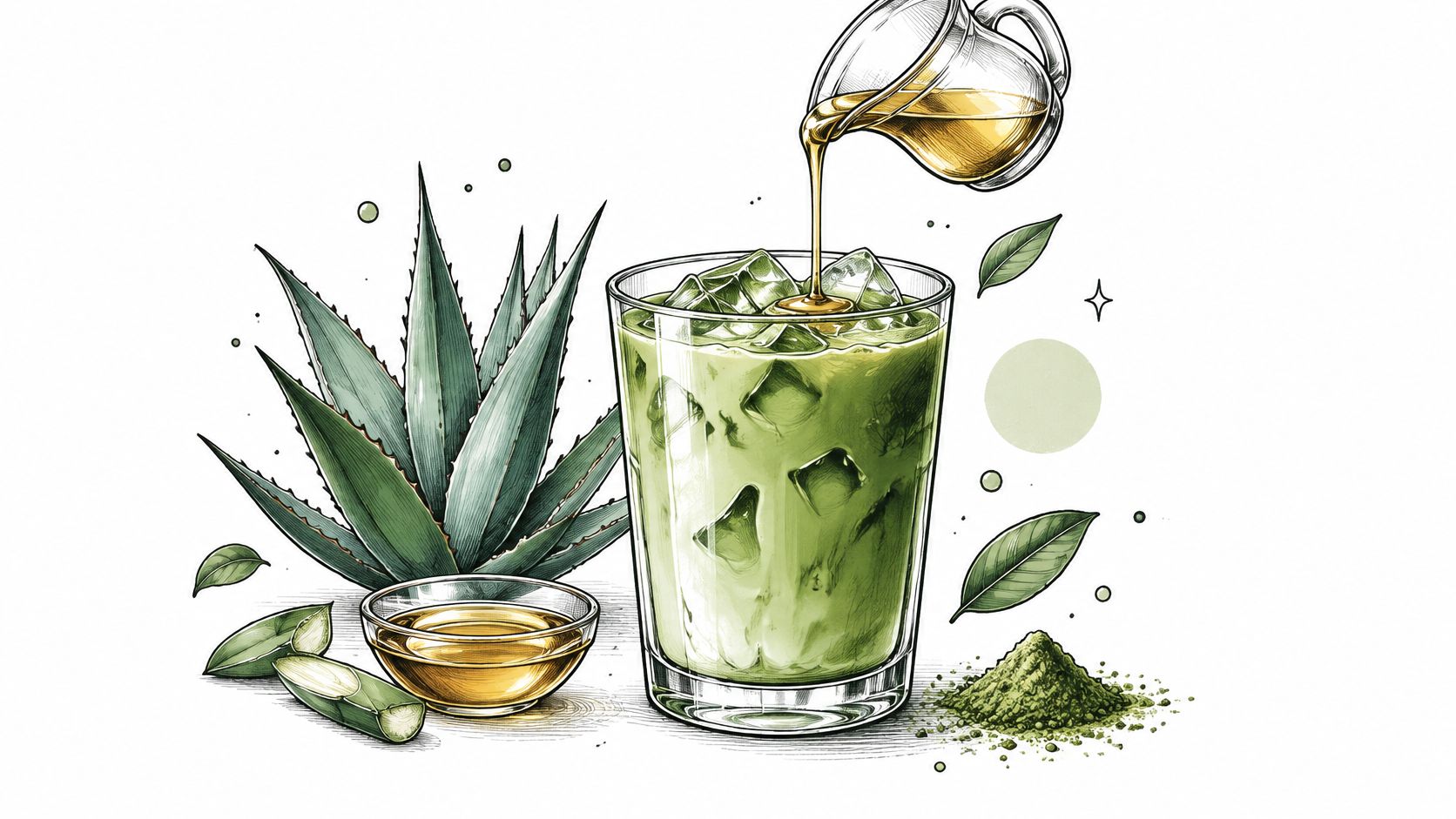
Pour agave into an iced oat milk matcha and you'll see why plant-based cafes love it. It flows thin, dissolves fast in cold liquid, and doesn't leave the syrupy drag that honey can. Extracted from the agave plant and composed mainly of fructose, it tastes sweeter per spoonful than sugar, so a little goes further than you expect.
That strength is also the trap. Dose agave like simple syrup and the cup turns bluntly sweet before the matcha flavor catches up. Start with about three-quarters of your normal sugar amount, taste the finished drink with milk and ice in it, then adjust. Light, neutral agave works best here. Darker agave brings a heavier, almost caramel edge that competes with a fresh, grassy matcha.
Where It Earns Its Place
Agave is at its best in iced, plant-milk drinks where speed and cold solubility matter. It disappears into oat or almond milk without whisking tricks, which makes it practical at a busy event bar. Put it on calibrated pumps so every barista lands the same sweetness, and label it clearly for guests watching fructose.
In a hot ceremonial matcha, I'd still choose a lighter touch. Agave can flatten delicate aroma if you're heavy-handed. Used sparingly in an iced latte, it's clean, quick, and vegan, with almost no mixing friction.
4. Maple Syrup
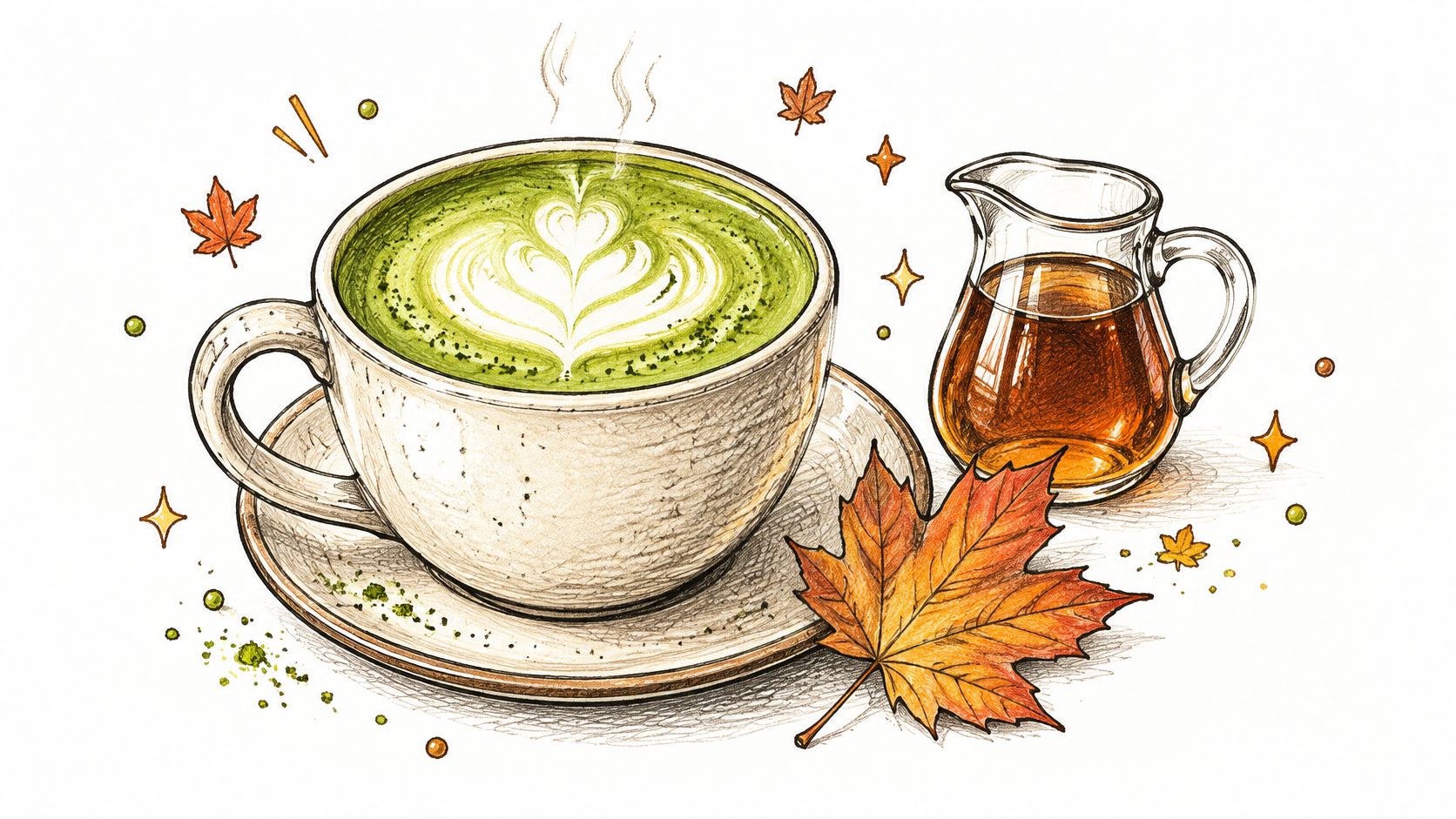
Maple syrup announces itself, and that's the point. Made by boiling down maple sap, it brings warm, caramel-like depth along with its sucrose sweetness. In matcha, that turns a bright green latte into something cozier, especially in fall and winter.
Pair it deliberately. A maple matcha latte with oat milk and a pinch of cinnamon tastes like a seasonal drink, not a compromised one. But pair that same maple dose with a delicate whisked ceremonial matcha and you'll bury the fresh, vegetal top notes under pancake-house flavor. The grade matters too. Grade A Amber or Dark Rich gives you balance. Anything darker can take over the cup.
Getting the Mix Right
Stir maple into the hot matcha base before cold milk goes in. It'll blend evenly instead of streaking through the drink. In cold brew style matcha, add it before ice and stir hard, since cold liquid slows integration.
Practical rule: Treat maple as a flavoring that happens to sweeten, not as a neutral sweetener. If you can't taste the matcha after you add it, you've built a maple drink.
Offer it as a seasonal option to keep a campus menu fresh, and note it on the board for transparency. When the weather cools and guests want warmth, maple is hard to beat.
5. Stevia
Stevia cuts sugar, but it doesn't behave like sugar. Its sweetness comes from steviol glycosides in the leaves of Stevia rebaudiana, and a tiny amount does the work of a spoonful of syrup. The FDA sweeteners summary reports steviol glycosides are approximately 200 to 400 times sweeter than table sugar and contribute few or no calories in the small amounts used.
That potency explains most bad stevia matchas. One extra squeeze and you get a lingering, licorice-like bitterness that sits right where matcha's natural bitterness already lives. The two stack up and the cup tastes harsh instead of fresh.
Standardize the dose by weight or a pre-diluted liquid, not freehand drops during a rush. The BMJ review of non-sugar sweeteners notes an acceptable daily intake of 4 mg/kg body weight per day, expressed as steviol equivalents, which is a safety ceiling, not a recipe target.
- Start low: Add a few drops, taste the finished drink, then decide.
- Soften it: Blend stevia with a small amount of simple syrup or maple.
- Pre-measure it: Use a dropper or pump system at events.
- Label it: Guests managing sugar need to know what's in the cup.
Kept at a low dose, stevia is a workable low-sugar option. Overdosed, it's the fastest way to mask good matcha.
6. Monk Fruit (Luo Han Guo) Sweetener
A guest orders an iced matcha with no sugar and watches you reach for a monk fruit packet. The packet is where the drink can go right or wrong. Monk fruit gets sold as the clean, premium answer, and in matcha it usually tastes cleaner than stevia. Its sweetness comes from mogrosides in Siraitia grosvenorii, a small gourd from southern China. The FDA page on aspartame and other sweeteners in food states that no formal ADI has been specified for monk fruit.
Read the bag before you judge the sweetener. Pure monk fruit extract is so concentrated that many products blend it with erythritol for bulk. That carrier changes the cup. It can add a cooling sensation, alter how the powder dissolves, and leave sediment in an iced drink if you stir it straight into cold milk. Check the ratio of monk fruit to erythritol, and put erythritol on the menu when it is present. Guests counting sugar or watching digestive sensitivity need that information before they order.
For hot matcha, whisk a small amount of monk fruit powder into the matcha before milk goes in. For iced matcha, use a pre-dissolved liquid or a portioned syrup. Powder tossed into cold milk is the usual reason a monk fruit matcha tastes gritty or uneven. At batch service, a pre-dissolved liquid keeps doses consistent across dozens of cups. Taste the finished drink at serving temperature, because a blend that reads balanced warm can taste thin or harsh over ice. In plant milk, the clean finish can make oat or almond taste flatter, so adjust the dose against the finished cup rather than the base.
Monk fruit works best in iced matcha and lower-sugar café drinks where you want sweetness without a stevia-like aftertaste. It is a poor fit for drinks that need body from sugar, like a rich hot latte or a dessert-style special. Use it where a clean finish matters more than caramel or honey depth, and keep the dose low enough that matcha still leads the cup.
7. Coconut Sugar
Coconut sugar is the one guests ask for by story. It's made by evaporating sap from coconut palm flower buds, and it looks the part, granular and golden-brown with a mild caramel flavor. In matcha, it lands close to brown sugar, warmer and less clean than white sugar syrup.
Be honest about what it is. It's a less-refined sugar, not a low-calorie sweetener, and its trace minerals are too small to change the drink nutritionally. What it does change is flavor and texture. Stir the dry crystals into an iced latte and you'll get grit. That single mistake is why many people decide they don't like it.
Turn it into syrup first. Dissolve it in hot water at a 1:1 ratio, cool it, and dose it like simple syrup. For a single hot cup, whisk it with a splash of hot water before the matcha and milk go in. Cafes use that syrup in seasonal matcha drinks and bakery-style matcha desserts where a caramel note belongs.
Store the dry sugar sealed, especially in humid Miami conditions where it clumps fast. As a syrup, it's a solid choice when you want brown sugar character with a natural origin guests recognize.
How each matcha sweetener compares on sweetness, mixing, vegan status, and best use
| Item | Sweetness Level | Dissolves in Cold Drinks | Vegan-Friendly | Best Use with Matcha |
|---|---|---|---|---|
| Simple Syrup (Cane Sugar Syrup) | Adjustable, neutral | Yes, fully | Yes | Iced matcha; preserves matcha's flavor |
| Honey | Moderate, floral | Slowly; dilute first | No | Warm matcha lattes |
| Agave Nectar | High; use less | Yes, fully | Yes | Iced and plant-based matcha |
| Maple Syrup | Moderate, caramel-like | Mixes well | Yes | Seasonal matcha lattes |
| Stevia | Very high; use tiny amounts | Depends on form | Yes | Low-sugar matcha |
| Monk Fruit (Luo Han Guo) Sweetener | Very high; often blended | Blends well | Yes | Low-sugar hot or cold matcha |
| Coconut Sugar | Moderate, caramel-like | No; dissolve first | Yes | Matcha with a brown-sugar flavor |
Match Your Sweetener to the Drink You Are Making
The cup format decides the sweetener before the flavor does. An iced matcha for a line of students needs speed and consistency. A hot seasonal latte needs warmth. A low-sugar cup needs careful dosing more than a health claim.
Use simple syrup for iced service and event service. It dissolves on contact and keeps the matcha front and center. Reach for honey or maple in warm and seasonal drinks where their flavor is part of the design, and dissolve both in the hot base before adding milk. Choose agave for plant-based iced matcha, where its thin texture disappears into cold oat or almond milk. Turn coconut sugar into syrup when you want caramel depth without grit.
For sugar reduction, dose stevia and monk fruit like concentrates, not syrup. Their concentrated sweetness makes them easy to overpour, and a heavy hand flattens the tea. The World Health Organization guideline announcement recommends non-sugar sweeteners not be used as a strategy for weight control, so offer them for taste and customization, not as a health promise. A menu with unsweetened, lightly sweetened, and full-sweetness builds lets palates adjust gradually.
A sweetener should not have to hide a preparation problem. If the matcha tastes weak, fix the tea, water, and milk ratio before you add more sugar.
Test every option hot and cold before a launch or event, with the matcha concentration and whisking time held steady. Sweetness reads differently over ice, in oat milk, and against fruit. Lock the winner into a gram-based recipe card so every shift pours the same cup.
The Matcha Bike whisks ceremonial-grade matcha to order for every drink, so the sweetener is the variable to tune for the format. The best sweetener for matcha is the one measured well enough that the matcha still tastes like matcha.
For a campus cup, check The Matcha Bike's Instagram for this week's location. For events, the bikes bring custom menus, professional baristas, and a self-contained setup to gatherings across Miami, and the event inquiry form is the place to start.