
You can have everything looking right on paper, the ceremonial matcha, the oat milk, the sweetener measured to the gram, and still end up with a cup that tastes dull, chalky, or oddly thin the moment the rush hits. That's the situation on a bike bar, where heat drifts, milk foams collapse, and a “quick” drink turns inconsistent fast if the workflow isn't tight.
A solid vegan matcha latte recipe is really a service system. The best results come from treating matcha as a powdered tea that has to be suspended cleanly in liquid, not as a flavor syrup you can freestyle at the counter, and that shift in thinking matters even more when the same drink has to taste the same across campus service and one-off pop-ups.
## Table of Contents - Why Vegan Matcha Is Easier to Get Wrong Than You Think - Matcha is sensitive to workflow, not just ingredients - Why campus service exposes the weak spots - The Whisk-and-Pour Recipe That Holds Up - The core method - Choosing the Right Plant Milk for Your Latte - Pick by function, not by habit - What the barista actually has to do - Caffeine, Sugar, and Honest Menu Labeling - Publish the dose, not the vibe - Sweetening should be measured too - What Actually Determines the Taste of the Final Cup - Small shifts that change the cup - The cheapest tools are the ones that save the cup - Scaling the Recipe Across Bikes and Event Bars - Build the line around timing - Document what changed, not just what sold - Bringing the Vegan Matcha Latte to Campus and Events
Why Vegan Matcha Is Easier to Get Wrong Than You Think
The ticket line is moving, someone wants a second drink while the first one is still being whisked, and the milk pitcher is already warmer than it should be. That's where matcha slips. The drink doesn't fail because the idea is bad, it fails because a few small variables drift at once.
Matcha is sensitive to workflow, not just ingredients
Matcha has a long history, but the modern cup still depends on one simple operational truth, the powder stays in the drink. That's what makes a latte different from steeped tea, and it's why a standardized whisk-and-pour process matters more than chasing a “signature” ingredient swap. The tea history is real, the preparation is real, and the service problem is real too, especially when the same recipe has to work at multiple stops. PBS on matcha's history and modern standardization
Practical rule: If the cup tastes great in the first hour and falls apart in the next one, the recipe isn't stable enough for service.
At a compact bar, the common failure points are predictable. Powder that wasn't sifted clumps. Water that ran too hot pushes the cup toward harshness. A lazy whisk leaves sediment at the bottom. A matcha concentrate that sits too long before dilution loses its clean color and aroma.
Why campus service exposes the weak spots
A home recipe can hide those problems because one person makes one drink and drinks it immediately. A campus line doesn't give you that luxury. Multiple bikes, multiple baristas, changing ambient heat, and uneven milk behavior all make small mistakes show up fast.
That's why a good vegan matcha latte recipe is less about a single perfect ingredient and more about controlling the order of operations. The drink should be built the same way every time, same matcha mass, same water window, same whisk motion, same steam target, same pour timing. When that happens, the flavor stays recognizable from one service to the next, even when the setting changes.
The Whisk-and-Pour Recipe That Holds Up
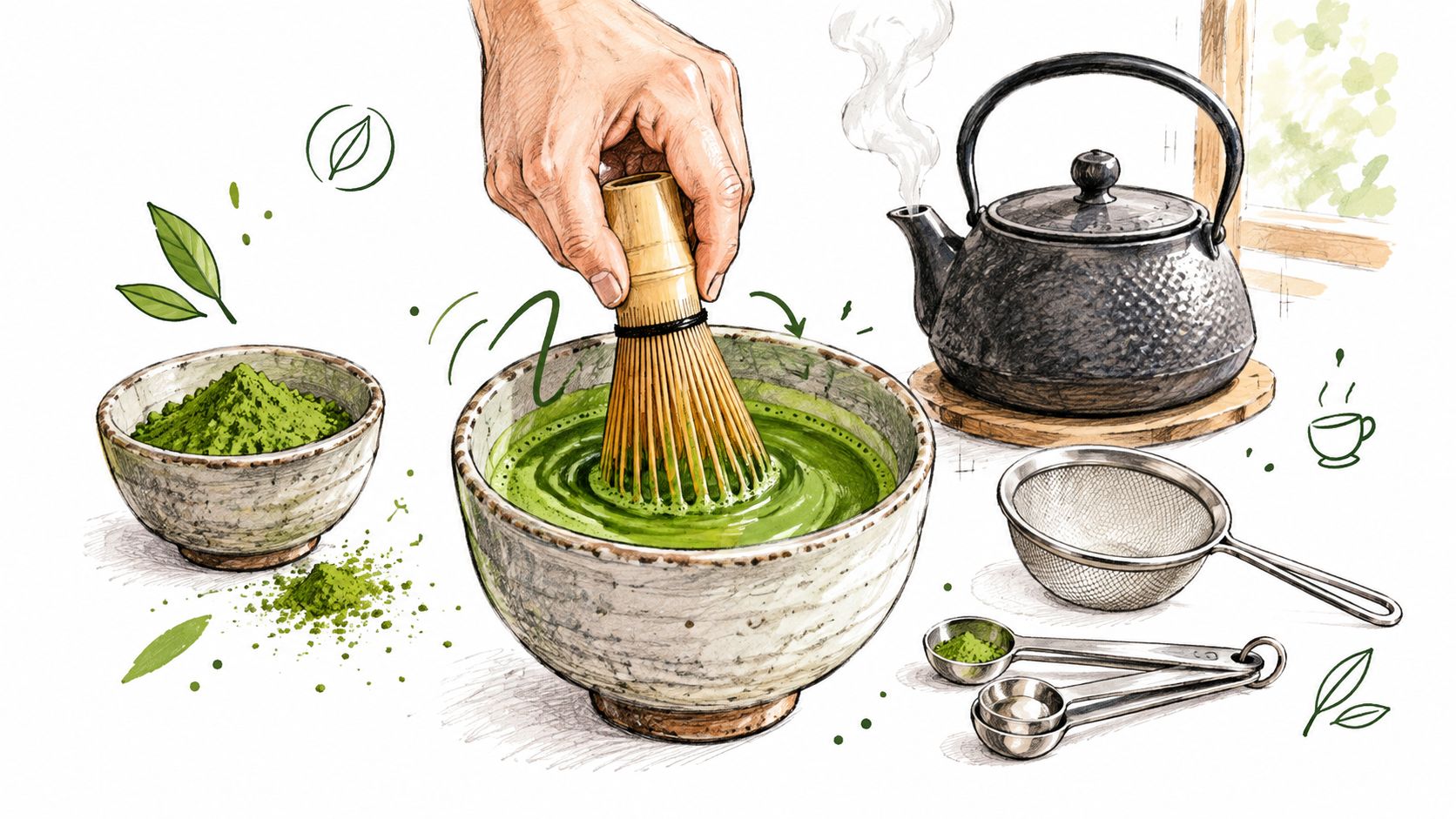
A drink that tastes good on the first pour and holds up during a rush starts with 2 g sifted matcha, not a loose spoonful. Weight keeps the cup repeatable. A published preparation study used 2 g matcha with 100 g water at 80°C, which is a useful benchmark for service work. For a latte, I keep the opening whisk tighter, with about 30 to 60 g of water at 70 to 80°C before the milk goes in. Preparation study on matcha whisking and temperature
The core method
- Sift the matcha first. If the powder is clumpy before water hits it, the cup is already working against you. Sifting takes seconds and avoids a gritty finish.
- Add warm water in the 70 to 80°C range. Keep it below boiling. In practice, anything above about 85°C pushes the cup toward harshness and flattens the umami side.
- Whisk in an M or W pattern for 15 to 25 seconds. Side-to-side motion does the job better than a lazy circle. The goal is suspension, not just stirring.
- Steam the plant milk to about 60 to 65°C. That gives texture without driving the foam into collapse.
- Pour the milk immediately over the whisked matcha. Do not let the concentrate sit.
On a bike bar, I use a scale and thermometer every time. Volume estimates drift fast when the line is moving and hands are switching between drinks. Fixed whisk time matters for the same reason, because “looks right” is how batches start to taste different.
Keep the order boring. Sift, whisk, steam, pour. The more the process changes, the more the cup changes.
The mistakes are plain to see, and they repeat under pressure. Unsifted powder, circular whisking, insufficient agitation, and holding the concentrate too long before dilution are enough to turn a clean matcha latte cloudy and uneven.
For teams building a repeatable bar flow, the same logic applies at a campus event or a one-off pop-up. A setup like The Matcha Bike shows how a fixed whisk-and-pour routine keeps the drink steady when service speeds up.
Choosing the Right Plant Milk for Your Latte
Plant milk is not a neutral swap. It changes foam, mouthfeel, sweetness, protein, allergen exposure, and how long the drink holds together once it leaves the pitcher. In a comparative study across almond, oat, soy, pea, coconut, and rice beverages, oat produced the longest-lasting foam, while rice produced the lowest foam quantity and stability. Plant-milk foam comparison study
Pick by function, not by habit
Oat is usually the easiest fit when you want a latte with a rounder body and steadier service behavior. It tends to hold foam well and gives the cup enough texture to survive a short walk from bar to table. Soy makes sense when protein matters more and when you want foam that stays fine and persistent. Pea can also perform well, although some palates read the flavor as a little greener.
Almond drinks lighter and can taste clean, but foam performance varies by brand. Coconut brings its own flavor and can work in warmer-weather drinks, though it is usually less stable in a queue. Rice is the one I would avoid when the drink needs visible foam and a cup that still looks good after handoff.
What the barista actually has to do
The steam routine changes with the milk. Oat, soy, and pea milk usually do best with low aeration, a steady stretch, and an immediate pour once the texture is set. Overheating or whipping too hard separates the cap from the drink, and a foam layer that sits too long becomes a service problem instead of a benefit.
Service rule: The milk should support the matcha, not cover it. If the foam turns into a lid, the pour is already off.
Nutrition still matters, but the carton is the place to check it. Compare the nutrition panel on each carton before service, because fortification and protein vary widely by brand, and sugar and allergen profiles vary too. I have seen two milks behave almost the same in the pitcher and serve very differently once the label is in play. Plant-based milk market overview
Caffeine, Sugar, and Honest Menu Labeling
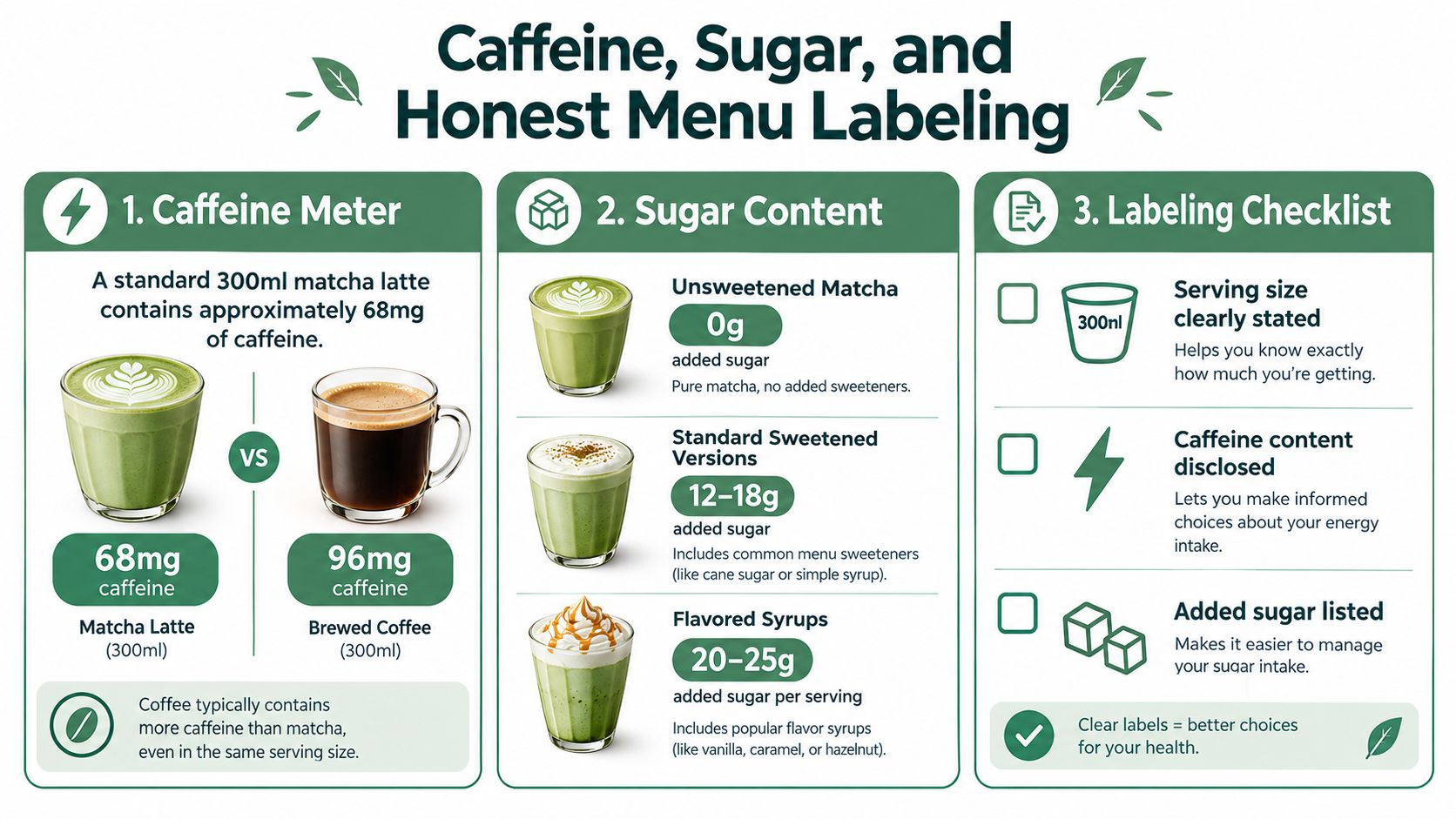
A lot of people read “matcha” and assume “gentle.” That's not a safe assumption. A 2024 chemical analysis reported an average caffeine concentration of 2,213.492 micrograms per gram, or about 2.21 milligrams per gram, so a 2 g serving dose lands at about 4.4 milligrams of caffeine before milk and sweetener, though the number shifts with cultivar, shading, harvest, grinding, and lab method. Jetro matcha composition data
Publish the dose, not the vibe
The cleanest menu language is simple. Put the grams of matcha per drink on the menu, offer a half-strength option, and label the milk choice separately when the beverage includes soy, almond, coconut, or oat. That gives students, event guests, and caffeine-sensitive customers something concrete to work with.
A stronger recipe should also avoid saying ceremonial-grade matcha is automatically lower in caffeine. Grade affects intended use and flavor quality, not a universal caffeine ceiling. The useful control is dose, not prestige language.
Sweetening should be measured too
Sweetener changes more than taste. It changes body, aroma, and the way matcha reads on the palate. If a bar uses syrup, measure it the same way every time and list it clearly, because “lightly sweet” means nothing to someone who wants to know what's in the cup.
A clear label is especially useful at events where service teams have to move quickly and guests have questions. A simple checklist helps:
- Serving size stated clearly.
- Caffeine content listed by gram dose.
- Added sugar disclosed.
- Major allergens named by milk choice.
That level of honesty makes the drink easier to trust. It also keeps the menu from promising a calming effect or a medical benefit that the recipe can't prove.
What Actually Determines the Taste of the Final Cup
Two cups can use the same ingredients and still land differently because a few variables decide whether the final pour feels balanced or flat. The main ones are powder-to-water ratio, water freshness, time between sifting and whisking, pour height, and how long the concentrate sits before dilution. At the cart, those are the differences between a vivid green cup and a tired one.
Small shifts that change the cup
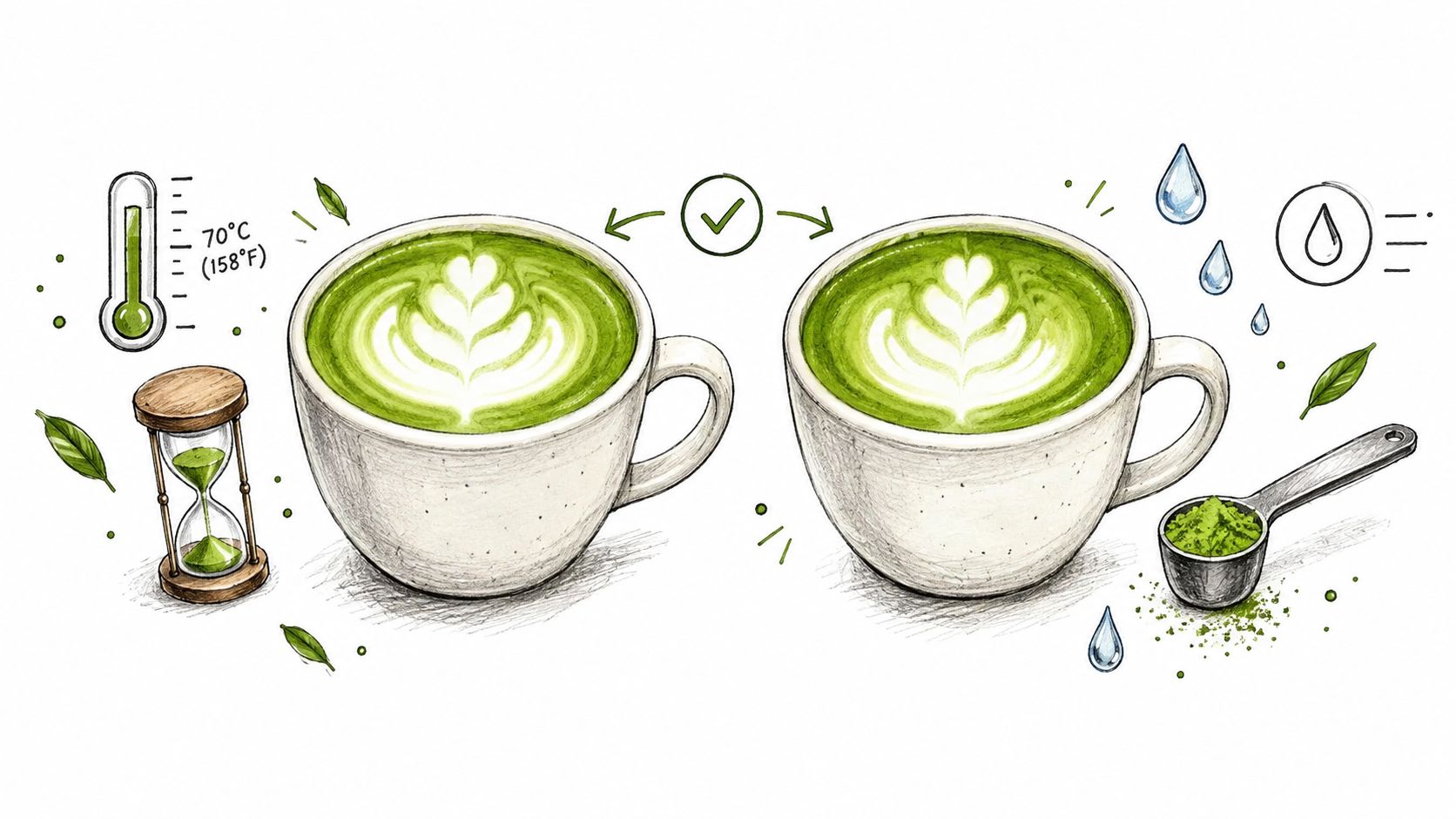
Freshly heated water behaves better than water that's been sitting in a dispenser too long. The reason is simple, dissolved gases and temperature drift change the way the matcha opens up in the bowl. If the water is too hot, the cup leans bitter. If it's too cool, the powder can read muted and chalky.
The pour matters too. A controlled, short pour keeps the drink integrated, while a splashy or overly high pour can break the texture and make the foam unstable. Once you've whisked the matcha cleanly, the goal is to preserve that structure as it moves into the milk.
The cheapest tools are the ones that save the cup
A calibrated thermometer, a scale, and a fixed whisk time do more for consistency than expensive equipment that's hard to maintain in the field. They also make it easier to train new staff because the recipe becomes repeatable instead of improvised. For a mobile bar, that matters more than fancy gear.
Operational shortcut: If the cup varies, check temperature first, then whisk time, then the milk.
The other hard lesson is that holding the concentrate for even a little too long can dull the aroma before the milk goes in. Matcha is at its best when the whisked slurry moves straight into service, not when it sits waiting for the next step.
Scaling the Recipe Across Bikes and Event Bars
A recipe that works in a quiet kitchen can unravel when three drinks are ordered at once. On a bike bar, consistency comes from removing guesswork before the rush starts. That means pre-weighed matcha, pre-labeled milk, a fixed whisk protocol, and a staff member who knows exactly when to steam and when to pour.
Build the line around timing
A compact team does better when roles are clear. One person should handle whisking, one should manage milk steaming, and one should watch order flow and cup assembly. If the same person has to do everything, the lag between whisk and pour grows, and the drink changes before it reaches the guest.
I'd keep matcha and sweetener portioned in labeled containers, then build the drink from those portions rather than scooping live under pressure. That single move cuts down on inconsistency and speeds up the whole line. It also makes it easier to hand the system to a new barista without sacrificing taste.
Document what changed, not just what sold
Pop-up service is a moving target. Outdoor heat shifts foam behavior, different venues change working speed, and milk textures react differently across a long event. When a batch tastes better than usual, write down what changed. When it tastes off, write that down too.
For a team running between campus stops and event sites, a one-page recipe card is better than a thick manual because it gets used. It should name the matcha dose, the water range, the whisk time, the milk target, and the pouring sequence. If a new barista can make the same cup on day one, the workflow is strong enough.
For teams coordinating more than one service point, the same process can be standardized across the fleet through a shared operating playbook, the sort of repeatable setup that keeps service aligned across locations like the one described at The Matcha Bike joining page.
Bringing the Vegan Matcha Latte to Campus and Events
A good campus drink has to survive more than one setting. The cup that works near a fountain at lunchtime should also hold up at a branded activation, a wellness morning, or a wedding pop-up. That's why consistency matters so much, because the guest remembers the taste, not the behind-the-scenes effort.
The best menus use the same core recipe and then change the presentation only when the format requires it. A bottled or canned version needs different texture decisions than a poured latte, but the same basic standards still apply, measured matcha, honest milk choice, and clear labeling. That's the only way the drink stays recognizable when the service style changes.
For a mobile program, weekly location updates and event-specific menus work best when the drink itself is stable enough to support them. That creates trust with planners and repeat buyers, and it also keeps the experience coherent across campus and city events. If the drink is going to travel, the process has to travel with it.
You can see how that kind of consistency fits into event formats at The Matcha Bike events page.
---
If you want a vegan matcha latte that tastes the same at a campus stop, a wedding, or a branded pop-up, The Matcha Bike is built around that kind of consistency. Visit The Matcha Bike to see how a standardized whisk-and-pour service keeps matcha tasting right every time.