You're standing at a campus counter or a pop-up line, the cup looks perfect, and the first sip tells you something's off. The matcha tastes grassy and thin, or it's buried under syrup that makes the whole drink feel heavy. A low sugar matcha latte works when you treat sweetness and caffeine as separate choices, not one blended guess.
That's how I build drinks across a mobile bar setup. I keep the matcha dose, the sweetener grams, and the milk choice on separate tracks, then I standardize the whisking step so every bike pours the same way. The result is a latte that tastes deliberate, not accidental, and a menu label that means something.
## Table of Contents - Why Most Matcha Lattes Taste Off and How to Fix That - The real problem is usually balance, not matcha itself - Defining Low Sugar Without Confusing Naturally Occurring Sugars - A usable menu threshold - Choosing Sweeteners That Actually Dissolve and Taste Clean - What works at the bar - The Whisk to Order Method That Keeps Every Pour Consistent - The sequence that holds up on a busy bar - Flavor Boosters That Stay Inside the Sugar Limit - Keep the flavor layered, not loud - The Caffeine Variable Most Low Sugar Guides Ignore - Dose disclosure belongs on the menu - Menu Labels and Event Signage That Communicate - Use labels people can parse in two seconds
Why Most Matcha Lattes Taste Off and How to Fix That
A lot of bad matcha drinks fail in the same place, the barista treats matcha like a fixed flavor block instead of a measured ingredient. One cup gets over-sweetened, another gets under-whisked, and a third uses too much powder for the milk volume. The drink can look polished and still drink like three different recipes depending on who made it.
The real problem is usually balance, not matcha itself
The fix starts with separating three variables. Matcha grams control tea intensity and caffeine exposure, sweetener grams control sweetness, and milk choice controls body and perceived richness. If you change all three at once, you can't tell what improved the drink and what made it worse.
A cleaner low sugar build also depends on using matcha as a powder, not pretending it behaves like brewed tea. A 2024 peer-reviewed analysis measured caffeine in dry matcha powder at 2,213.492 micrograms per gram, about 2.21 milligrams per gram, which means a 2 gram serving would supply roughly 4.4 milligrams based on that measured concentration, though actual servings vary by cultivar, preparation, and product specification (PMC analysis of dry matcha powder). That figure isn't a universal label claim, but it gives a concrete anchor for recipe thinking.
For a mobile bar, the practical move is simple, record the grams every time. A notebook, prep sheet, or digital POS note that lists matcha weight and sweetener weight makes repeat service possible across bikes and shifts. It also helps when guests ask why one latte tastes more vivid than another.
Practical rule: if the drink tastes flat, don't reach for more syrup first. Check the matcha dose, the whisking, and the milk before you add sweetness.
The other mistake is skipping the water phase. When matcha goes directly into cold milk, it clumps, settles, and drinks unevenly from top to bottom. I've seen that create bitter sips at the end of a cup and weak ones at the start, which is exactly what you don't want on a campus line or a wedding bar.
The right answer isn't a sweeter drink. It's a more controlled one. If the powder is weighed, the sweetener is measured, and the milk is chosen on purpose, the latte tastes cleaner without losing the matcha character.
Defining Low Sugar Without Confusing Naturally Occurring Sugars
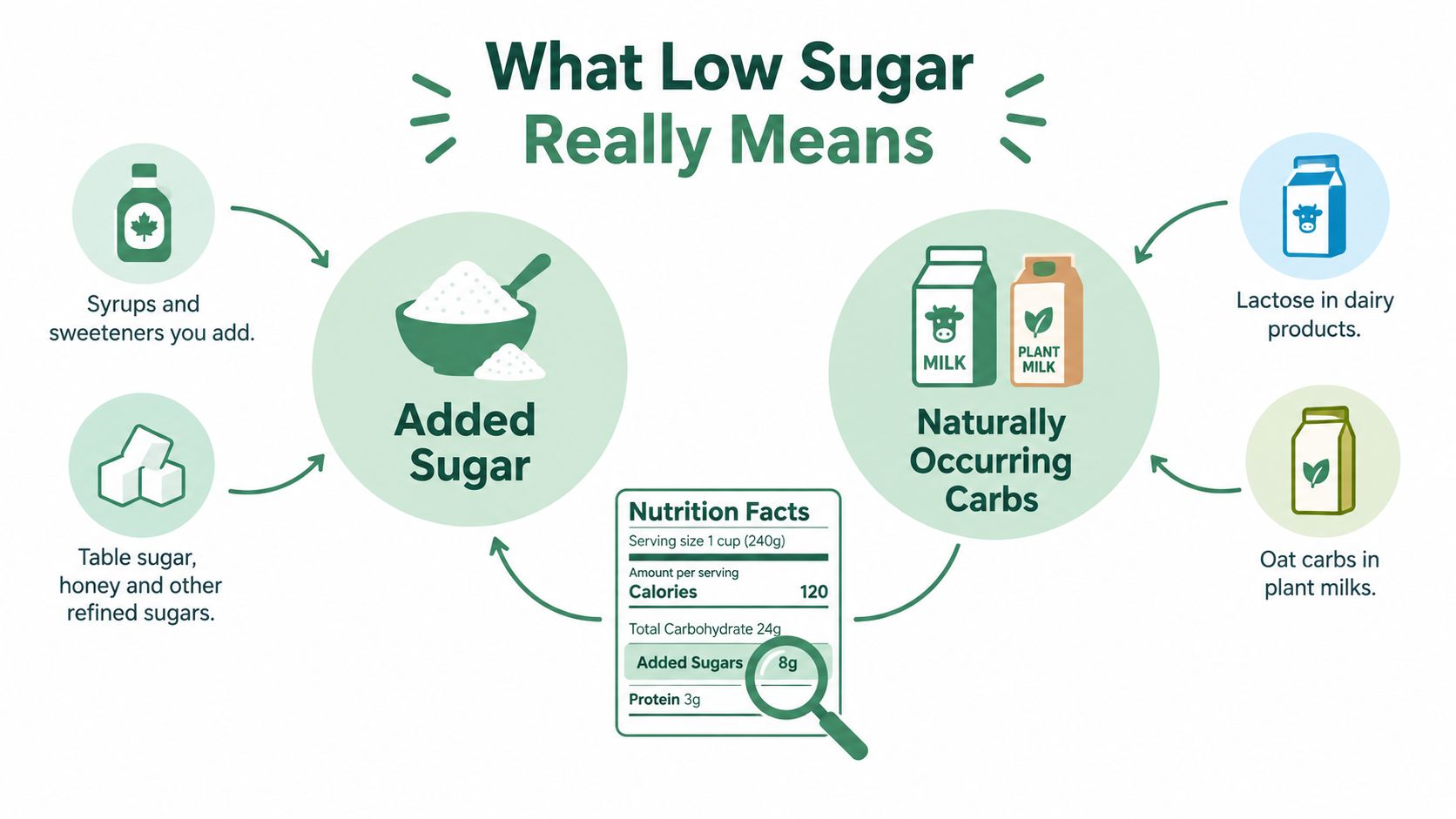
Low sugar should mean low in added sugar, not low in every carbohydrate in the cup. Milk and some plant milks bring their own naturally occurring sugars or carbs, while syrups and sweeteners are the part you control. The FDA sets the Daily Value for added sugars at 50 grams per day on a 2,000-calorie diet, which is about 12.5 teaspoons (FDA added sugars guidance).
A usable menu threshold
That benchmark gives a clean way to label a latte. Every gram of added sweetener equals 2% of the Daily Value, so 5 grams of added sugar is 10%, and 10 grams is 20% (FDA added sugars guidance). For café counters, campus service, and event bars, that is a practical cutoff for deciding what belongs on a low sugar menu.
The label still has to be honest. A drink made with dairy or unsweetened plant milk can still contain naturally occurring carbohydrates even when the added sugar stays low. A 12 oz latte with milk will usually bring lactose into the cup, so the sweetener math and the milk math are two different things.
A useful menu rule is to disclose added sugar separately from total sugar whenever possible.
That wording keeps the promise tight. Guests can see what you added, and they can still understand that the base ingredients may contribute their own sugars.
For matcha service, that matters because the drink should read as tea first and dessert second. A low sugar label works best when the sweetener stays modest, the ingredients are listed clearly, and the cup can still taste creamy without pretending to be sugar-free. The result is a cleaner nutrition story and a menu that does not confuse naturally occurring sugars with added ones.
Choosing Sweeteners That Actually Dissolve and Taste Clean
A good low sugar matcha latte menu lives or dies on sweetener behavior in cold milk. Some sweeteners read clean on paper and turn gritty in the cup. Others dissolve well but leave an aftertaste that fights the matcha instead of supporting it.
What works at the bar
Monk fruit blends and allulose are useful because they can deliver sweetness without forcing you to dump in a big spoon of sugar. Stevia blends can work too, but they're easy to overdo, and the finish can feel sharp if the dose is off. Erythritol is familiar to many guests, yet it can still read cool or sandy if the liquid base isn't mixed well.
Honey is different. It's a recognizable sweetener, and some guests prefer it because they know exactly what it is. I use it more like a flavor cue than a main formulation tool, since it can push a drink toward dessert if the pour gets generous.
| Sweetener | Behavior | Grams per 12 oz drink |
|---|---|---|
| Monk fruit blend | Dissolves cleanly, light profile, good house option | Small measured amount |
| Allulose | Clean sweetness, soft mouthfeel, blends well in milk | Small measured amount |
| Stevia blend | Strong sweetness, easy to overdo, can leave a sharp finish | Tiny measured amount |
| Erythritol | Familiar bulk, can feel gritty if under-mixed | Small measured amount |
| Honey | Clear flavor cue, recognizable, can raise sweetness quickly | Small amount |
A house syrup built around a monk fruit and allulose blend is the most practical default for mobile service. It reads cleanly on an ingredient list, it works in cold milk, and it keeps the matcha visible in the flavor profile. Honey can stay on the side as an optional flavor direction for guests who want something more familiar.
For events, clarity beats novelty. If the menu board has to communicate fast, a short ingredient list does more than a trendy description ever will. The more your sweetener behaves consistently, the easier it is to keep both the taste and the label stable.
The Whisk to Order Method That Keeps Every Pour Consistent
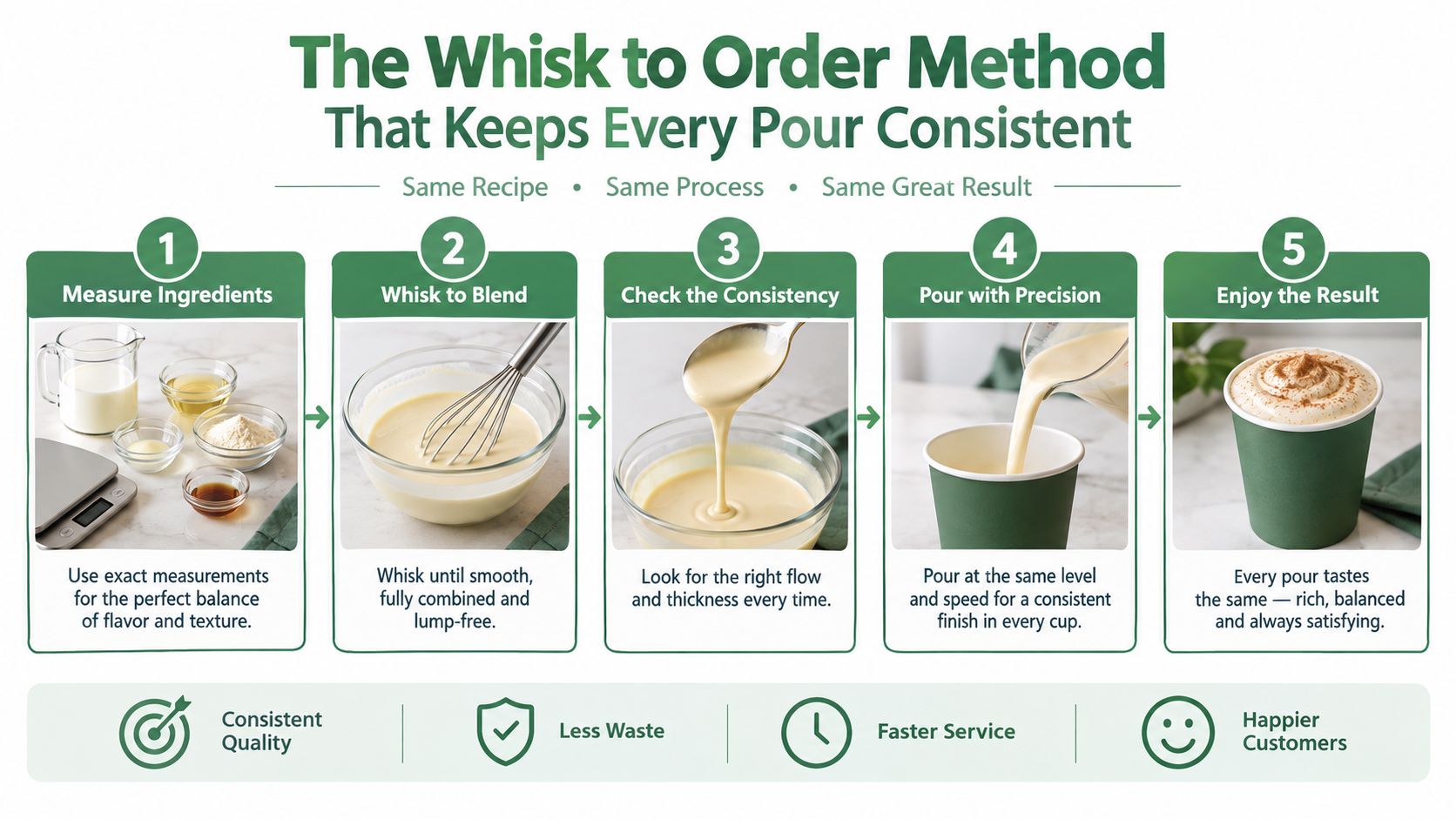
A matcha latte gets easier to repeat when every cup follows the same build. I weigh the powder, sift it, whisk it in a measured water phase, then add steamed or cold milk. That order keeps the base smooth before the milk enters the cup.
The sequence that holds up on a busy bar
Rushing staff usually skip the water phase. They drop powder into milk, stir twice, and send out a cup that tastes bold at the top and dull at the bottom. Whisking first gives even dispersion, so the matcha carries flavor and caffeine through the whole pour.
The sensory check has to be fast. Look for a bright green color, not a dull brown-green. Reject any drink with visible particles or sediment. On a wedding bar line, that means pulling a cup before it leaves the counter if it shows streaks, grit, or an uneven top layer.
- Weigh the powder. Keep the dose identical from drink to drink.
- Sift before whisking. Fewer clumps means a smoother pour.
- Whisk in a small measured water phase. The matcha opens up here.
- Add milk after dispersion. Cold or steamed milk both work once the base is smooth.
- Check the cup before serving. Color, texture, and finish should line up.
The point is repeatability. On a cart, a bike, or a compact event bar, every gram and every step has to survive real service conditions.
For mobile teams, that makes the recipe operational instead of theoretical. Staff can be trained on the same build across the fleet, output stays consistent across locations, and bad pours get caught before they reach the guest. See how The Matcha Bike runs its whisk-to-order program.
Flavor Boosters That Stay Inside the Sugar Limit
The smartest flavor additions are the ones that add interest without turning the latte into a syrup bomb. A strawberry-style build can still feel bright and seasonal if you use fruit, aroma, or texture as accents instead of leaning on a heavy sweet base. The drink should taste like matcha first, with the booster acting like a frame around it.
Keep the flavor layered, not loud
Fruit purée is the most obvious choice, but it's also the easiest place to blow up the sugar budget if you're careless. Citrus zest gives lift without much weight, vanilla extract softens the edges, and a small amount of cocoa can deepen the finish without making the cup taste like a mocha. Toasted oat or coconut flakes work better as garnish or texture than as sweetening tools.
Ceremonial-grade spice blends can also be effective when they're used lightly. They help the drink feel seasonal without masking the tea. The key is to treat each addition like a small adjustment, not a second recipe hiding inside the first.
A useful pairing pattern looks like this:
- Oat milk with fruit purée, for a rounder, brunch-style profile.
- Dairy milk with citrus zest, for a cleaner finish and brighter aroma.
- Coconut milk with cocoa, for a deeper, more dessert-leaning cup.
- Unsweetened plant milk with vanilla extract, for a lighter flavor structure.
The best boosters do one job well. They add interest, not clutter. If the guest remembers the matcha and the fruit together, that's a good sign. If they only remember sweetness, the build is too blunt.
The Caffeine Variable Most Low Sugar Guides Ignore
A drink can be low in sugar and still be too strong for the wrong guest at the wrong time. That's the part many guides skip. Matcha dose changes the experience as much as sweetener does, and the same menu can feel gentle at one gram and intense at two.
Dose disclosure belongs on the menu
Published reporting places matcha caffeine roughly around 35 to 70 milligrams per 1 to 2 grams of matcha, and it notes that many health claims still rest on limited human evidence (BBC Food on matcha caffeine ranges). Another analytical study found a broader spread, with ceremonial matcha averaging 31.45 ± 1.08 mg caffeine per gram, and individual products ranging widely, while another review cited values around 18.9 to 44.4 mg/g (PMC study on matcha caffeine variation). That spread is exactly why dose, not label style, is the controllable variable.
Menus should print the matcha grams used per drink next to the added sugar. That gives guests a real decision tool, especially when they're caffeine-sensitive, pairing matcha with coffee, or ordering later in the day. It also helps campus service, where some guests want the flavor but not the full stimulant load.
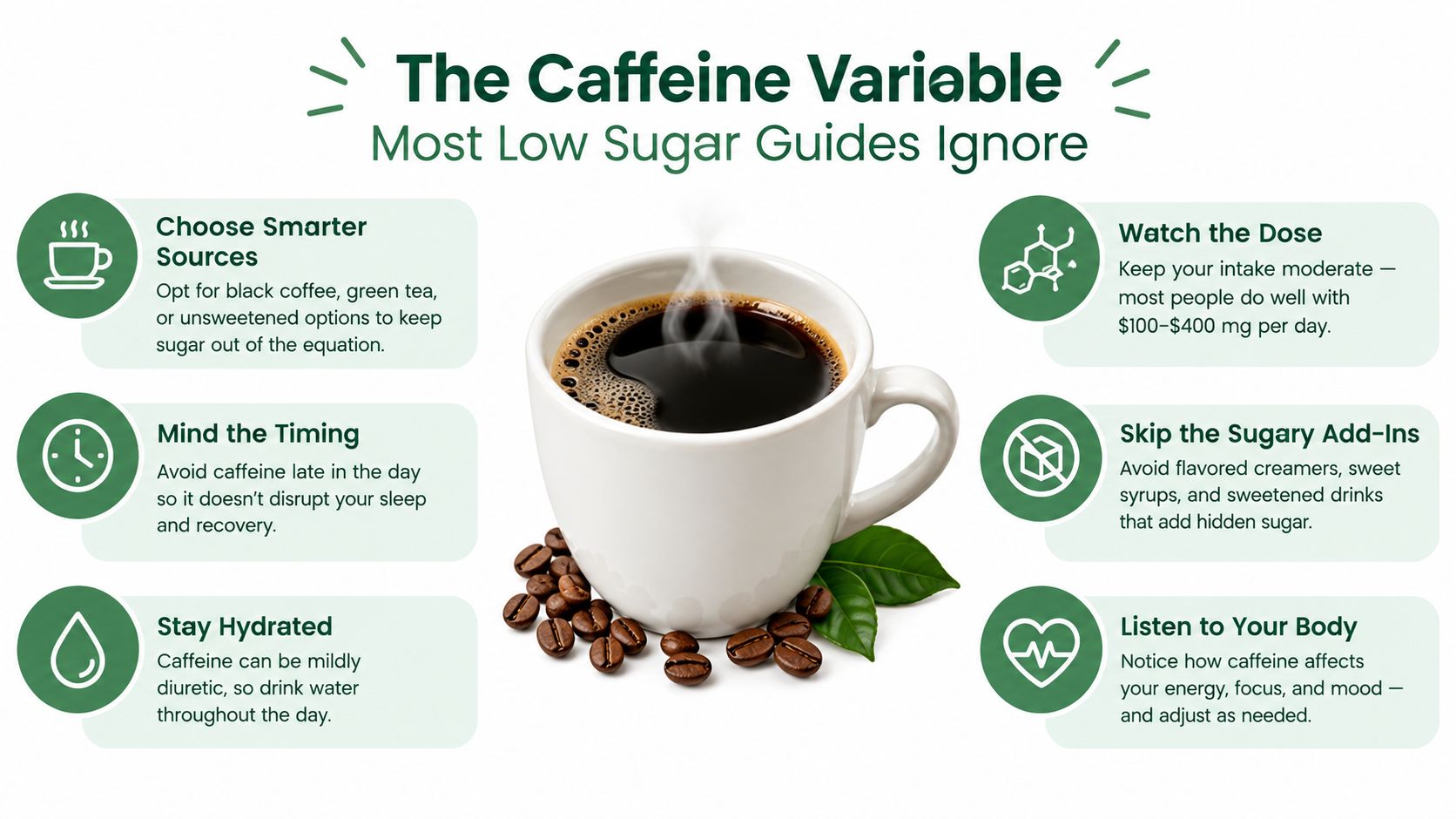
Half-strength matcha is the easiest adjustment for a menu. A smaller serving works too, and an earlier ordering window can help guests who know caffeine hits them hard. The important thing is not to pretend ceremonial grade automatically means lower caffeine or better tolerance.
Bottom line: a low sugar menu should disclose both sweetness and dose, because the guest is managing two variables, not one.
Menu Labels and Event Signage That Communicate
A label should tell the guest what they're getting without making them decode marketing language. On a campus board or event menu, I'd rather see a plain build description than a poetic name that hides the ingredients. The point is trust, not mystique.
Use labels people can parse in two seconds
For a standard listing, keep the format simple. Name the drink, list the matcha grams, state the milk type, and show added sugar in grams. If the cup has a lower-caffeine version, note that too. That keeps service moving because staff do not have to translate the menu on the fly.
A useful event template looks like this:
- Low Sugar Matcha Latte, 1 g matcha, oat milk, lightly sweetened.
- Low Sugar Matcha Latte, 2 g matcha, dairy milk, unsweetened.
- Strawberry-style Matcha, 1 g matcha, plant milk, fruit-forward, lightly sweetened.
The label should also flag dietary issues clearly. If a drink contains dairy, that needs to be visible. If a plant milk contains its own carbs or a flavoring adds sugar, the wording should make that obvious instead of burying it in fine print.
For event planners, the decision matrix is straightforward. Guests who are caffeine-sensitive get the lower-dose build. Later service calls for lighter dosing. Dairy and sweetener choices need to be explicit. Fruit-forward activations can use brighter boosters, while wellness events can stay cleaner. For event planners, event pop-ups from The Matcha Bike show how licensed, self-contained service fits that same logic.
That structure works on a campus cart and at a private event, as long as the recipe is standardized. If one team member whisks a different way or free-pours syrup, the label stops being credible. A weighed, whisk-to-order process keeps the printed menu honest, which is what guests notice when the drink lands in their hand.
If you want a low sugar matcha latte program that tastes consistent and still respects caffeine sensitivity, The Matcha Bike can help you think like an operator, not just a drink buyer. Visit The Matcha Bike to see how ceremonial-grade matcha, measured sweetening, and whisk-to-order service can translate into a menu that works on campus and at events.